A critical look at supply chains
Learning lessons from Ukraine.

Andriy Dovbenko, founder of the UK-Ukraine TechExchange
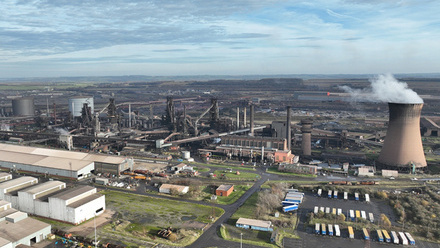
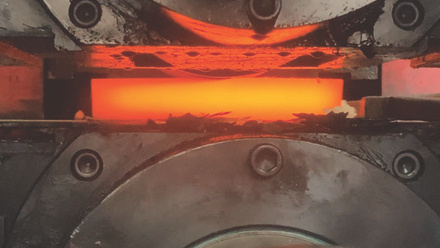
© Andriy DovbenkoIn April 2025, a cargo ship carrying more than 55,000t of coke arrived at Immingham, UK, from Australia. Its load was destined for the blast furnaces at British Steel’s Scunthorpe works, where ministers had intervened to prevent steelmaking from coming to an abrupt halt. Shipments of iron ore from Sweden were also being secured. Without those materials, the government’s extraordinary efforts to preserve British steelmaking would have achieved very little.
The immediate crisis was resolved, and, in July this year, the government brought British Steel into public ownership. Thousands of jobs were protected, along with a capability that Britain would struggle to replace if it disappeared. Yet, the scramble to secure coke and iron ore ought to have prompted a much wider examination of the materials on which British industry depends. A factory can remain open, with its workers and equipment in place, and still be unable to manufacture anything if supplies are interrupted.
This is particularly important for defence, energy and advanced manufacturing, where the availability of certain minerals and specialist components can determine whether production continues. Britain has considerable industrial expertise, but many of the materials feeding its factories pass through complicated international supply chains, often involving processing facilities concentrated in a handful of countries.
A mineral deposit in a friendly country offers little immediate security if the raw material must be sent elsewhere for refining, then perhaps somewhere else to be processed into a usable component. Each stage introduces dependencies that can be difficult to overcome when supplies are restricted.
The pressures of war
Having spent considerable time working with Ukrainian defence technology businesses and British partners, their experience offers some uncomfortable lessons.
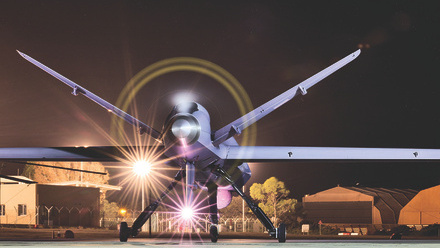
Under the pressure of war, Ukrainian manufacturers have become remarkably effective at designing equipment, adapting existing technologies and bringing new products into production. The speed of innovation in drones and electronic warfare systems has been extraordinary. Yet, even the most capable manufacturers continue to face problems sourcing relatively basic components.
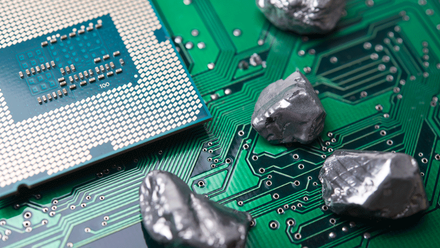
A company can design and assemble a drone in Ukraine while remaining dependent on imported motors, battery cells or specialist sensors. Thermal imaging systems require components containing materials such as germanium, for which alternative suppliers can be expensive or difficult to find. Manufacturers have sometimes had to redesign equipment around the parts they can obtain, adding cost and time to production.
An Associated Press investigation published this October found that Ukraine has made considerable progress in reducing its direct dependence on Chinese drone components. The article – The not-so-secret vulnerability in Ukraine’s drone arsenal? Chinese technology – reported on Ukraine Customs data. In early 2024, almost 90% of imported drone parts came directly from China. During the first eight months of 2026, that proportion had fallen to 28%.
Those figures demonstrate what can be achieved when manufacturers have sufficient incentive to develop alternatives. They also conceal an ongoing problem, since components imported through European intermediaries may still have been manufactured in China.
One Ukrainian company making particularly interesting progress is Vyriy Industries, a drone manufacturer that has developed a growing network of domestic component suppliers. By 2025, around 70-80% of the components used in its serially produced drones were Ukrainian-made, including flight controllers, speed controllers, antennae and other equipment. The company says it manufactured more than 1,000 first-person view drones using entirely Ukrainian-made components that year.
This has required investment in specialist manufacturers capable of producing equipment previously sourced overseas. There are still dependencies further up the supply chain, particularly for semiconductors, magnets and raw materials, but developing domestic component manufacturing gives Ukrainian businesses considerably more control over production and the ability to adapt equipment quickly.
Government policy has helped create conditions in which that investment makes commercial sense. Under Ukraine’s Made for Victory initiative, domestic manufacturers of defence components can apply for grants of up to 8mln hryvnias to expand production. Its Weapons of Victory programme offers qualifying manufacturers government procurement contracts lasting three, five or ten years, with eligibility criteria including more than 50% localisation by component cost.
For a manufacturer considering investment in new machinery or a domestic supplier, the prospect of several years of government orders can change the economics considerably. Ukraine has also developed a dedicated components library to connect defence manufacturers with local suppliers, alongside funding for new technologies through its Brave1 innovation programme.
Crunch time
The UK should be paying close attention. We are fortunate to have time to address these weaknesses without factories operating under missile attack, or manufacturers searching desperately for substitute components. That advantage will disappear quickly if we continue to assume that international markets will always provide whatever British industry needs.
The government’s Critical Minerals Strategy, published last November, acknowledges the scale of the challenge. Its targets include meeting 10% of British demand through domestic production and 20% through recycling by 2035, supported by up to £50mln for critical minerals projects.
The strategy is a useful starting point, particularly its emphasis on domestic processing. The UK has expertise in metallurgy, refining and advanced materials, and there are opportunities to build on existing capabilities. For example, Clydach in Wales is a major nickel refinery that produces high-purity material used in specialist alloys for aerospace and defence. Facilities of this kind are valuable industrial assets.
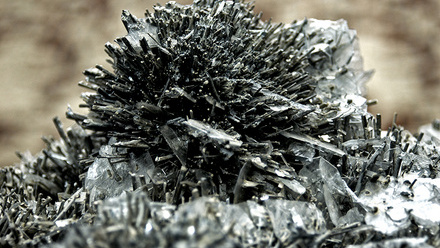
Elsewhere, there are some obvious gaps. The tin supply chain provides a particularly interesting example. The government’s own strategy acknowledges that tin extracted in the UK is exported for refining and processing, with higher-purity products subsequently imported. We have the resource, but lack the domestic capacity to complete an essential stage of its transformation into commercially useful material.
Some of the most interesting work is coming from younger businesses developing alternative sources of advanced materials. Uplift360, a company operating from Bristol, has developed technology to recover high-performance fibres from discarded composite materials. Working with aerospace and defence manufacturer Leonardo, it successfully recovered carbon fibre from an end-of-life helicopter rotor blade and used it to produce a prototype drone arm.
The two companies are now working together to qualify regenerated composites for use in defence and aerospace manufacturing. This is an encouraging example of how specialist materials expertise creates additional sources of supply from resources already available within Europe.
Projects like this deserve more attention from government and major manufacturers. Developing the technology is expensive, and investors need confidence that customers will purchase the resulting materials over a sufficiently long period. Technical qualification can take years, particularly in aerospace and defence where manufacturers must demonstrate how recovered materials meet stringent performance and safety requirements.
Government procurement and long-term agreements with major industrial customers can help provide that certainty. The technical challenge is often manageable, while it can be considerably harder to create a commercially viable business.
Other European countries are moving in this direction. Earlier this month, the European Commission designated another 46 strategic raw materials projects for accelerated permitting and assistance with investment. They span 16 EU countries and could require approximately €21bln in capital. The scale of that ambition demonstrates how seriously Europe is beginning to treat its dependence on imported minerals and processing capacity.
The UK can develop its own approach, making use of existing industrial strengths and relationships with countries able to contribute resources and manufacturing expertise. Ukraine should be an important part of that effort.
Our countries already have a framework for cooperation through the UK-Ukraine 100 Year Partnership, which includes critical minerals and green steel production. The relationship has considerable potential, particularly if we can move towards specific manufacturing partnerships and investment projects.
Ukraine has substantial mineral resources, alongside a growing community of engineers and manufacturers accustomed to solving problems under intense operational pressure. The UK has access to international capital, established processing capabilities and industrial customers capable of supporting the development of new facilities.
Overcoming the hurdles
There are obstacles, of course. Some Ukrainian mineral deposits are in territories currently affected by Russian occupation, and any new mining operation requires substantial capital, infrastructure and reliable geological information. Developing a new mineral supply chain can take years. The UK and Ukraine should be looking for projects that are commercially realistic and can begin delivering benefits much sooner.
Joint manufacturing ventures are one possibility. Ukrainian businesses developing components for defence systems could work with British manufacturers to increase production, qualify alternative materials and gain access to more dependable sources of supply. British investors could support new processing facilities, while existing manufacturers provide the technical expertise and customers needed to establish commercially viable operations.
There is considerable value in the knowledge Ukrainian companies have accumulated during the war. Understanding which components repeatedly cause production delays, which substitutes can be used safely and where alternative suppliers are most urgently needed can help direct investment towards capabilities that manufacturers will actually use.
That is also where I would like to see British industrial policy become more demanding. Manufacturers supplying strategically important sectors should be able to identify their most vulnerable materials and components, understand where those products originate and establish how quickly alternative suppliers could be brought into production. A shortage of a relatively inexpensive component can hold up equipment worth millions of pounds.
Some of these vulnerabilities could be addressed through strategic reserves. Others require investment in processing or the development of alternative suppliers. There will be cases where the UK will have to accept higher production costs in exchange for greater certainty of supply, particularly where national security is concerned. These decisions need to involve the businesses that will ultimately purchase the materials, since an investment in a new facility is of limited use if its output does not meet their technical requirements.
More attention needs to be paid to the relationship between mineral security and industrial finance. The UK has considerable expertise in financing mining projects and trading metals internationally. We should be using more of that capability to help develop the processing and manufacturing businesses that our economy increasingly needs.
The intervention at Scunthorpe demonstrates that the government is prepared to act when a strategically important industry faces collapse. The challenge now is to identify the less visible vulnerabilities across British manufacturing while there is still time to address them.
The UK will always rely on international suppliers for many of its raw materials, and there is nothing inherently wrong with that. What concerns me is how little attention some of those dependencies receive until supplies are threatened. Spending time with Ukrainian manufacturers operating under wartime conditions reveals just how difficult it can be to find alternatives once production is disrupted.
Preserving industrial capacity requires continued access to the materials that make production possible. We have spent considerable political and financial capital protecting steelmaking at Scunthorpe. We should be equally serious about securing the materials and components needed across the rest of British industry.
More like this...