Europe’s waste could supply over half of critical material demand by 2050
The continent's vast ‘urban mine’ is mapped in an EU-funded project.
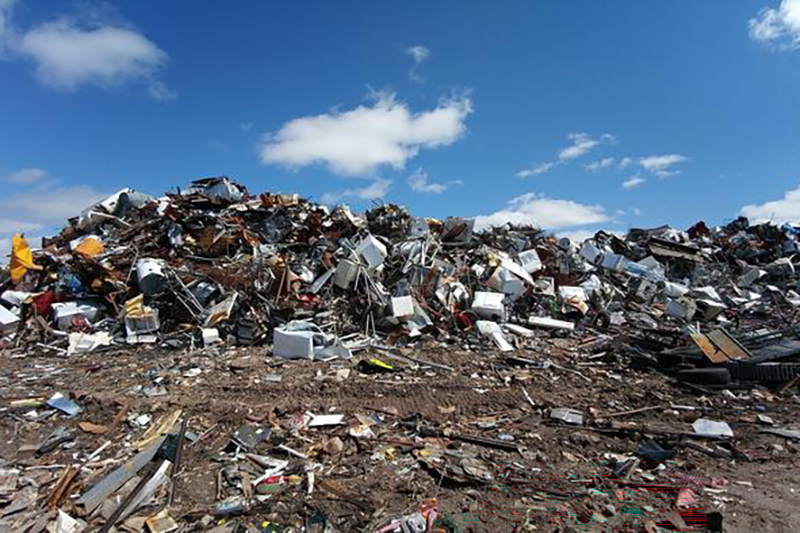
Researchers working on the FutuRaM (Future Availability of Secondary Raw Materials) project have developed a comprehensive map of critical raw materials embedded in discarded products, industrial residues and demolished infrastructure across the EU, UK, Switzerland, Iceland, and Norway.
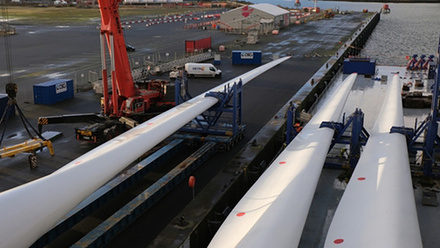
The survey involved analysis of 42 critical elements contained in several waste streams, from electronic waste, vehicles and their batteries, to wind turbines, slags, ashes, and building construction and demolition debris.
It revealed that, by 2050, recovery systems could enable Europe to recover 4.1-5.7 Mt of critical raw materials annually, with primary substitution potential ranging from up to 33% under business-as-usual conditions, up to 47% with improved recovery systems and 56% under a circular economy scenario, if the quality of secondary raw materials is on par with primary materials.
A key advance of the project is a new recovery model that distinguishes between critical raw materials present in waste and those available as secondary raw materials after treatment. This is said to address a major limitation in previous assessments and allows more policy-relevant estimates of supply potential.
Despite the enormous potential, the study highlights major gaps in current collection and recycling systems.
For example, despite Europe being a global leader in waste electrical equipment management, nearly half of its electronic waste is handled outside compliant recycling systems, and part of the losses even arise in compliant waste management, leading to 500Kt of losses in critical raw materials in 2022.
Similarly, many batteries are improperly discarded or exported, while a large number of end-of-life vehicles remain outside official treatment channels or exported in second hand vehicles outside the EU, leading to losses of over 200Kt of critical raw materials in 2022.
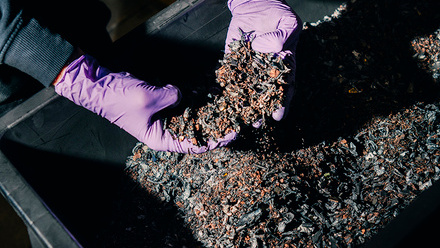
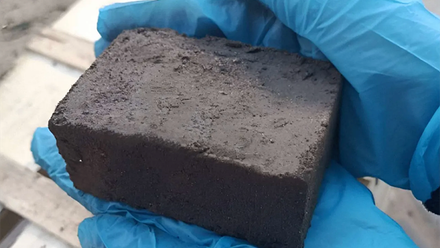
Current recycling capacity for lithium-ion technologies is still expanding. Significant quantities of partially processed battery materials known as 'black mass' are exported from Europe, meaning valuable resources are not fully recovered within the region.
Improving collection rates, tracking systems and recycling infrastructure could therefore unlock substantial additional supplies of critical materials.
Key gaps identified are:
- Making recycling projects more viable in Europe
- Investing in better waste sorting and mechanical treatment/dismantling
- Investing in innovative recycling techniques
The report outlines a set of policy actions to unlock Europe’s urban mine potential, including:
- Establish a harmonised EU framework for secondary raw materials reporting and classification. A common system would ensure consistent, comparable data across Member States, enabling more accurate tracking of critical materials and better-informed policy decisions.
- Institutionalise the Urban Mine Platform as core EU data infrastructure. Embedding the platform within EU systems would provide a permanent, trusted source of data to support monitoring, investment planning and regulatory implementation.
- Apply the classification system to secondary resources. Extending this globally recognised framework to recycling projects would improve transparency, comparability and confidence for investors and policymakers.
- Strengthen enforcement and monitoring of illegal waste flows. Tighter controls and better tracking are needed to prevent valuable materials from being lost through informal channels, exports, or non-compliant treatment.
- Support long-term scenario modelling for strategic planning. Using forward-looking models can help policymakers anticipate future material demand and align infrastructure, investment and regulation accordingly.
- Invest in skills, awareness and recycling capacity across value chains. Building technical expertise and expanding recycling infrastructure is essential to scale up recovery and fully integrate secondary materials into supply chains.
All the project data are now available through the Urban Mine Platform.
For more like this...