Shake it off
Orbital friction welding achieves full-contact joints.
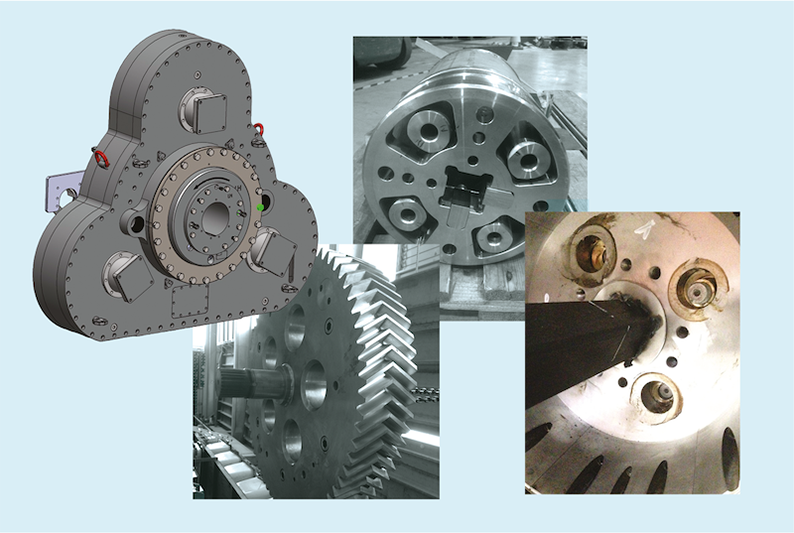
The machinery design and components used in vibrationless orbital friction welding (left). The process uses an intermediate piece (right) that orbits while the parent components are held stationary. This enables a highly accurate alignment and allows the weld to be produced to a precise set. Flash is produced as for all friction welding, as the plasticised material is extruded out of the weld interface zone
© JackweldFusion welding has proved an effective method for manufacturing components and assemblies, but there are limitations in its application for thick sections, including use of different metals and concerns around hydrogen embrittlement, fatigue failures, cracks, defects and radiation hardening (see box-out below).
Joining the dots
Fusion welding uses heat to join two or more materials by heating them to melting point.
It may use a filler material but does not require the application of pressure, apart from resistance welding, where substantial contact pressure is used for sound joining.
Fusion welding processes can be grouped according to the source of the heat, such as gas, electric arc, electrical resistance and high energy. Common examples of each are, respectively, oxy-fuel welding, plasma arc welding, resistance spot welding and electron beam welding.
Friction welding is a solid-state joining technique that welds workpieces by generating heat through mechanical friction. How the frictional heat and material mix is dependent on the friction welding process, of which there are four main ones: friction stir welding, friction stir spot welding, linear friction welding and rotary friction welding.
On the other hand, friction welding offers opportunities to exploit the design and developments in extreme performance materials for the defence, energy, nuclear and construction sectors. Developed more than 60 years ago, it is a widely understood solid-state welding process with many advantages over fusion welding. It can achieve a highly competent weld between a wide range of metals, as well as from one parent metal to itself.
The welds typically take on engineering and metallurgical characteristics akin to the parent metal. Friction welding processes are also considered inherently more tolerant to variables in the process and offer good reproducibility at scale.
Nevertheless, we can push the envelope further in welding. New materials and metallurgical processes aimed at meeting the demands in the nuclear, aerospace and automotive industries, present unique challenges when these are joined into assemblies. Electron beam (EB) and diffusion bonding techniques are being used for these applications.
To achieve full-contact welds without compromising their properties, vibration-free orbital friction welding (VFOFW) is a patent-approved technique that offers a scaleable process to exploit the advantages of friction welding in the full-contact joint. This is achieved between monolithic components of diverse profile, as opposed to friction stir welding (FSW) applied to sheet materials.
Non-full-contact welds, such as in FSW, are formed by a tool in a stirring action against the surface of the metals, and so are limited to the tooling cross-section area and the tooling material. Friction stir welding is typically applied for sheet type profiles. In orbital friction welding, the actual surfaces of the two parts are facing each other without any tooling doing the stirring action on a given point. Instead a bond is created with the orbital motion in action.
Friction stir welding relies on a special tooling based on artificial diamond or other carbide-based additives to make tooling material. These are expensive, especially in welding steel-based materials. Vibrationless orbital friction welding does not require such tooling.
Friction stir welding is also typically worked on thin profiles like aluminium plates and extrusions. Steel FSW still has production challenges as the tooling wears over time from the higher melting point of steel compared with aluminium. Reaching a semi-solid state requires higher temperatures, so the tooling needs to be hotter for longer in friction, resulting in wear and tear, and more frequent tool changes.
Good vibrations are no vibrations
Vibration-free orbital friction welding works by moving an intermediate puck orbitally in the joint between the stationary parts to achieve a vibrationless and a uniform distribution of friction energy. The puck is located eccentrically in a tubular rotor that rotates about the stationary parts held in their collars.
The rotor is synced with the orbital puck forces, and the mechanical tooling generates an orbital friction welding process that has a high degree of symmetry, eliminating vibrations and fatigue stresses. This enables the machine to be much smaller, lighter and more efficient, and eliminates both large forces and cyclical fatigue stresses in moving parts.
Friction welding of large components is already an established concept, but here it is applied differently to enable vibrationless friction welding. The elimination of vibrations in turn reduces applied forces in the parent components and is fundamental for scaling up the process for industrial applications.
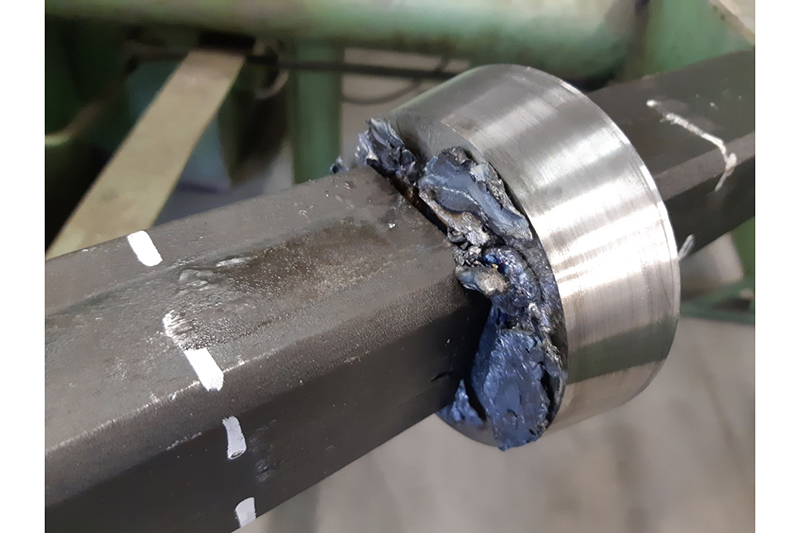
This friction process is also both consistent over time and across the whole interface, and available for non-uniform and irregular profile shapes. See the initial welds produced at full scale from rail steel in the images below.
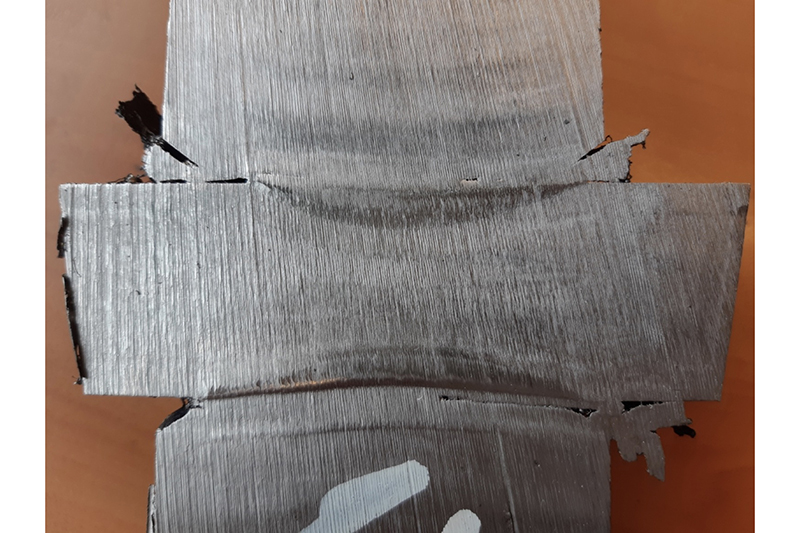
Rail steel welds made using vibration-free orbital friction welding
© JackweldThe below image shows a close-up view of a square bar weld. As can be seen, there is no obvious porosity, clumps, inclusions, tears, weld line damage, or cross-section deformation. The result is a clean joint and a continuous section. The second image shows an optical micrograph of a cross-section sample from the square bar weld. The micrograph shows the weld region. The absence of defects and porosity can be seen along with uniformity of the weld zone, indicating a high integrity joint.
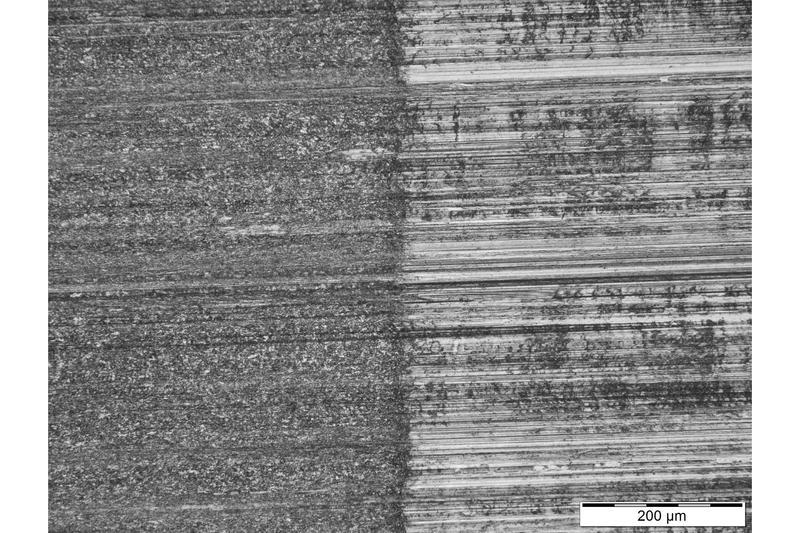
A close-up of a square bar steel weld
© Jackweld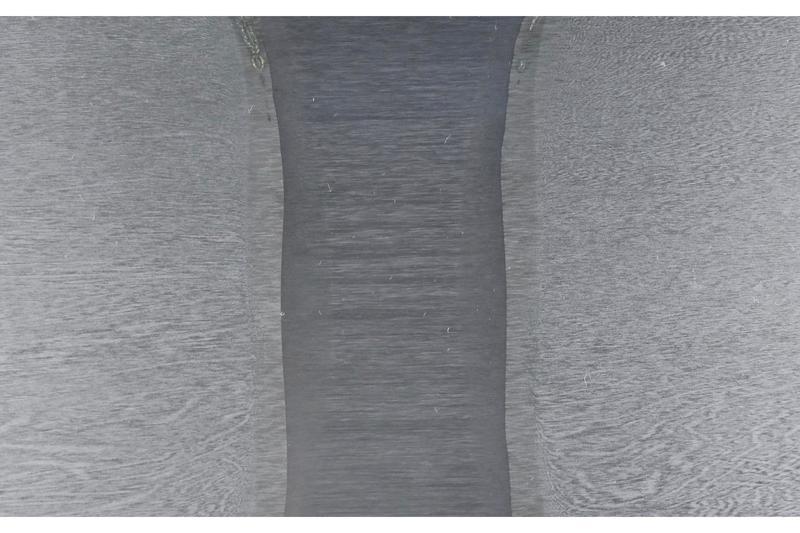
Cross-sectional micrograph from the same weld
© JackweldSpin class
The next generation of materials and components now being taken up and adopted in the nuclear sector is quite large and complex. This will involve exploiting the fabrication and joining of high-entropy alloys, and multi-component and compositionally complex alloys.
Fusion welding challenges, including formation of brittle phases and phase evaporation, are successfully overcome using FSW. The VFOFW method can now deliver the same for thick sections.
Within the aerospace, defence materials, automotive, rail, energy, oil and gas, and infrastructure sectors, VFOFW can achieve full-contact welds with the following materials: those used in hot isostatic pressing (HIP) – a process that simultaneously uses heat and pressure to reduce the porosity of metals and increase the density of ceramic materials; thixotropic, rheocast and bainitic steels; as well as magnesium and structural aluminium extrusions.
This would avoid the use of conventional fusion-based EB processes for full-contact joints in HIP materials in such high-criticality components in the nuclear, aerospace and space applications, where HIP material porosity, highly intense temperature gradients and rapid solidification from EB can introduce new porosity. Vibration-free orbital friction welding is a solid-state, non-fusion-welding process and inherently cannot produce these problems. Its lower, solid-state, process temperature below liquidus avoids critical microstructure change and loss of mechanical properties.
There is demand for a process that can maximise the potential of existing and new alloys and materials where these are to be connected by full-contact joints. Vibration-free orbital friction welding opens these benefits to monolithic components of practically any shape and size.
The VFOFW process is patented with intercontinental coverage for industry.
More like this...