Trade-offs examined for post-sorting plastics waste
The quality of recycled plastic tends to be higher when the waste is pre-sorted by households, research in Nature suggests.
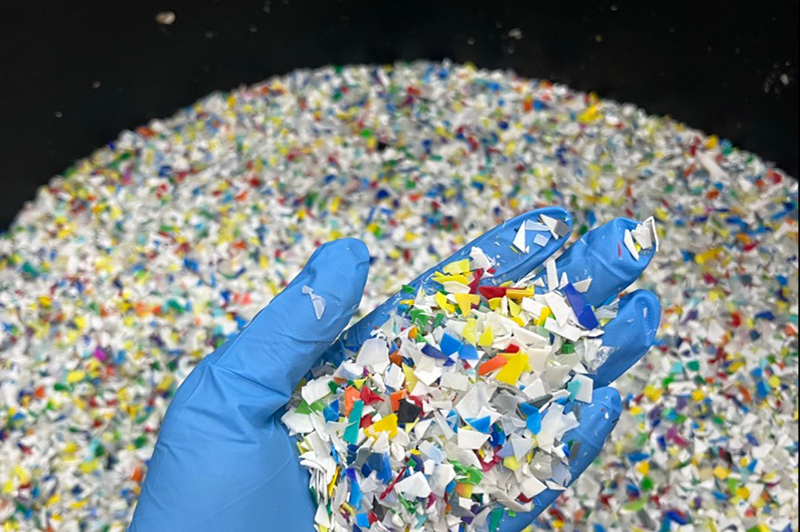
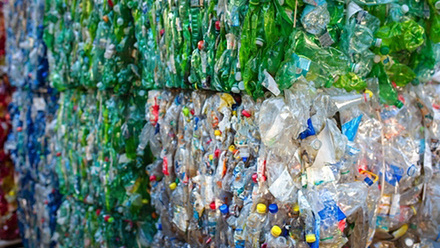
Shredded plastic waste
© Charmayne Siebers, Maastricht UniversityA joint Belgian, Dutch and German recycling study has compared measurables such as contamination, fraction purity, odour and quantity of plastics recovered to see how mixed waste recycling compares with pre-sorted plastics.
The study finds that post-sorting mixed plastics should not replace systems that separately collect plastic packaging, metal packaging and drinking cartons (PMD), but could supplement them to increase recycling rates, albeit at a cost.
Consumers in the three countries actively sorted their waste using the PMD system. While the quality of material captured is typically higher compared to systems using mixed waste systems, sorting errors and some consumers refusing to participate meant that, where PMD systems operate, a considerable proportion of recyclable plastics is diverted into residual waste.
The paper on Analysis of trade-offs of post-sorting plastic packaging paper reveals how the researchers used a single material recovery facility (MRF) in the Netherlands to process both source-separated and post-sorted streams on the same sorting line, but at different times, and concluded there was a quantity versus quality trade-off.
While post-sorting captures more plastic packaging, it is more contaminated, particularly with prohibited metals including lead and cadmium, and additional cleaning is required to remove the increased dirt.
The team has modelled how much more plastic could be captured if MRFs accepted more mixed waste and found that substantial investment would be needed in post-sorting infrastructure to capture more high-quality materials.