Paper-based material harvests electricity from indoor humidity
The proposed wallpaper reportedly turns moisture in the room into electric current.
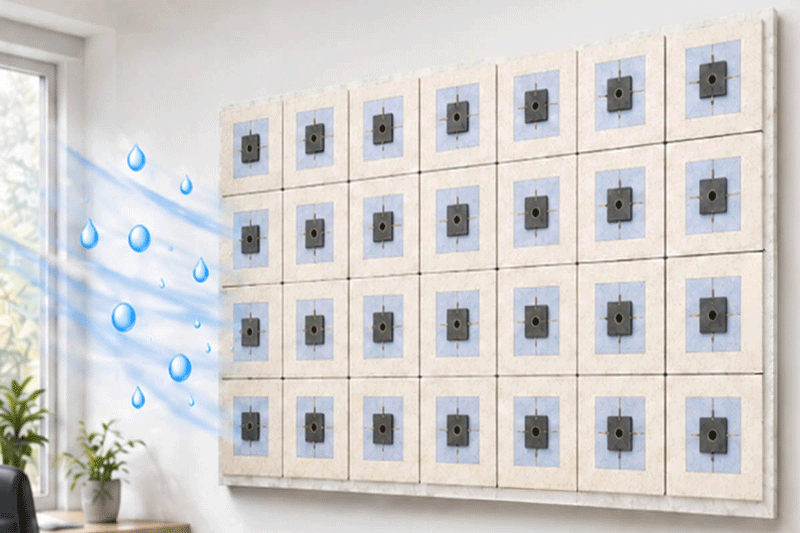
Researchers at Binghamton University, USA, say the current power output is suited to low-energy devices such as environmental sensors, wireless modules and other smart-building electronics.
The arrangement of glycerol, polyvinylpyrrolidone (PVP) and wax controls how moisture moves through the material, helping to maintain the ion-concentration gradient needed to generate a voltage.
The material uses glycerol around its edges to absorb water from the air, while a raised PVP structure at the centre controls moisture release and evaporation. A patterned wax layer then helps direct water from the absorption region towards the evaporation region. This uneven spread of moisture causes ions to move through the material, creating a charge imbalance that produces a voltage.
The design aims to overcome some of the problems that arise when conventional moist-electric generators are scaled up, including inefficient use of space and difficulty maintaining directional moisture transport over large areas.
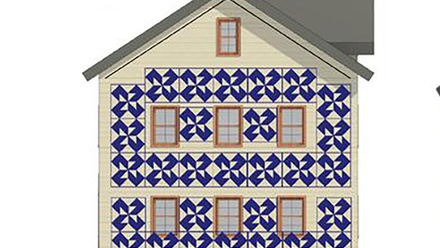
The researchers have incorporated arrays of the generators into wallpaper, with the electrical connections placed on the reverse side. They are aiming to make the whole structure printable for larger-scale manufacturing.
More like this...