The merits of a closed-loop culture
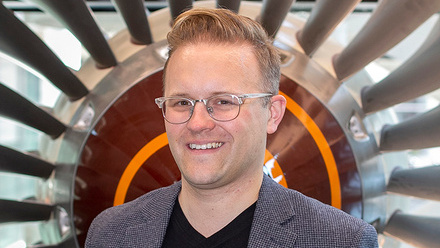
Animesh Anand MIMMM reflects on how inclusivity drives grassroots innovation.

Animesh Anand MIMMM, member of the IOM3 Pride Group
© Animesh AnandAs materials scientists and engineers, the principles of the circular economy are wired into our DNA and we know that a linear take-make-waste model is a fast track to systemic failure.
Yet, when we look at the human systems running our labs, workshops and foundries, we regularly tolerate a glaringly linear thermodynamic leak:
Recruitment (take) + technical upskilling (make) → attrition (waste)
We pour immense energy into the first two stages, only to watch diverse talent, particularly from LGBTQ+ and underrepresented backgrounds, quietly exit the sector down the line.
If we want to build a resilient future, we must stop treating diversity like a finite and single-use resource. We need to engineer a closed-loop culture.
Engineering has a retention problem, disguised as an attraction problem. We celebrate statistics that show diverse cohorts entering technical apprenticeships and university courses, but we rarely examine the structural mechanics of the workplaces they inherit.
When a young LGBTQ+ engineer steps into an environment where senior leadership is entirely homogeneous, a cultural mismatch occurs. It is the human equivalent of trying to weld two incompatible alloys without the proper filler material. The interface is brittle, internal residual stresses run high and the joint is highly prone to sudden failure under load.
Without visible representation at senior levels, early-career queer talent views the industry as a temporary rental space rather than a permanent career home. Constantly calculating the personal energy required to navigate such environments, many choose to export their problem-solving skills to sectors that feel more structurally accommodating.
To understand how diverse staff sustain further diversity, look to the science of solidification. In a pure molten liquid, forming a solid crystal structure from scratch requires massive supercooling because the activation energy barrier is incredibly high. This is homogeneous nucleation. However, introduce a seed crystal – a solid surface matching the incoming atoms – and you trigger heterogeneous nucleation. The activation energy plummets and the new structure stabilises rapidly.
Visible LGBTQ+ leadership acts exactly like those nucleation sites. It lowers the psychological activation energy required from a queer student or apprentice to envisage their own progression.
This goes far beyond passive visibility – it drives genuine grassroots innovation. A visible queer leader implicitly alters the workplace chemistry. They eliminate the invisible cognitive load that junior engineers waste on ‘masking’, or deciding whether it is safe to mention their partner during a shift handover. Liberated from policing their own identity, the individual’s mental bandwidth redirects exactly where it belongs – into creative, lateral, engineering design.
But there is another cognitive load to consider. Queer and minority staff are routinely expected to shoulder the unpaid and unrecognised labour of diversifying their organisations. They are the ones asked to review the company pronoun policies, sit on every interview panel to tick a diversity box, or organise the site’s Pride month initiatives, all while trying to maintain their core technical outputs. This creates intense localised stress.
When a mechanical component faces cyclic loading well below its ultimate tensile strength, it does not fail on day one. Instead, microscopic dislocations accumulate at structural stress points, eventually coalescing into a fatigue crack that propagates until catastrophic failure occurs. In the workforce, this cyclic loading is the ‘minority tax’.
Total systemic stress = core responsibilities + minority tax (tokenism + unrewarded EDI labour)
Without structural dampening or dedicated recovery phases, these high-performing individuals face severe burnout. When they break under the strain and leave the industry, the closed loop ruptures. The incoming generation loses its seed crystals, the system reverts to an unstable state and the cycle of attrition begins anew.
Closing the loop requires moving past cosmetic corporate fixes and re-engineering internal process controls. We must formalise contribution to institutional culture, mentorship and EDI leadership within promotion criteria.
Progression paths need to be transparent and objective, removing the informal ‘hidden handshakes’ that historically favour majoritarian networks. Finally, organisations must champion active sponsorship, ensuring senior leaders intentionally leverage their professional capital to advocate for queer and minority engineers behind closed doors.
A truly circular economy designs the system so that degradation never happens in the first place. By protecting and advancing our LGBTQ+ and minority leaders, we stop the talent leak, prevent material fatigue and make grassroots innovation an inherent property of our engineering systems.