Guidance published on the UK Carbon Border Adjustment Mechanism
The illustrative rates and worked examples are intended to support businesses affected by the mechanism (CBAM).
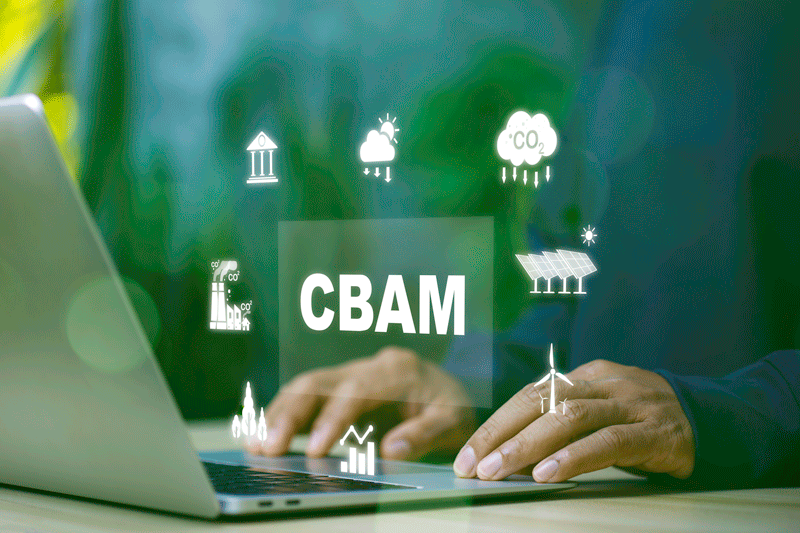
The preliminary rates and the worked examples aim to explain how rates are determined and indicate future liabilities.
With the official rates set to be introduced before the end of the year, the illustrative CBAM rates are based on existing legislation and preliminary data.
The rates give an initial indication of potential CBAM costs, while the default emissions value provides a government-defined default for emissions of imported CBAM goods.
A markup on those default values helps balance CBAM’s objectives and facilitates a transition to actual emissions reporting.
‘The government’s guiding principle in setting default values is to ensure that there is no advantage to liable persons in using default values rather than determining the actual embodied emissions of imported CBAM goods, as set out in Schedule 17, Part 4 of the Finance Act 2026’, reads the Treasury Statement.
The sectors covered are aluminium, cement, fertiliser, hydrogen, and iron and steel.
The guidance and examples are now available.
More like this...