Straw houses could help UK meet housing targets while cutting emissions
University of Bath researchers say the biggest barriers to greener construction are not material scarcity but systems and policy.
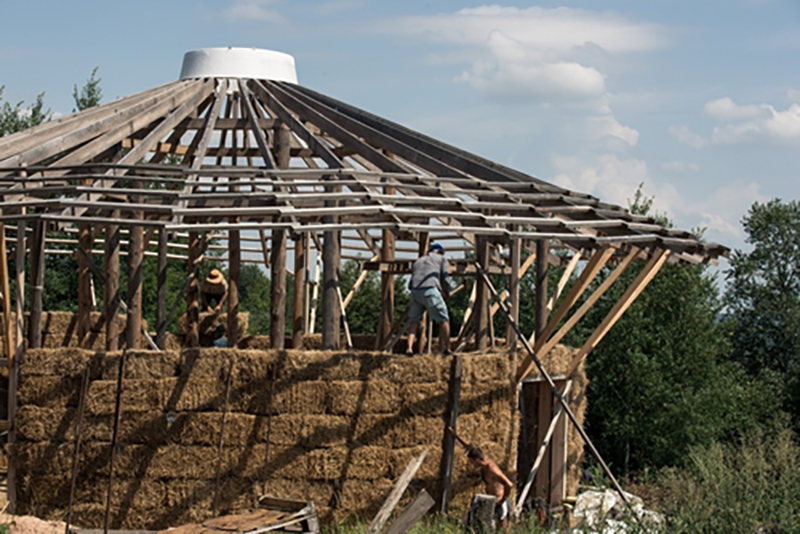
Their study says the government could meet its housing targets of up to 300,000 new homes each year, swapping high-carbon building materials for straw without running out of supply.
The country produces ~9.9mln tonnes of straw every year, far more than needed as a construction material to meet the government’s housebuilding targets.
Agricultural straw is a co-product of cereal farming and could replace high-emission materials such as concrete and steel, while storing carbon in buildings. Using straw in construction could also diversify farmers’ revenue streams by turning an underutilised byproduct into a higher‑value building material.
The team reports that the key barrier to adopting straw houses is not the availability of the raw material, but the need for stronger supply chains, clearer regulation, and greater acceptance in the construction industry.
Charlotte Taylor, a researcher in the Department of Architecture and Civil Engineering and the study’s lead author, says, 'Straw is an incredibly common resource here in the UK. It’s used as livestock bedding and feed or ploughed back into fields to improve the soil. It’s also used for energy generation, horticulture, and even mushroom cultivation.
'However, despite being a renewable, low-carbon and historically important building material, very little straw is currently used in construction. In the UK, less than 20 new homes a year are built using it as a material.'
The study shows that scaling up straw construction could not only significantly cut emissions from building construction but could store between 1.8 and 3.1 million tonnes of carbon dioxide every year, locking this away for the lifespan of the buildings.