Risk reduction for lunar rovers
The European Space Agency (ESA) has contracted Venturi Space to investigate technologies in lunar exploration.
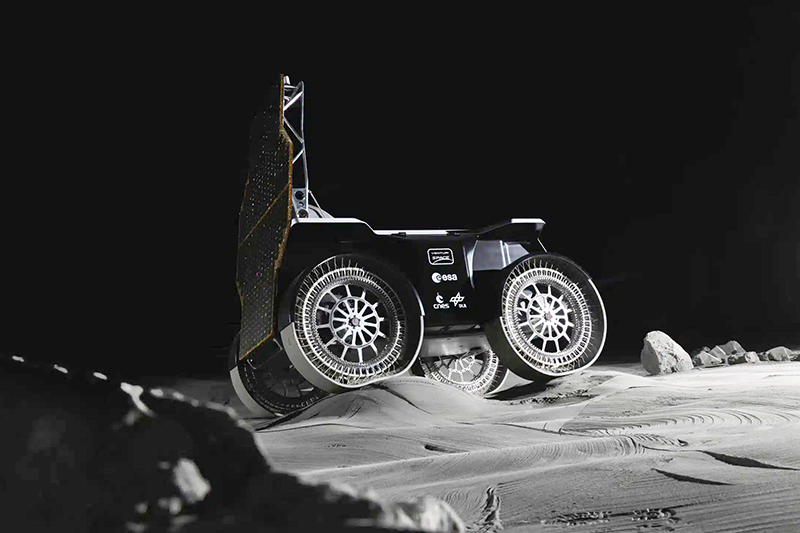
Venturi Space, which specialises in mobility solutions for space exploration, is looking into the key aspects of mobility capability, power supply systems and thermal regulation.
The study results will feed into the design and development of future lunar rovers.
The company’s aim is to consolidate acquired technical knowledge and translate it into requirements and specifications consistent with ESA’s lunar exploration roadmap, as well as demonstrate technologies’ through dedicated test campaigns.
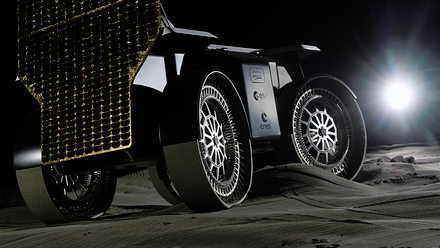
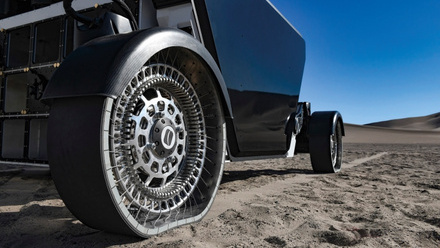
These campaigns will test hyper-deformable wheels, high-performance batteries, suspension system and the egress system that enables the rover to descend from the lander, using its MONA LUNA rover as the test platform.
The tests will take place within the LUNA building, jointly developed by ESA and the Deutsches Zentrum für Luft- und Raumfahrt. The facility provides an analogue environment representative of lunar conditions, dedicated to preparation for future European lunar missions.
However, the technologies being studied are designed to equip significantly heavier lunar rovers – up to several tonnes – in line with the needs of future logistics and crewed missions.
In particular, the suspension system and hyper-deformable wheels must enable rovers to operate with a high level of efficiency on the lunar surface, with its loose and uneven soils.
Rovers also have to withstand temperature variations of approximately 400°C and long lunar nights, so the electrical power supply and thermal management subsystems must undergo specific studies and validation testing.
As part of the contract, a representative model of the European Argonaut lander’s geometry will also be designed, assembled and tested by ESA to validate the mechanical interfaces and operational conditions associated with the rover deployment phase.
The egress phase is reportedly a critical step between the rover landing and beginning its surface operations.