European lunar rover completes first driving tests
The MONA LUNA rover was tested by the European Space Agency.

Tests of the MONA LUNA, which was unveiled at the Paris Air Show, demonstrated its adaptability to loose soil, slopes and obstacles.
The rover’s primary objectives are to explore the lunar surface and test critical technologies for sustainable lunar mobility.
The MONA LUNA weighs 750kg (extendable to 1,000kg), with four-wheel drive, a four-wheel steering system and passive damping suspension. These features allow it to climb and descend slopes of up to 33°.
Other tests include traction exceeding forecasts, easy crossing of large, rocky obstacles, satisfactory dynamic stability on slopes and good operational performance in onboard electronic systems.
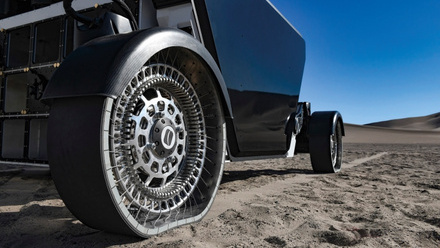
The rover’s hyper-deformable wheels also show good performance on both loose soil and rolling terrain, confirming results of tests carried out by NASA between 2022 and 2025.
It was designed, assembled and tested across three Venturi Space sites in Monaco, Switzerland and France.
In the first half of 2028, 150 engineers will continue work on the design and manufacturing of MONA LUNA at a new Venturi Space flagship facility in Toulouse, France, due to begin construction in spring 2026.
This will be in collaboration with the Swiss and Monegasque entities responsible for the hyper-deformable wheels, heating systems, cryogenic materials, lander egress system and high-performance batteries.