Protecting water in the mining rush
How can mining companies protect pressured water resources while increasing output?
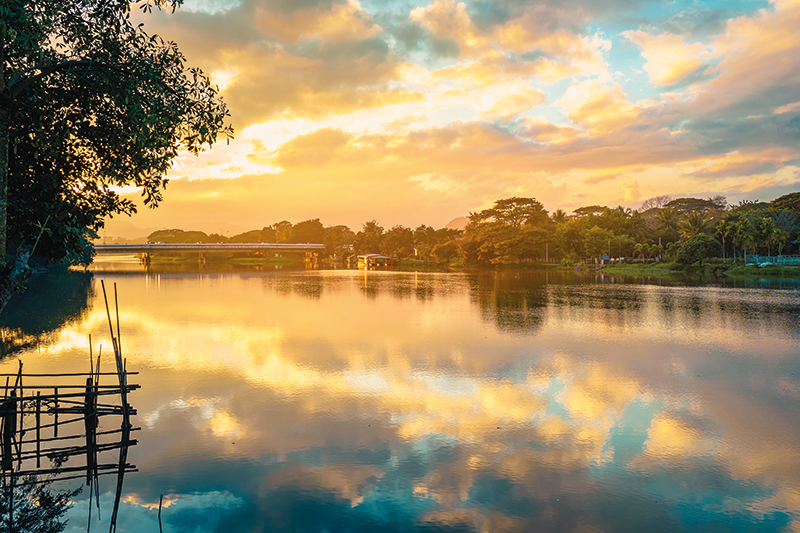
Kok River, Chiang Rai Province, Thailand. The Stimson Center reports how testing on two Mekong River tributaries in the Chiang Mai and Chiang Rai Provinces showed pollution from unregulated mines in Myanmar was damaging downstream livelihoods in Thailand
© KoBoZaa/ShutterstockAs demand for critical minerals increases, so too does scrutiny of the environmental and social conditions under which they are produced. Alongside questions of supply, processing capacity and investment, another issue is becoming increasingly important to the long-term viability of mining projects – water.
This was the focus of a recent online event hosted by the Stimson Center, USA, entitled ‘Protecting Water in the Mining Rush: Lessons from Africa and Southeast Asia’.
The non-profit organisation brought together speakers on water governance, environmental law, data analysis and responsible mining standards to explore how mining affects water availability and quality, and what more effective water stewardship might look like in regions under growing pressure.
The issue is not limited to one region or one type of mineral. From lithium production in southern Africa to river-based mining impacts in Southeast Asia, water is becoming a key factor in project resilience, community trust and regulatory risk.
Dr Susanne Schmeier, Professor of Water Cooperation, Law and Diplomacy at IHE Delft Institute for Water Education in the Netherlands, explained how mining affects water in two main ways. Firstly, how much water is needed, particularly in minerals processing. Secondly, in terms of quality, in that there is a risk of contamination. In the wider global context, this places pressure on water resources at local, national and transboundary levels, and those pressures are likely to intensify as countries race to secure mineral supplies.
'The world’s demand for critical minerals is accelerating rapidly, but so are the risks to water – from tailings dam collapses to toxic spills, from over-extraction in arid regions to chemical runoff into rivers,' reflected Lauren Risi, Senior Fellow and Director of the Environmental Security Programme at the Stimson Center, who moderated the panel discussion.
'Communities are paying a steep price. This isn’t just an environmental story for many of these communities – the water being put at risk is their source of drinking water. It’s critical to subsistence farming and livelihoods. It sits at the centre of daily life.' Therefore, water-related mining impacts can also become sources of friction between neighbouring states and communities.
'Many of the mining operations happen in places that are already water scarce,' Schmeier added, highlighting that water is not just an environmental compliance issue, but a factor that can shape where projects are located, how they are designed, and whether they can maintain a social licence to operate.
She warned of the added issue that 'there are very few effective governance frameworks available that would help us to address these impacts, to mitigate different interests, to address issues of competition over water, or to assign clear responsibility and liability to water quality damages.
This is the case from the very local level, where there might be no regulation available, or where there might be regulation that very much favours mining and industries over local needs.'
Zooming in on Zimbabwe
Obert Bore, Programmes Manager at the Zimbabwe Environmental Law Organisation, illustrated these pressures using examples from southern Africa, particularly Zimbabwe’s rapid growth as a lithium producer. According to Bore, the country’s expanding lithium sector is concentrated in regions four and five – the driest of its five regions.
The issue is made more complex by Zimbabwe’s policy emphasis on domestic value addition and beneficiation. Earlier this year, the government banned exports of raw lithium ore and concentrate. Companies are being encouraged to process material domestically. While that may bring economic benefits, where will the water required for processing come from?
Bore reported, 'To put this into context, [companies] indicate that they require at least in excess of 50,000L of water to process just one tonne of lithium. Which is massive, given that the areas where the extraction and processing are happening are already dry.
'There is now competition over water between companies who require the water for processing and communities that require water for their livelihoods, livestock and agricultural purposes,' said Bore.
He also cited cases in which mining-related effluent had reportedly affected local water supply and incurred fines. He noted that US$5,000 is the highest Zimbabwean level of fines, and asked, 'Is this enough to remedy the damage that has been done to the environment?'
This raised an important question – is it enough to have regulation if, in practice, the costs of non-compliance remain low? 'This is not only played out in Zimbabwe,' Bore added. 'When you look across the region, particularly in Zambia for instance, you’ll see similar cases...'
The accountability gap becomes clear. Schmeier highlighted that while frameworks, such as environmental impact assessments, international water law principles and OECD due diligence guidance are in place, the challenge lies in implementation.
'The interest of countries to follow these principles and to implement them is decreasing,' she said, stressing the need for greater cooperation and collective action.
Scott Sellwood, Civil Society Lead at the Initiative for Responsible Mining Assurance (IRMA), urged governments to mandate robust impact assessments and waste planning – 'and critically enforce those rules, including investigating breaches, and apply sanctions and penalties effectively'.
He added that policymakers and companies need to consider water availability much earlier in planning decisions, including where processing facilities are located. Site selection, process design and infrastructure choices all influence water outcomes, and should therefore be considered as part of the overall viability of a mining project.
Visible data
In contrast to southern Africa, where water resources are under pressure, Southeast Asia raises a different question.
Regan Kwan, Research Analyst for the Stimson Center Southeast Asia Programme, described how concern over unusual river conditions in the Kok River basin prompted a wider effort to track mining activity in Myanmar, Laos and across the Mekong region.
Following flooding caused by Typhoon Yagi in 2024, 'communities living along the river experienced what they called a different type of silt that they had never experienced before. It was a little tacky – something was strange about it', Kwan explained.
This led researchers to examine whether upstream mining activity could have contributed. Using satellite imagery and geospatial analysis, the Stimson team developed a dashboard to map mining expansion and its relationship with river systems.
Initially focused on rare-earth mining, the work expanded to include other forms of river-linked and under-regulated mining activity. 'These were all mining activities that weren’t being monitored by the countries or by the region,' added Kwan.
The team made the dataset freely available online, and the increased visibility appears to have had practical effects. It has resulted in further testing by scientists, governments and regional organisations, and has drawn wider attention from development partners. 'It let people see what was happening in the region,' said Kwan.
Additional water quality testing by the Mekong River Commission across parts of the Mekong Basin reported heavy metal levels above World Health Organization guidelines in some locations. 'It was widespread, much more widespread than we had initially imagined,' added Kwan.
Tools such as remote sensing, public data and local monitoring are making water issues harder to hide, while raising expectations around transparency. These tools may not solve the problem on their own, but they are increasing pressure for earlier disclosure, better baseline data and stronger oversight.
However, speakers cautioned against relying on data alone. Schmeier asserted, 'The challenge is that very often we don’t have enough data, and we keep on saying that we have to collect more data before we can do something. It’s important to keep in mind that a lack of data, which is a big issue, should not prevent us from taking action, [including] precautionary action.'
Shared resource
So, what does better practice look like at mine-site level? Sellwood offered his thoughts based on approaches used at IRMA – one of several international initiatives aimed at improving transparency and accountability in mining using independent and third-party audits.
Sellwood talked about managing risks as a single system – 'preventing contamination at source, then really ensuring that water use and management protect current and future water users'.
The framework centres on four key principles:
- Addressing water from the design phase – identifying all relevant water users, understanding local hydrology, testing contamination risks, and building a full picture of water demand and risk. Sellwood said, 'This has to happen at the beginning. It can’t happen after impacts occur.'
- Applying a mitigation hierarchy – avoiding and preventing risks where possible, containing any risks where necessary, and using remediation strategies only as a last resort. 'This really is trying to shift towards safer mine design,' said Kwan.
- Continuous monitoring and management – use of monitoring systems with defined thresholds, predictive tools and adaptive response plans. 'This applies to both water quantity and water quality,' said Kwan. 'For example, responding to changes in groundwater levels, surface flows or extraction rates before they result in harm.'
- Community participation – ensuring local communities have access to data, can engage with monitoring and have the resources to commission independent experts to analyse data that they can then use. 'That’s really recognising water as a shared resource,' said Kwan.
While Sellwood acknowledged that voluntary standards cannot replace effective government regulation and enforcement, he noted that they can help improve transparency, help fill regulatory gaps and provide a framework for going beyond minimum legal compliance. This in turn offers downstream buyers and investors greater transparency over how transition minerals are produced, and any environmental and social risks in the supply chain.
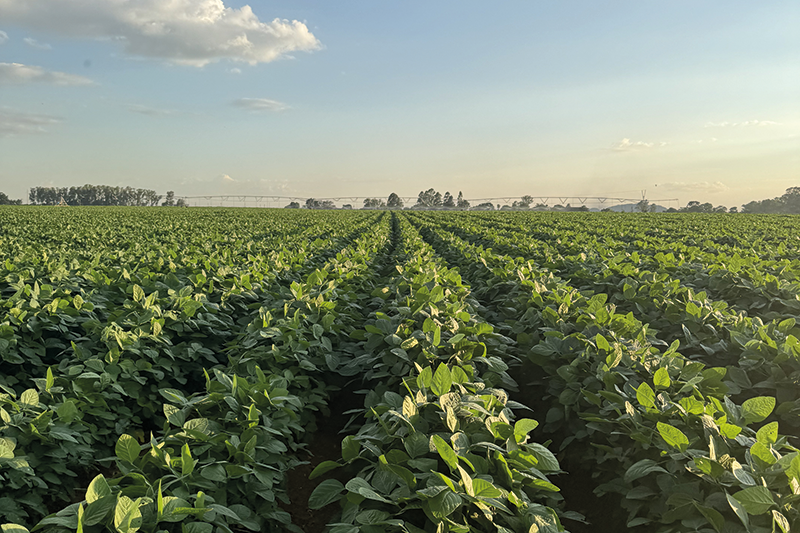
Farm in Zimbabwe. The Government of Zimbabwe’s recent ban on exports of raw lithium ore and concentrate aims to encourage domestic processing. This will increase competition for water in drier regions with sectors such as agriculture
© NomaKings/ShutterstockClosing the gaps
At the close of the discussion, panellists were asked which single gap, if addressed first, would have the greatest impact on protecting water in mining-affected communities.
Some pointed to greater transparency and disclosure. Sellwood flagged, 'We have sites that are already disclosing the sort of data that I think accountability activists inside and outside government can then really use. It’s technically possible – the sites are already doing it. We need the rest of the mining industry to be required to do that.'
However, enforcement emerged as the strongest point of consensus. 'You can have all the data you want, all the governance you want, but if it’s not being enforced, there’s no point in all this paperwork,' said Kwan.
Bore agreed, pointing to the widely accepted ‘polluter pays’ principle.
Schmeier highlighted governance more broadly, particularly the challenge of implementation. She noted other gaps such as technology, development and data, 'but there we can make progress, whereas on the governance side, things seem to be moving backwards'.
The discussion made clear that water management needs to sit much closer to the heart of how mining projects are planned, governed and assessed. For governments, that means ensuring mineral development plans reflect local water availability, especially in drier regions. For mining companies, it means factoring water into key decisions on where and how projects are developed. And for buyers and investors, it means looking beyond volumes to how materials are actually produced.
Mining will remain essential to the energy transition. But for projects to be resilient, efficient and built to last, water stewardship needs to be part of the picture from the start.
Study examines growing water footprint of material production
Researchers behind a study published in Nature Sustainability reveal that the global water footprint of material production doubled between 1995 and 2021, rising from 25.1bln m3 to 50.7bln m3 in 2021. East and South Asia and Oceania saw the steepest rise.
The paper on Doubling of the global freshwater footprint of material production over two decades assesses the ‘blue water footprint’ – the freshwater drawn from rivers and aquifers to produce 16 key metallic and non-metallic materials across 164 countries and regions.
Upgraded global water standard
The Alliance for Water Stewardship has released Version 3.0 of the International Water Stewardship Standard, 'giving companies a strengthened framework to manage growing water risks and disclosure demands'.
Version 3.0 builds on a decade of implementation and evidence, and has been produced through global consultation. Certification to the standard is carried out by independent third-party auditors.
The Alliance for Water Stewardship reports that certified sites highlight improved relationships with local communities and authorities, increased investor confidence, enhanced brand reputation, better water quality and balance, groundwater recharge, new habitats, and lower costs through reduced water use and greater efficiency.
'Water is now a board-level risk as water-related shocks are already disrupting supply chains and undermining business continuity,' comments Adrian Sym, Chief Executive Officer of the Alliance for Water Stewardship. At the same time, they find regulators and standard setters are tightening expectations around environmental claims and water reporting.
The EU Corporate Sustainability Reporting Directive and related European Sustainability Reporting Standards (ESRS), including ESRS E3 Water, as well as evolving rules in the UK and other jurisdictions, require companies to demonstrate robust management of environmental impacts and dependencies.