Cellulose antimicrobial coating trialled on hospital surfaces
A antimicrobial coating made from agricultural waste is being tested n Brisbane, Australia.
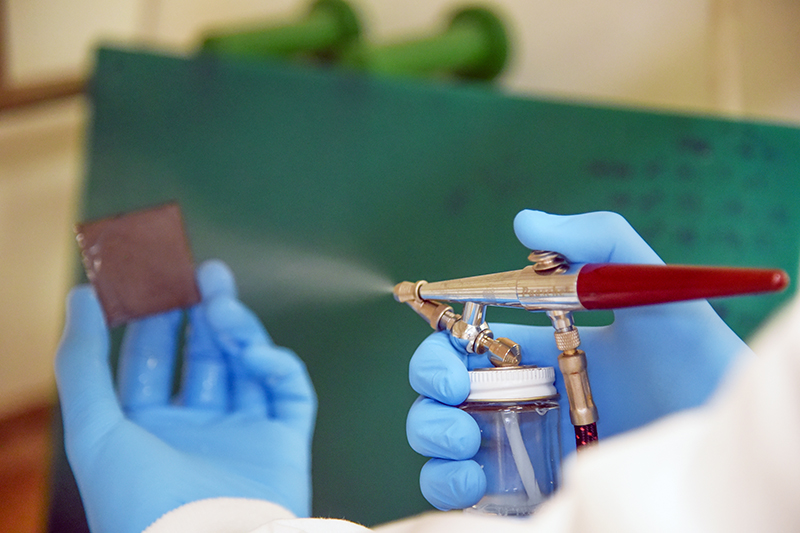
The NanoAM coating spray is designed to provide longer-lasting antimicrobial protection between routine hospital cleans
© The University of QueenslandResearchers at the University of Queensland (UQ) have developed the coating, called NanoAM, which is now the subject of a two-year trial at the Intensive Care Unit of the Future at The Prince Charles Hospital.
Healthcare-associated infections are a significant burden on Australia’s health system. According to UQ, they account for 38% of hospital-acquired complications, contribute to around 7,000 deaths each year and cost the health system an estimated AUS$1bln annually.
Associate Professor Nasim Amiralian at the university explains that current chlorine- and bleach-based approaches can be ‘damaging surfaces, fuelling antimicrobial resistance [and] releasing toxic materials’, while generating chemical and hazardous healthcare waste. NanoAM is designed to kill microorganisms and make it harder for them to stick to and build up on surfaces.
Cellulose is extracted from underutilised biomass waste, including sugarcane, banana and hemp, and engineered into cellulose fibres. The researchers can then fine-tune its structure, surface chemistry and functionality at the nano and microscale.
The technology uses several antimicrobial mechanisms, depending on the formulation. Reactive aldehyde groups on the cellulose fibres interact with microbial cell components, particularly proteins, contributing to microbial inactivation.
Additionally, metal nanoparticles anchored to the cellulose fibres generate reactive oxygen species that cause oxidative damage to microbial cell membranes and other essential cellular components. Small molecules with antimicrobial properties are also chemically attached to cellulose fibres, providing antimicrobial activity at the coating surface.
‘By introducing antimicrobial functionality, we transform what would otherwise be agricultural waste into high-value materials capable of combating microorganisms,’ says Amiralian. ‘Our technology can be adapted for different uses, including contact-active surfaces and controlled antimicrobial release.’ She adds that another aim is to minimise reliance on conventional biocides and their uncontrolled release into the environment.
‘We engineer antimicrobial and antifouling properties to work simultaneously,’ Amiralian explains. ‘First, it discourages bacteria from attaching to the surface in the first place. Second, when microorganisms are inactivated through contact with the antimicrobial components, the low-adhesion surface helps prevent dead cells and microbial debris from remaining attached and accumulating.’
In laboratory-developed formulations, the materials have shown activity against bacteria including Staphylococcus aureus, MRSA, Escherichia coli and antibiotic-resistant Klebsiella pneumoniae, as well as influenza A/H1N1 virus.
In one study, a cellulose-based formulation completely inactivated several bacterial species within 30 minutes and reduced influenza A/H1N1 by around 99% within 15 minutes under laboratory conditions.
However, Amiralian stresses that performance depends on the formulation and testing conditions. ‘This is one of the key questions we are investigating,’ she says. ‘We have demonstrated antimicrobial efficacy under controlled laboratory conditions, but we need to establish how long the coating remains effective in a real hospital environment.’
In the live trial, UQ researchers are comparing microbial contamination on coated and uncoated surfaces, while also testing how the coating stands up to repeated cleaning, disinfectants, contact and general wear.
‘NanoAM is designed to complement existing infection-control practices by providing an additional layer of antimicrobial protection between routine cleans,’ Amiralian says. ‘We are working closely with our healthcare partners to evaluate its long-term performance and durability under real-world hospital conditions. Ultimately, we hope this technology will help reduce infection risks while potentially reducing reliance on chemical disinfectants.’
More like this...