Bacteria-resistant coating for catheters
A clinical trial reports that the technology reduces catheter-associated urinary-tract infections (CAUTIs) by a third.
CAUTIs account for around 75% of all urinary tract infections (UTIs) picked up in hospitals.
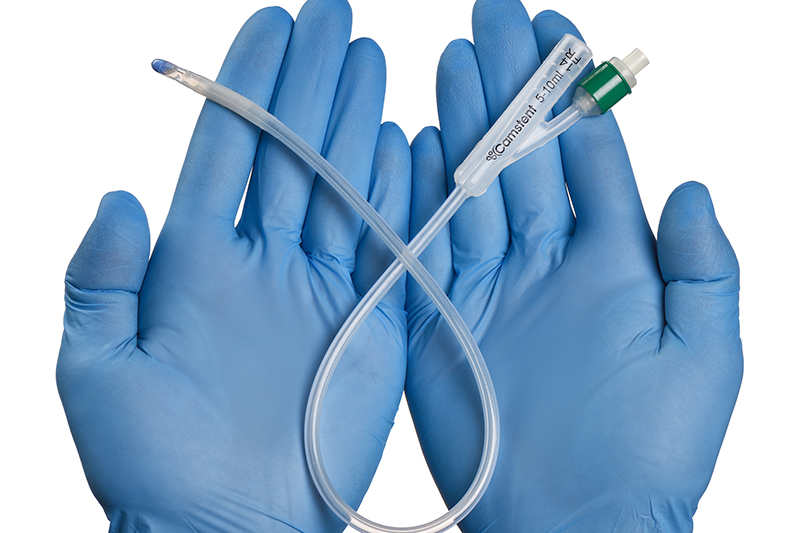
Scientists at the University of Nottingham, UK, have developed a bacteria-resistant polymer coating that has been commercialised for urinary catheters by Camstent, a privately-funded Cambridge-based business.
High-throughput screening was used to identify these polymers, which act as a repellent to stop bacteria like E. coli and S. aureus from forming protective biofilms on the surface, at the earliest possible stage.
In the clinical trial, the bacteria-resistant polymer coating was applied to the Camstent Coated Catheters and the results compared with a control group – patients who received a standard uncoated catheter. During hospitalisation, around 10-25% of patients typically receive this standard model and around 20% reportedly develop CAUTIs.
The trial results reveal that bacteria-resistant polymer coating reduces CAUTIs by a third and the need for antibiotics was cut by more than 50% when compared to those receiving standard care.
The researchers also report benefits for long-term catheterised patients, who, they say, show no symptomatic CAUTIs, compared to 20% in the standard care group.
For more like this...