Wool rope makes waves in seaweed farming
The advance could overcome the issue with polyester ropes where repeated use leads to mechanical failures that release microplastics or result in loss of the ropes at sea.
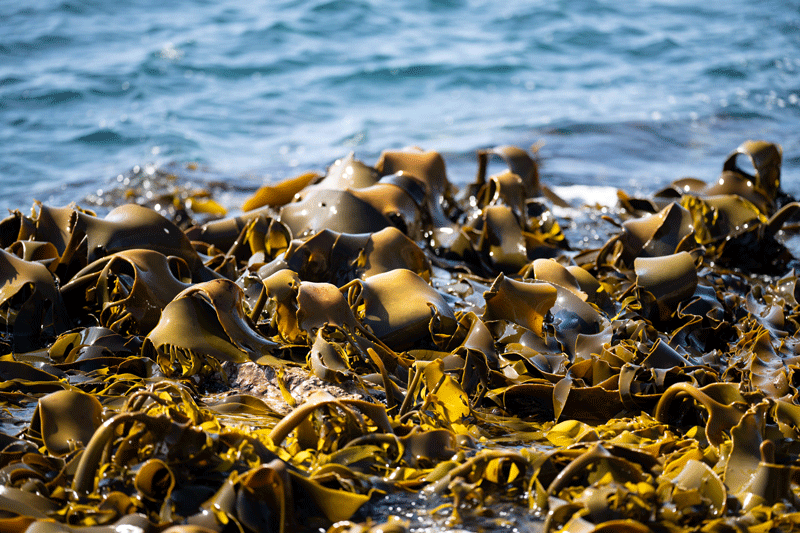
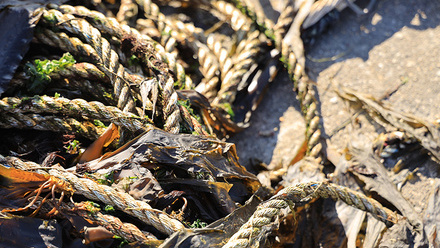
The ropes produced from 100% sheep’s wool are said to show promise for growing kelp – a large, fast-growing, brown seaweed.
A team of researchers at Queen’s University Belfast, Northern Ireland, has been working on the project for the last two years, experimenting at the university’s seaweed farm in Strangford Lough.
At the end of the growing period, conventional plastic ropes are typically treated with detergents to remove any residual seaweed biomass, then reused. The detergents can potentially be harmful to marine environments, while repeated use of the ropes increases wear, leading to mechanical failures that release microplastics or result in loss of the ropes at sea.
In Norway, which is a key focus area for the researchers, an estimated 383t of plastic ropes are lost at sea every year, and the rest are typically incinerated or sent to landfill. While the scientists suggest the wool ropes and any residual biomass could be valorised into biochar or fertilisers.
Dr Pamela Walsh at the university says, 'The wool is sourced from Whiteface Dartmoor sheep in the UK, ensuring full traceability while supporting British farming.' The current designs are made from 100% pure wool with a central core for mechanical stability, surrounded by a series of intertwined woollen yarns.
'At the moment, we’re using commercially available options to test the concept, playing with the physical design of the ropes. However, we have looked at the lifecycle analysis of the wool production process and can see hotspots in terms of environmental impacts, which we are keen to address.'
Walsh explains how seaweed can be grown on the substrates by seeding it directly onto the ropes, or growing it onto shorter twine first and then wrapping it around the longlines.
The team is testing how the rope performs by either growing directly on a wool longline, pairing plastic twine with wool longlines, or using woollen twine with plastic longlines. 'This season, we’re hoping to try woollen twine on woollen ropes,' Walsh shares.
'As this work progresses, we are looking at other natural materials and sources of wool. Different sheep breeds produce wool with different staple lengths and mechanical properties. We are keen to understand how these differences influence rope performance, and which design provides the best substrate for seaweed farming.'
The team has recently moved into commercial trials in collaboration with The Provenance Company, UK, on farms run by Arctic Seaweed in Norway.
'We are confident that plastic-free solutions for seaweed farming can work at scale,' says Walsh. This has been demonstrated through industrial trials that cultivated three different species of seaweed – Ulva, Saccharina latissimi and Alaria esculenta – on 100%-wool longlines.
Arctic Seaweed’s CEO and Founder Kim Kristensen comments, 'From the very first deployment of seeded lines 10 years ago, we have been looking for alternative solutions to polyester-fibre rope.'
While plastic ropes are stronger, the longlines can lose up to 50% of their mechanical strength in marine environments. The commercial trials using wool saw mechanical failures at some points along the ropes, but they largely remained intact, and can reportedly support similar yields to plastic ropes.
The team is looking to improve the yield further by improving substrate design and attachment, as well as building in flexibility, given that kelp farms are not standardised in their format.
Waterproofing options are also being investigated. 'We want the ropes to support the mechanical loading of the kelp for the full growth season, but also be biodegradable at the end of the season,' expands Walsh.
The team believes this could create new markets, reduce waste and support long-term sustainability for both land- and sea-based farmers.
Potential applications could extend to shellfish farming, fishing, lobster pots and coastal restoration work.
More like this...