Smart contact lens has eyes on sensing blood oxygen levels
The design uses polymer composite nanowires and gold nanoparticles for non-invasive monitoring of blood oxygen saturation in eyelid capillaries.
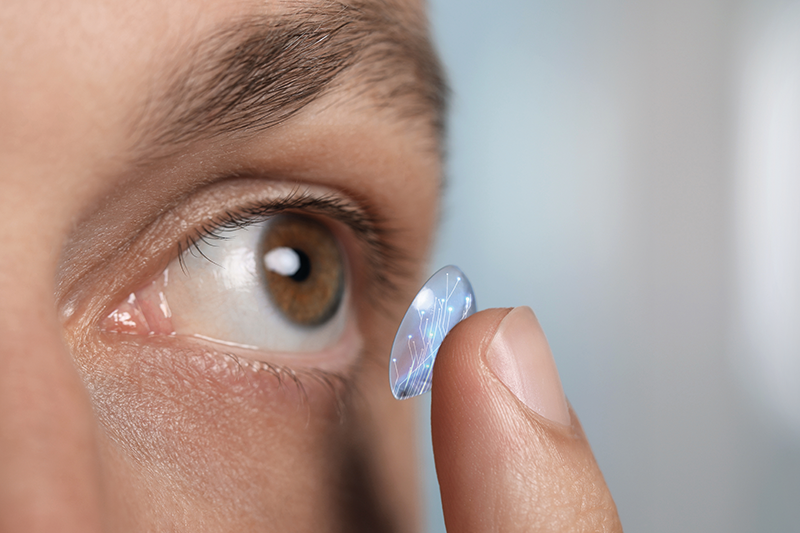
A smart contact lens could offer a non-invasive method for blood oxygen monitoring
© New Africa/ShutterstockResearchers at Tianjin University and Nankai University, China, have developed the ocular device to detect vision-threatening and systemic diseases.
Existing wearable oxygen sensors are not suitable for ocular use. Therefore, ocular oxygen saturation measurements currently rely on bulky equipment.
The paper on A smart contact lens with plasmonic nanoconfinement nanowire array for non-invasive ocular blood oxygen saturation monitoring describes flexible and transparent lenses that incorporate plasmonic nanoconfinement (PNC) nanowire photodetectors. They comprise highly aligned and ordered PEDOT:PSS nanowires with embedded gold nanoparticles.
Published in npj Flexible Electronics, the study shows how the PNC nanowire photodetector serves as the core oxygen saturation sensor. It is sandwiched between two thin polydimethylsiloxane (PDMS) films and integrated onto the inner surface of the contact lens.
The paper reads, 'To overcome the interfacial charge-transport limitations of conventional organic optoelectronic sensors, an advanced organic photodetector architecture is proposed, incorporating a PNC nanowire array to enhance device performance.'
The array acts as an anode interfacial modification layer. The PEDOT:PSS nanowires provide a 'structurally confined nanoscale framework that guides the spatial distribution of gold nanoparticles, reduces random aggregation and facilitates interfacial charge transport'.
While the localised surface plasmon resonance of the embedded gold nanoparticles is said to increase light absorption within specific wavelength ranges. This combined effect lowers the hole-extraction barrier, suppresses interfacial recombination and enhances photoconversion efficiency.
To build the PNC nanowire array, a pre-cleaned polyethylene naphthalate (PEN)-indium tin oxide (ITO) substrate is treated with UV light for 15 minutes, then with oxygen plasma for 10 minutes. Hot-embossing forms nanogroove soft templates out of PDMS.
Nanoimprint lithography is then used to create nanowires on the PEN-ITO substrate, by blending PEDOT:PSS with gold nanoparticle solutions at a volume ratio of 1:5 and agitating this ink at room temperature for one hour, before dropping it into the PDMS template and letting Laplace pressure spread the ink into the channels.
The photodetector architecture is developed by spin coating a PEDOT:PSS-based interfacial layer, a polymer-fullerene blend photoactive layer, and a perylene diimide electron transport layer over the device region.
Finally, aluminium top electrodes are patterned using a shadow mask during thermal evaporation, leaving an effective device area of ~3mm².
A compact back-end circuit that uses wavelet-threshold denoising enables integration into a smart contact lens.
The wearable monitoring system consists of a contact lens, LEDs, the flexible PNC nanowire photodetector and some external circuitry.
The researchers have identified 20nm as the optimal size of gold nanoparticles for strong near-field enhancement, minimising radiative damping and sufficient scattering cross-section.
These factors are said to improve responsivity and wavelength selectivity at 630nm and 850nm, which are reported as critical for resolving the differential absorption of oxyhaemoglobin and haemoglobin.
Finger-based validation tests are said to show a 99% agreement with commercial pulse oximeters, and demonstrate how the PNC nanowire architecture improves sensing and accuracy by ~35% compared to devices without nanowires.
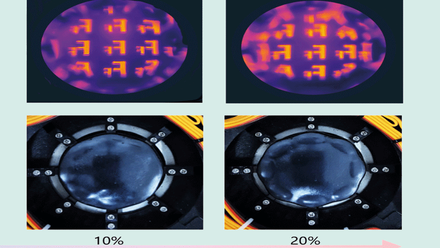
In vivo experiments with animal models demonstrate the device’s feasibility, showing that the lenses can acquire stable oxygen saturation signals over a five-minute period and under different oxygen concentrations.
Visual examination reportedly reveals good ocular tolerance, with no obvious redness, irritation, inflammation, corneal opacity, or visible corneal or conjunctival damage.
The researchers explain that awake tests are now required to evaluate long-term operational robustness, and how physiological and mechanical factors affect signal stability, such as blinking, eye movement, tear-film fluctuation and lens displacement.
Finally, the current validation covers ~84-100% oxygen saturation. This includes normal and moderately reduced conditions, but not the clinically critical and severe hypoxemia range near 70%, which wasn’t induced in the experiments due to animal safety and ethical considerations. Broader-range calibration and validation will be required before clinical application.