Self-foaming conductive elastomer enables soft sensors
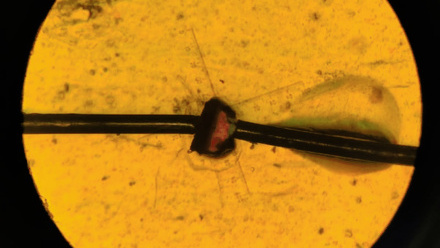
Researchers in China have synthesised an ultralight, biomass-based, conductive elastomer using lipoic-acid chemistry.
The reusable elastomer reportedly self-foams at room temperature under 2MPa CO2, heals within five hours and can be recycled five times without its properties being diminished.
It was developed by a joint research team from Zhejiang University of Technology, the University of Science and Technology of China, and Xi’an Jiaotong University.
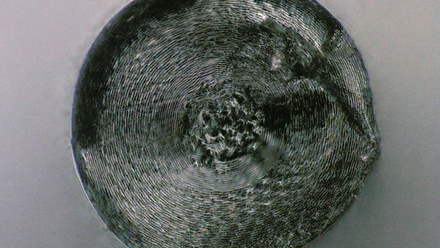
This ‘micro-spring’ lattice reportedly delivers a gauge factor of 4.8 under 1% strain, rebounds by 93% after 200% stretch and can track actions such as handwriting, heartbeats and ball drops in real time.
Many conventional soft sensors that can survive 500% stretch still rely on petroleum-based rubbers and energy-intensive foaming.
On top of its micro-spring sensitivity and scaleable self-foaming mechanism, the elastomer offers self-healing, closed-loop recycling at room temperature and dynamic cross-linking.
Adjustments in CO2 pressure and nano-filler loading can tune the pore size between 20 and 200µm, and density to as low as 0.18gcm-3.
The tuned elastomer can also detect <1% micro-strain, 50µN contact force, 0.3s rapid deformation and 5°C temperature steps.
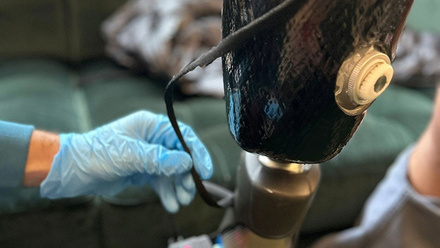
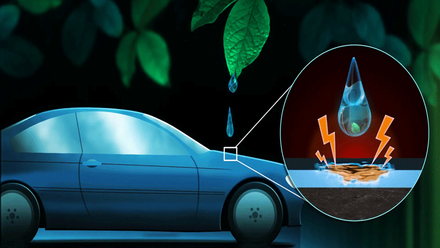
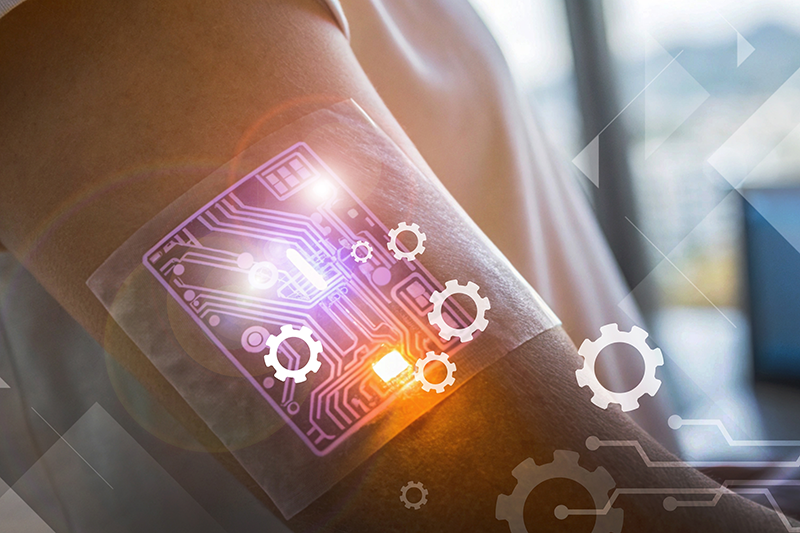
Potential applications for this sensing foam include wearable health patches, soft-robot skin and circular manufacturing, contributing to more effective and sustainable soft electronics.