Soft bioelectronic fibre senses multi-channel applications
The hair-thin, implantable fibre could offer a minimally invasive alternative to needle-like probes or stiff wires.
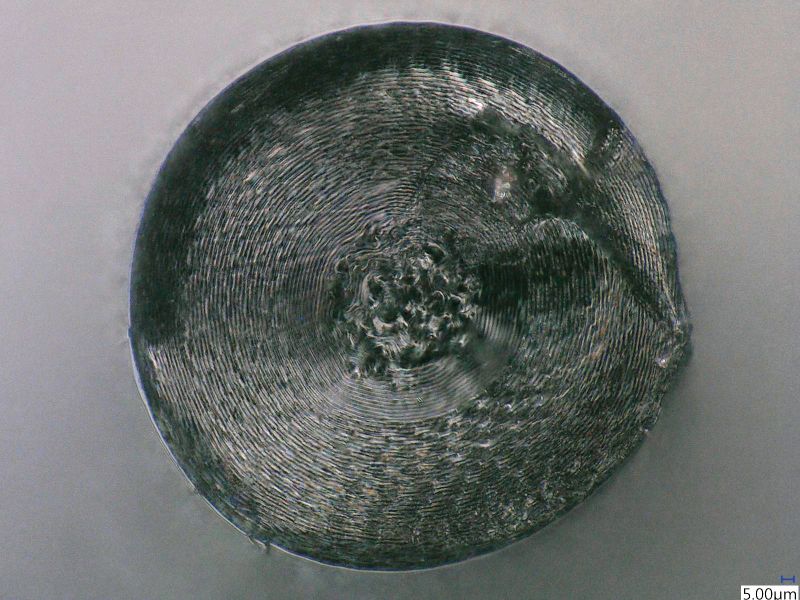
‘NeuroString’, developed as part of the Stanford University Wearable Electronics (eWear) Initiative in the US, is billed as a soft bioelectronic fibre made from skin-like material that can host hundreds to thousands of electronic ‘channels’.
It is said to have the potential to sense chemicals, deliver drugs, stimulate muscles or nerves, and monitor bodily activity.
The innovation could also further developments in smart fabrics, wearable devices and soft robotics, according to its developers, led by Project Director and Professor Zhenan Bao.
'The NeuroString circuitry is built using conventional microfabrication (lithography) techniques for the precise integration of sensing components on soft, elastic, thin films/sheets,' adds Muhammad Khatib, a Postdoctoral Fellow in Bao’s team.
'By embedding these materials into a stretchy, soft matrix, we create circuits that are both functional and soft.'
This builds on research by Bao and the team on an e-skin made from a tri-layer dielectric structure, of which one of the layers is nitrile – the same rubber used in surgical gloves.
Xiang Qian, eWear Initiative’s Co-Director, explains that the biocompatible and high-density electronic fibre device advances clinical research because 'it can stay inside the body for months at a time or longer'.
The fact that it is so small – just a quarter of a millimetre in diameter or about the width of a human hair – also means 'it can be implanted without discomfort or harm to the patient'.
The team has also developed a roll-up fabrication technique for the transparent skin-like material that contains 20 electronic channels rolled tightly into a 1D spindle. Each channel comprises an electrical connecting wire that is spiralled inside the string like a Swiss roll with the corresponding sensors exposed on the surface.
'We are rolling films that are only a few micrometres in thickness – a highly challenging task given the inherent fragility of these materials,' explains Khatib, who says the layers are rolled meticulously to optimise packing and to prevent damage to the films and their embedded electronic components.
Stanford Paediatric Surgeon James Dunn has monitored the NeuroString’s performance in the harsh environment of a pig’s gut for a week to inform his research on a new intestinal tissue to treat short gut syndrome – a congenital disease in which children are born with short intestinal tracts.
The eWear Initiative has also recorded NeuroString’s performance in a mouse brain for a longer period of four months. Khatib explains it is the film’s transformation into a hair-thin fibre that allows the researchers to embed the circuity either inside the body or position it on the surface so it interacts directly with biological tissues.
This could enable future applications in brain-computer interfaces, neuromodulation, real-time post-operative monitoring and next-generation interventional tools like guidewires and catheters.
The proof-of-concept study in an animal model has enabled Dunn to track how the new intestine tissue absorbs nutrients and secrets biochemicals like serotonin.
Having demonstrated NeuroString’s short-term functionality, Khatib says the next step involves a rigorous study to ensure the device remains fully functional and can survive the harsh in-body environment for years.
'Crucially, we must also perform in-depth, long-term analysis of device toxicity and assess the physical impact of the device on surrounding biological tissues following years of implantation,' he adds.
One of the directions the team is exploring is NeuroString’s use in lab-grown organs and organoids. Khatib explains such a capability would give researchers a deeper understanding of tissue development, provide sophisticated control over organ function and allow for real-time performance monitoring.