Purple, the new white for keeping cool in heatwaves
A lightweight, purple fabric reportedly stays up to 6.2°C cooler than conventional purple cotton when exposed to direct sunlight.
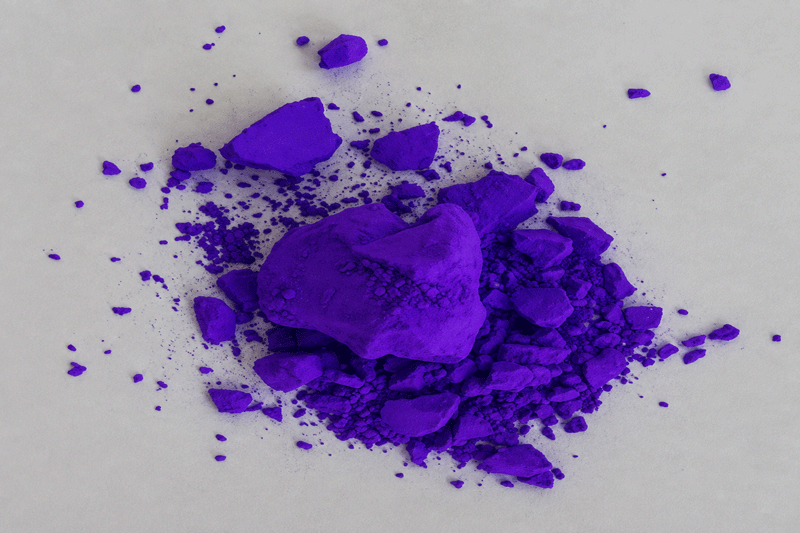
It is made using thermoplastic polyurethane (TPU) fibres that contain a purple material comprising ZIF-67 – a cobalt-based metal-organic framework (MOF) – and zinc oxide (ZnO) nanoparticles.
The fabric is said to overcome a technical challenge associated with dark colours, namely greater absorption of the sun’s energy.
The colour purple presents a particular challenge as it is produced by absorbing green light – one of the strongest parts of the solar spectrum – explain researchers at Zhengzhou University, China, who led the study, supported by a team at Adelaide University, Australia. In other words, purple directly conflicts with the principles of passive radiative cooling, a critical requirement for effective personal thermal regulation.
In their paper on An electrospun purple fabric for personal thermal management, the researchers explain how they overcame this by fabricating the TPU/ZnO/MOF (TZM) nanofibrous fabrics through a 'one-step electrospinning strategy, employing MOFs as spectrally selective colourants.
'The MOF provides dense, mid-infrared, vibrational absorption from its imidazole and Co-N framework, achieving a mid-infrared emissivity of 96.4%, while synergistic scattering with ZnO nanoparticles delivers an average solar reflectance of 87.6% (90.1% in visible light and 90.7% in the near-infrared range).'
In outdoor tests under direct sunlight, the fabric was found to be 4.2°C cooler than commercial white cotton and 6.2°C cooler than commercially dyed purple cotton.
Further testing reveals that simulated skin covered with the fabric stays up to 8°C cooler than uncovered simulated skin during the day. This compares with a 4.6°C maximum reduction for white cotton and just 2.8°C for conventional purple cotton.
Unlike many experimental cooling materials, the new fabric is also said to be lightweight and flexible, can withstand significant stretching, and allows water vapour – including perspiration – to pass through.
The material’s high water repellence and strong UV resistance are further benefits, the scientists claim. They have discovered the fabric retains its cooling performance after 50 wash cycles and its optical performance after high-intensity, UV age testing equivalent to about 108 days outdoors.
'For outdoor workers, athletes and anyone exposed to hot weather, staying cool is not just about comfort,' says PhD Student Yangzhe Hou from Adelaide University.
'We are interested in developing fabrics that can help manage body temperature without consuming additional energy.'
He believes the research could ultimately pave the way for cooling clothing in a much wider range of colours.
'The long-term opportunity is to move beyond the idea that cooling fabrics have to be white. There is enormous potential
to combine colour, comfort and cooling performance in the next generation of textiles.'