Bolstering the resilience of lithium and nickel supply
An OECD report finds traceability can enhance the integrity of mineral supply chain diligence.

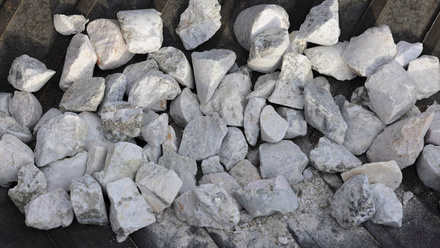
Nickel sulphide ore
© BJP7images/ShutterstockThe report, Enhancing Resilience Through Traceability, assesses uptake, drivers and limitations of traceability in critical mineral supply chains, focusing on lithium in Argentina and Chile, and nickel in Indonesia and the Philippines.
With increasing global demand intensifying pressure on supply chains, the report highlights an acute market concentration of processing, smelting and refining
It also says investment lags behind demand, and operational and governance risks persist, undermining reliable supply and resilience.
Traceability has emerged as a tool for policymakers and industry to enhance mineral supply chain resilience, although current traceability systems are said to be fragmented.
The report is informed by a survey of 90 leading companies across critical minerals value chains, conducted by the OECD and International Energy Agency, and complemented by stakeholder interviews and site visits.
According to the OECD, initiatives to improve economic security will require supply chain transparency to be fully implementable and reliable, forming the core of traceability systems.
This includes verified information on origin and production conditions to inform price floors and similar trade-related measures, as well as to direct support toward trusted and responsible producers.
Stockpiling programmes also require provenance, grade and ownership data for acquired commodities, while preferential procurement initiatives require chain-of-custody data to exclude entities of concern.
The report lays out a series of policy recommendations:
- In the near term, leveraging what is already in place – trade data and supplier mapping can help monitor processing dependencies; audit programmes can strengthen country-of-origin disclosure; and bilateral mineral agreements and financing can embed transparency and traceability standards.
- In the medium term, governments should work to close data gaps via engagement with midstream actors; strengthen beneficial ownership transparency; and introduce independent mineral testing and recycled content tracking.
- In the long term, focus should move to measures that require international cooperation, such as interoperable, cross-border platforms for secure traceability data and expanded digital product passports aligned with international standards.
The full report and findings, exploring uptake and barriers to critical minerals traceability, can be found on the OECD website.