Doing the groundwork
Reliability, lifecycle thinking and engineering collaboration are needed for new energy technologies to succeed at scale.
The energy transition is often described through targets, technologies and investment. Its success, however, will ultimately depend on something more fundamental – whether materials and equipment can withstand demanding operating conditions, deliver reliable performance and remain viable throughout their working lives.
Across industry, the direction of travel is clear. Energy systems must become lower carbon, while continuing to provide secure and affordable supply on which communities and economies depend. That means scaling technologies such as carbon capture, utilisation and storage (CCUS), along with hydrogen and sustainable fuels, while also reducing emissions, energy consumption and water use across the industrial base we have today.
The scale of the ambition is considerable. Yet the energy transition will not be delivered by ambition alone. A technology that performs well in a laboratory or pilot project must still prove that it can operate safely, efficiently and continuously in the field. It must tolerate pressure, temperature, variable process conditions, corrosion, erosion and repeated operating cycles. It must also be maintainable, supported by an effective supply chain and economically credible over its lifecycle.
This is where materials science and engineering move from the background to the centre of the transition. The question is not simply whether a new process can work. It is whether every material, interface and component within that process can continue working under real operating conditions, often for years at a time.
The transition often depends on adapting proven technologies for new duties, while being clear about where different materials, designs or qualification methods are required.
Different demands
Many emerging energy applications place different demands on infrastructure that was originally designed for conventional hydrocarbons. Hydrogen is a clear example. As the smallest molecule of any flammable gas, H2 can diffuse through very small clearances, interfaces and defects that would be far less significant in hydrocarbon service.
It can also permeate into some elastomeric sealing materials, contributing to swelling, dimensional change and, under rapid depressurisation, blistering or explosive decompression damage in susceptible compounds. This makes containment, sealing, leakage control and non-metallic material qualification more demanding, particularly where existing metallic pipework, equipment and sealing systems are being considered for a change of duty.
The safety envelope is also fundamentally different. Hydrogen is flammable in air over a much wider concentration range, typically about 4-75% by volume under standard conditions. This is compared with approximately 5-15% for methane, 2.1-9.5% for propane and around 1.4-7.6% for petrol vapour.
Under near-stoichiometric conditions – around 29% hydrogen by volume in air – the minimum ignition energy is exceptionally low, meaning that even a small electrostatic discharge or spark can initiate combustion.
A further operational hazard is that hydrogen burns with a pale blue flame that can be almost invisible to the human eye in daylight, so flame detection cannot rely on visual observation alone. These characteristics mean small hydrogen releases can create credible ignition risks over a wider set of conditions than many traditional hydrocarbon gases or vapours.
Hydrogen can also degrade some metals through hydrogen embrittlement. Atomic hydrogen generated at the surface can diffuse into the metal lattice, accumulate at microstructural traps – such as inclusions, grain boundaries and crack tips – and reduce ductility and fracture resistance.
Under tensile stress, residual stress or cyclic loading, this promotes crack initiation, subcritical crack growth and localised yielding, increasing the risk of brittle failure. A simple substitution of hydrogen for traditional hydrocarbons is therefore not a like-for-like change. A full materials compatibility and process safety assessment is required, covering alloy selection, heat treatment, forming processes, hardness, weld condition, stresses, operating pressure, temperature, purity, ventilation, detection, ignition control and duty cycle.
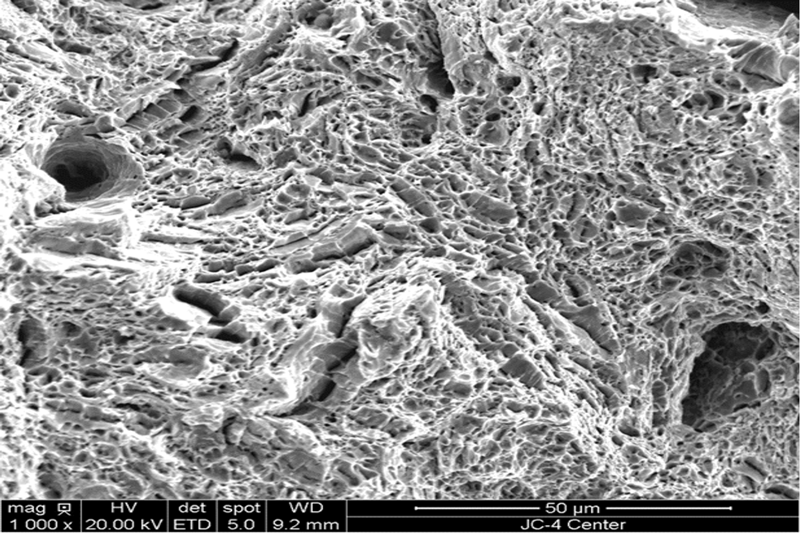
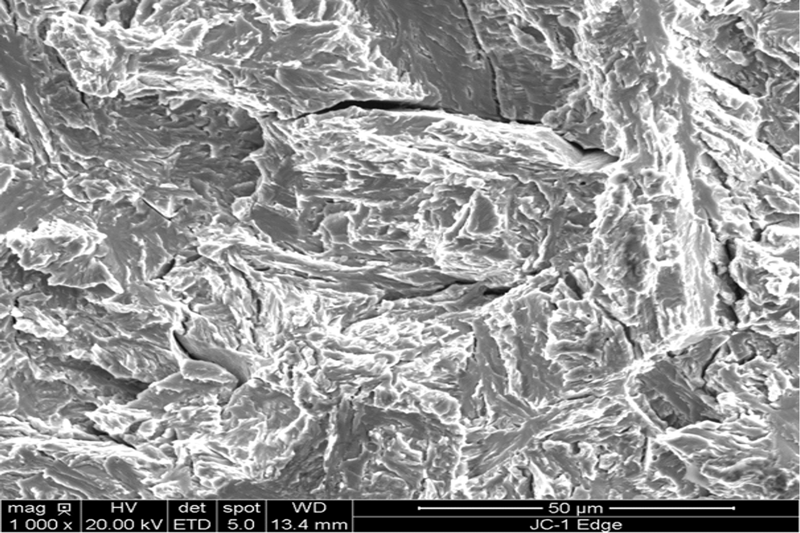
Dr Maweja Kasonde in John Crane’s materials laboratory has carried out slow strain rate tensile (SSRT) tests to illustrate the effect (see images below). The same 17-4PH H1100 steel grade shows ductile failure in air, but brittle intergranular fracture in hydrogen gas at 150bar. Both tests were conducted at 23°C.
The challenge is intensified by hydrogen’s very low volumetric energy density. Although it has a high energy content per unit mass, it contains far less energy per unit volume than liquid hydrocarbons or natural gas at comparable conditions, so practical storage and transport often require compression to hundreds of bar – commonly 350-700bar.
For hydrogen compression, these conditions bring several risks together – higher rotational speeds can increase cyclic and tensile stresses, while high pressure and hydrogen’s small molecular size increase leakage risk, elastomer swelling and rapid gas decompression damage. Containment, sealing, fatigue resistance and materials qualification must therefore be treated as fundamental design requirements.
Indirect effects
Hydrogen leakage also has a climate dimension. The gas is not itself a direct greenhouse gas, and its use at the point of consumption can avoid carbon dioxide (CO2) emissions, particularly where it displaces fossil fuel combustion. However, hydrogen released to the atmosphere can influence atmospheric chemistry by reacting with hydroxyl radicals, which can extend the lifetime of methane, a powerful greenhouse gas.
Recent studies estimate hydrogen’s indirect 100-year global warming potential at roughly 10-12kg CO2e per kg of H2 released, with a greater relative effect over a 20-year timescale.
The engineering implication is therefore important – leakage control is not only a safety and reliability requirement, but also part of preserving the climate benefit of hydrogen systems.
As hydrogen production, storage, transport and end-use scale up, containment performance, monitoring and maintenance will be central to both process safety and emissions reduction.
Carbon dioxide handling presents a different set of considerations. Its behaviour changes significantly with pressure and temperature, and impurities can alter corrosion risk and phase behaviour. Equipment may encounter dense-phase or supercritical carbon dioxide, rapid decompression, or transient conditions during start-up and shutdown.
In the supercritical state, CO2 can behave as a highly effective solvent and plasticising medium. Although most high-molecular-weight polymers have limited true solubility in CO2, it can dissolve into many plastics and elastomers, causing swelling, reduced glass-transition temperature, plasticisation, loss of mechanical strength and rapid gas decompression damage. This makes non-metallic material compatibility particularly important for seals, O-rings, gaskets, valve seats and polymeric components used in carbon capture, transport and supercritical CO2 power-cycle equipment. Material selection, surface treatments, clearances and sealing arrangements therefore need to be considered as part of the complete system rather than as isolated specifications.
Duty calls
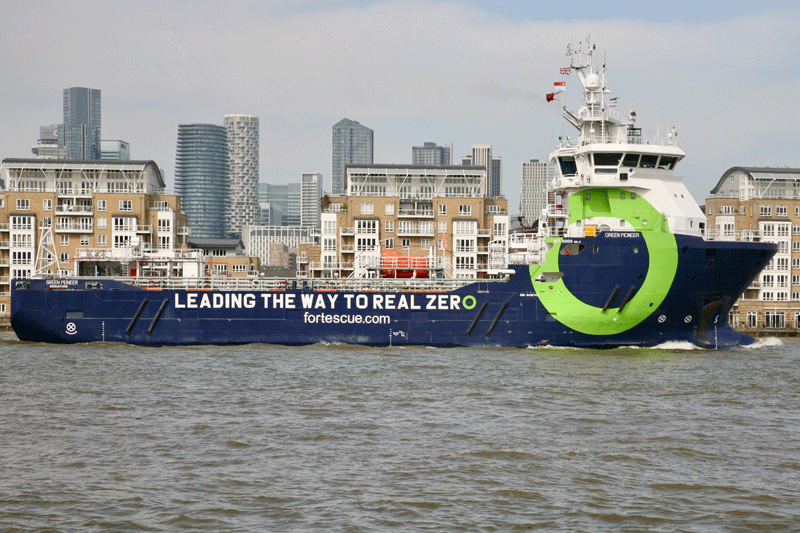
Ammonia is also emerging as a potential marine fuel and hydrogen carrier, particularly for deep-sea shipping where energy density, storage practicality and carbon-free tank-to-wake operation are important. It brings a very different engineering risk profile.
Ammonia is toxic at low concentrations, can be corrosive in the presence of water and can contribute to stress corrosion cracking in susceptible materials. This includes copper-containing alloys and some steels under specific combinations of stress, environment and temperature.
The combustion characteristics also differ markedly from conventional marine fuels, with lower flame speed, more difficult ignition, and a need to control ammonia slip, nitric oxide and potential nitrous oxide formation.
For marine fuel systems, this makes material compatibility, leak detection, ventilation, drainage, double containment, crew exposure management, sealing reliability and maintenance access central design considerations for tanks, pumps, valves, pipework and fuel-handling equipment.
Sustainable aviation fuels and other synthetic fuels bring their own challenges. Feedstocks, intermediate products and final fuels can vary in composition and lubricity. Processes may operate at elevated temperatures or involve aggressive chemicals. Materials that have a long record in one service cannot automatically be assumed to behave identically in another. Compatibility testing and a detailed understanding of the operating envelope are essential before a solution is deployed at scale.
These examples illustrate a wider point – familiar equipment can face unfamiliar duty. The transition therefore requires more than changing the fluid passing through an existing asset. It requires a rigorous assessment of how the entire system will respond.
Reliability is a sustainability issue
While reliability is sometimes treated primarily as an operational or financial concern, it is also an environmental one. Equipment that fails prematurely consumes replacement materials, requires additional manufacturing and transport, and can lead to unplanned shutdowns, or the loss of valuable process fluids. Poor performance can also undermine confidence in a new technology just as it is beginning to gain acceptance.
By contrast, equipment that operates reliably for longer can reduce waste, maintenance interventions and the resources required over its lifetime. The most sustainable component is not necessarily the one with the lowest initial material content or embodied carbon. It may be the one that delivers the greatest efficiency, containment and service life within the wider system.
That requires lifecycle thinking from the outset. Engineers need to consider how materials will age, how surfaces will wear, how process conditions may change, and how equipment will be inspected, repaired or upgraded. Designing for maintainability and extending the interval between interventions can be as important as the initial technology selection.
Digital monitoring can strengthen this approach. Condition data helps operators identify changes in vibration, temperature, or other performance indicators before they become failures. The evidence can then be used to refine maintenance strategies and future designs.
However, digital technology is not a substitute for sound materials selection and engineering. It is most valuable when it is combined with an understanding of the physical asset and the process in which it operates.
Examining existing assets
Much of the discussion around the energy transition focuses on new infrastructure such as hydrogen electrolysis and battery technology. New capacity is essential, but the transition will also depend on the performance of existing industrial assets. Refineries, chemical plants, power-generation facilities and pipelines will continue to play important roles while lower-carbon systems develop. Improving their efficiency and reducing their environmental impact can deliver meaningful benefits now.
There are many opportunities to do this. Better containment can reduce fugitive emissions and lower energy or utility consumption. Improved cooling arrangements can reduce water demand. Upgrades and retrofits can allow equipment to handle changed operating conditions without replacing the complete asset.
Refinery conversion is a practical step, for example. Phillips 66 has converted its 128-year-old Rodeo facility in California, USA, into the Rodeo Renewable Energy Complex, processing waste oils, fats, greases and vegetable oils to produce renewable diesel and sustainable aviation fuel (SAF). It has ~50,000 barrels per day of renewable feedstock capacity and an initial production capacity of about 150mln gallons of neat SAF per year.
Likewise, Eni’s Porto Marghera site in Venice, Italy, has been converted into a biorefinery, with plans to increase capacity and broaden production to include SAF.
This work may attract less attention than a completely new facility, but it is central to a practical transition. Industrial assets are long-lived and capital intensive. Discarding serviceable equipment too early carries its own material and carbon cost. The challenge is to determine where life extension is safe and beneficial, where modification is required, and where replacement is the responsible choice.
This also changes the way sustainability should be measured. A narrow comparison of individual components can miss their effect on the wider process. A modest increase in the material or complexity of one component may be justified if it prevents leakage, cuts energy use, or extends the life of a much larger asset. System-level outcomes and whole-life performance should guide decisions.
Real-world testing
The gap between promising technology and dependable industrial application is often closed through testing. Materials data sheets and established standards provide an essential foundation, but emerging applications can push equipment beyond familiar experience. Testing needs to reproduce the combinations of pressure, temperature, speed, fluid chemistry and transient behaviour that equipment will encounter in service.
It is equally important to learn from field performance. Pilot installations, early commercial projects and operating data can reveal interactions that are difficult to reproduce fully in a test facility. That learning should flow back into material selection, design methods and operating guidance.
The objective is not to eliminate every uncertainty before deployment, which would slow progress indefinitely, but to manage uncertainty through evidence, appropriate qualification and carefully staged scale-up.
Standards will evolve as experience grows. Engineers and materials specialists need to remain closely involved in industry working groups, research programmes and professional institutions. Shared learning can prevent the same problems being solved repeatedly in isolation and help good practice develop more quickly.
Collaboration as an engineering requirement
No single organisation holds all the knowledge to scale a new energy technology. Process developers research the chemistry, operators know site realities, equipment manufacturers comprehend behaviour and failure modes, while materials specialists have insight into how properties change under different forms of exposure. Bringing these perspectives together early is far more effective than asking each part of the supply chain to respond after the main design decisions have been made.
Early collaboration allows operating envelopes to be defined more accurately, risks to be identified and test programmes to focus on the conditions that matter most. It can also reveal where existing technologies can be adapted safely and where genuinely new materials or designs are required. This avoids unnecessary reinvention and the equally serious risk of assuming that established solutions can be transferred without qualification.
Professional bodies have an important role here. They provide a neutral space in which knowledge can be tested, challenged and shared across disciplines. They also help develop the next generation of engineers who need to combine deep technical expertise with a system-wide understanding of sustainability, reliability and commercial reality.
This collaborative work is already visible in the development of hydrogen-specific standards and guidance. Specifically, ISO/TC 197 covers hydrogen technologies across production, storage, transport, measurement and use, with working groups addressing areas such as fuelling-station compressors, hoses, fittings, safety systems and O-rings.
Meanwhile, ASME B31.12 provides requirements for gaseous and liquid hydrogen piping and pipelines, while API Recommended Practice 941 remains an important reference for steels used in elevated-temperature, high-pressure hydrogen service. In Europe, CEN-CENELEC and the European Clean Hydrogen Alliance have coordinated their work, including on a roadmap for hydrogen standardisation.
These activities matter because hydrogen qualification does not rely only on legacy hydrocarbon experience. It requires shared test methods, common terminology and application-specific guidance, developed jointly by operators, equipment manufacturers, materials specialists and standards bodies.
The energy transition is frequently framed as a race to invent and deploy. Speed matters, but durability matters too. Infrastructure that is expected to support a lower-carbon economy must be engineered for dependable performance, not simply successful commissioning.
The central engineering challenge is to turn technical possibility into safe, scaleable and sustained performance. This will help determine whether the transition succeeds.
More like this...