Bamboo waste to strengthen cement
A mild chemical treatment could help the plant fibres bond more effectively with a low-carbon cement matrix.
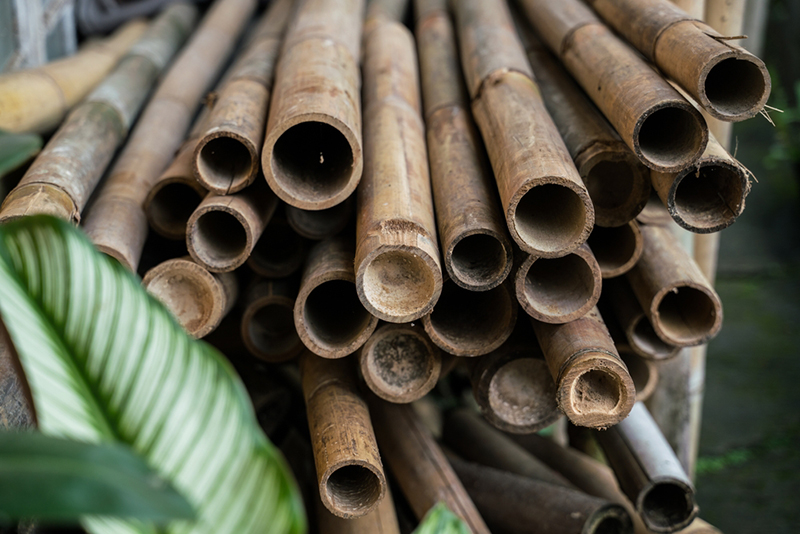
Researchers in China claim to have developed a way to turn bamboo processing waste into stronger, lighter, building composites based on magnesium oxychloride cement (MOC).
Bamboo processing can discard around 35-50% of the plant. Much of this material is currently landfilled or incinerated. Meanwhile, MOC is said to offer a lower-carbon alternative to Portland cement as it requires lower calcination temperatures. However, its brittleness and moisture sensitivity limits wider use.
In this work, bamboo scraps have been treated with ammonium carbonate then added to the cement matrix. Unlike stronger alkali treatments, the mild process is said to selectively remove lignin and hemicellulose while preserving the cellulose fibre structure.
The treatment reportedly makes the bamboo more receptive to the cement matrix by softening its structure, creating micropores and exposing hydrophilic functional groups that support stronger bonding.
Microstructural analysis shows that needle-like MOC crystals can grow into the micropores on the treated bamboo surface, creating a stronger interfacial ‘anchoring’ effect.
Under optimised conditions, the composites are reported to show a 45% increase in compressive strength, a 12% improvement in softening coefficient and a 15% reduction in thermal conductivity.
The researchers say the approach could support insulation panels, building fillers and fire-resistant components made from agricultural waste.
For more like this...