Smouldering technology for tackling nuclear waste
Researchers at the University of Nottingham, UK, to investigate combustion treatments for waste graphite.

Applied smouldering, or flameless combustion, could potentially harness the energy in nuclear graphite waste bricks to reduce them to ash.
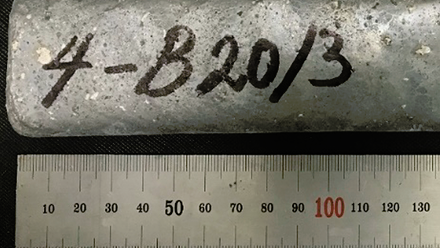
High-purity, synthetic, graphite moderator bricks arranged into interlocking structures typically form the core of gas-cooled nuclear reactors in the UK.
Over decades of operation, the bricks become contaminated – primarily with carbon-14 – and Nuclear Restoration Services manages the decommissioning of approximately 100,000t of this graphite.
This will reportedly comprise ~33% of the total intermediate-level waste destined for the UK’s proposed Geological Disposal Facility, presenting technical and environmental challenges.
These include the long half-life of carbon-14 – around 5,730 years – managing other radionuclides, the volume of waste and other persistent residual risks.
Smouldering is emerging as an energy-efficient alternative thermal technique for managing nuclear graphite waste that has reportedly been used successfully on a commercial scale to manage similar, non-volatile, carbon-based wastes.
The Nottingham research team, alongside international partners between the UK and Canada, aims to assess the feasibility of applied smouldering for nuclear graphite waste treatment through experiments, modelling, techno-economic analyses and Life Cycle Assessments.