Shipping partnership unlocks lower-emission transatlantic freight
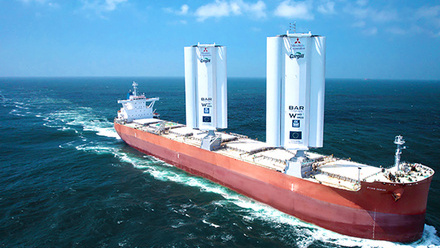
The Europe-North America shipping route will employ wind-powered cargo.

A view of the Atlantic Ocean from a ship
© Ana del Castillo/ShutterstockAir and ocean freight specialist DHL Global Forwarding France and VELA, French operator of wind propulsion cargo trimarans, have signed a partnership that will reportedly carry 600 EU pallets per trip.
The direct transatlantic route will operate between strategic secondary ports – Caen-Ouistreham, France and New Haven, USA – to combine speed, reliability and safety.
An independent Life Cycle Assessment conducted by Carbone 4 shows a lower lifecycle greenhouse gas impact compared with other transport modes on comparable routes, with reductions of up to 99% under specific assumptions.
The partnership combines DHL Global Forwarding France’s expertise in transport organisation, pre-carriage, on-carriage, customs, warehousing, and associated logistics services, with the VELA’s sailing maritime solution that uses wind as the primary propulsion mechanism.
The service for palletised Less-than-Container Load (LCL) shipments is primarily designed for customers seeking lower-emission shipping options with no compromise on speed, reliability, traceability or security.
It is reportedly tailored to the pharmaceutical, high-value and luxury goods, cosmetics, aerospace, and wine and spirits industries between Europe and the US and vice versa. VELA also aims for a target port-to-port transit time of 15 days.
By reducing exposure to congestion at major hubs, limiting transshipments and strengthening operational control, the service is aiming to be among the leading lower-emission transatlantic service options currently available, based on indicative comparisons.
Additionally, the patent-pending CoolSafe refigeration system by VELA is powered primarily by onboard renewable energy sources to preserve the integrity of highly sensitive products throughout their journeys.
DHL Global Forwarding France will have a dedicated allocation on VELA’s vessel, with volume commitments expected to grow in line with the fleet’s expansion.
Commercial operations are scheduled to begin in early 2027, with ultimately five ships and up to one weekly departure on the transatlantic route.