Radioactive waste buffers
A patent for a nuclear waste barrier in deep geological repositories.
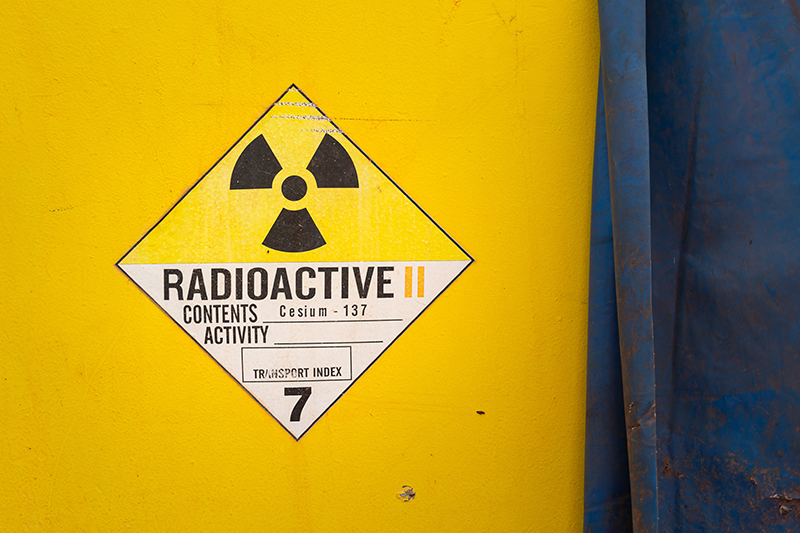
Deep geological repositories are underground storage facilities for hazardous and radioactive waste. Several such repositories are already in use worldwide, and many more are planned or under construction.
These repositories are designed to isolate high-level nuclear waste at a depth of 300-1,000m, relying on a multi-barrier system to hopefully prevent environmental contamination for tens of thousands to millions of years. This system includes rock formations that function as a natural barrier, and buffer and backfill materials that act as engineered barriers.
The buffer material selected must serve multiple different roles – reduce the inflow of groundwater into the repository, prevent leakage of radionuclides into the surroundings, and shield waste disposal containers from mechanical shocks.
Bentonite clay has long been the industry standard for engineered barrier systems due to its low permeability and high swelling capacity.
Raw bentonite is also highly effective at trapping cationic radionuclides like caesium through cation exchange. The clay has a layered platy structure, consisting of an aluminium hydroxide octahedral layer between two silica tetrahedral layers. Isomorphous substitution of anions in the octahedra or tetrahedra create a net negative charge, which can attract cations such as Na+, Ca2+ and Mg2+ between the layers. These cation sites are available for exchange with positively charged radionuclides.
Unfortunately, the same characteristics of bentonite mean that it also has virtually no affinity for hazardous anionic species. This is particularly concerning because volatile radioactive isotopes of iodine, such as iodide and iodate, may easily bypass unmodified clay barriers to escape repositories and enter surrounding groundwater systems.
US patent US 12,496,568 B2, granted in December 2025 to the POSTECH Research and Business Development Foundation, presents a solution to this problem. Inventors have developed a buffer material composed of a bentonite surface modified with a layered double hydroxide (LDH).
The patent claims protection for a method of preparing a buffer material. This involves producing a first mixture by adding a compound containing a divalent cationic material, aluminium nitrate and bismuth nitrate to a reactor, and then producing a second mixture by adding bentonite to it.
The patent also claims protection for a buffer material prepared by this method, as well as a buffer material comprising bentonite with a surface modified using a LDH, in which the LDH includes aluminium and bismuth.
According to the patent, the LDH is an anionic clay with a 2D layered structure, in which a divalent metal cation M2+ is surrounded by six hydroxyl groups in the form of an octahedron. Some of the M2+ cations are also substituted isomorphically by trivalent metal cations M3+. Exchangeable anions can therefore be inserted between the layers to balance the charges.
Since the surface layers of the LDH are positively charged, while the surface of bentonite is negatively charged, LDH nanoparticles tend to aggregate on the bentonite surfaces. These nanoparticles also enable anionic radionuclide exchange. The surface-modified bentonite is therefore able to capture both positively and negatively charged ions simultaneously.
The patent specifies several preferred chemical parameters to optimise the buffer material’s synthesis. The compound containing the divalent cationic material may be selected from cobalt, copper, or nickel nitrates.
The mixtures may be prepared using ultrapure water. Acidic conditions may be maintained during the initial mixing phase by including nitric acid, and precipitation of the LDH nanoparticles may be triggered by adding sodium hydroxide and carrying out ageing.
Experimental results highlight the performance improvements achieved by the modified clays compared to raw bentonite. While unmodified bentonite was found to exhibit a 0.00% removal efficiency for both iodide and iodate ions in a reaction solution over a period of four days, synthesised copper-, cobalt- and nickel-containing LDH-bentonites showed remarkably higher levels of anion capture. The copper-containing variant, for example, achieved an iodate removal efficiency of 95.40% and an iodide removal efficiency of 72.96%.
The inventors note that a slightly lower removal efficiency for iodide compared to iodate is likely due to the larger ionic radius of the iodide ion, which affects its intercalation into the LDH structure.
It is notable that the caesium removal efficiency was somewhat reduced by the addition of the LDH (45.47% for the copper-containing LDH-bentonite, versus 86.48% for unmodified bentonite). However, it is clear that both ion types were captured. Moreover, the inventors explain that removal efficiency can be optimised by adjusting the content of bentonite according to the concentration or type of radionuclides in the target solution.
Read the patent at bit.ly/nuclearwastebarrier