National Grid trials tech to reduce sulphur hexafluoride emissions
A substation in the North West of England is using a rubber patch to capture the greenhouse gas before it enters the atmosphere.
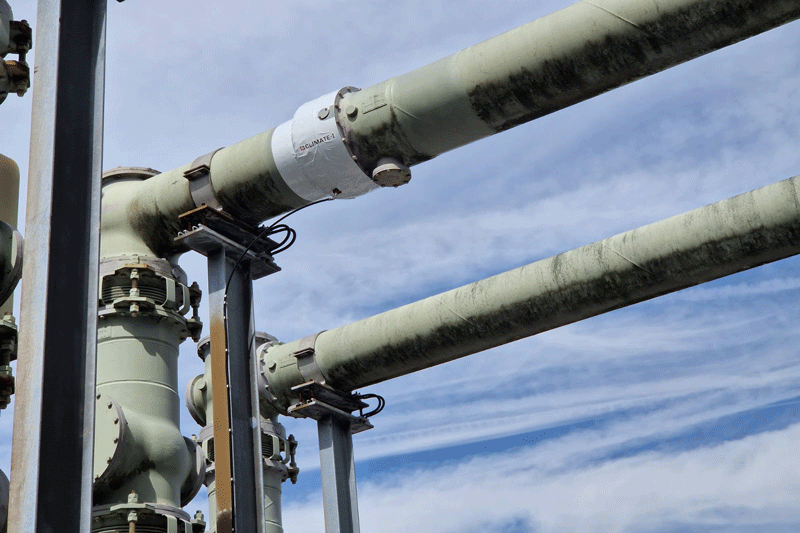
Sulphur hexafluoride (SF6) provides electrical insulation and arc interruption to substations. It also has a global warming potential 24,300 times greater than CO2.
The National Grid has partnered with climate-tech start-up Climate-i to trial a flexible adhesive rubber patch that covers leaks and directs any escaping gas to a capture rig. The rig measures the amount captured before pumping it into a storage tank and being safely disposed.
The seal can often be installed without shutting down the equipment, adapting to different geometries, and is designed to act as a short-to-medium term intervention while assets await repair or replacement.
National Grid has committed to reduce SF6 emissions from its operations by 50% between 2018/19 and 2030/31. It is reducing the use and release of SF6 by building new substations with SF6-free switchgear and an ongoing programme of leak repair and mitigation of older SF6-filled equipment.
More like this...