Pit stop
Under the skin of corrosion in the nuclear sector.
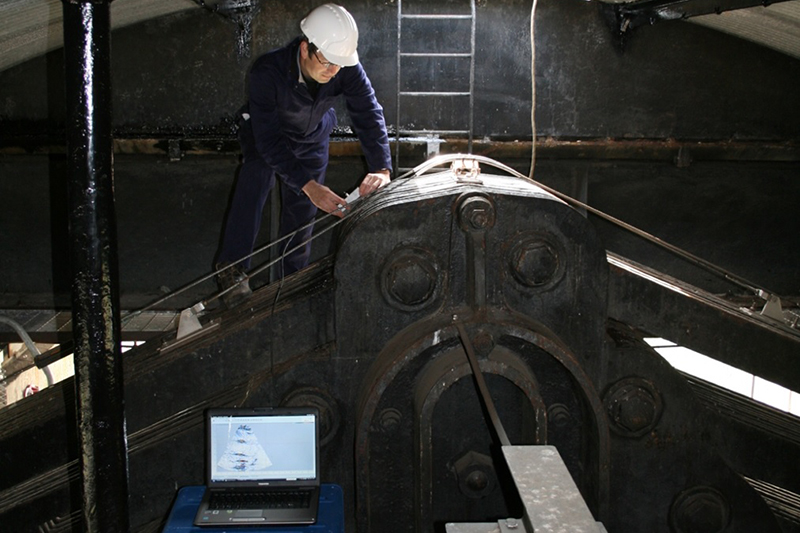
The structural integrity of a nuclear plant and its associated infrastructure relies on inspection, monitoring and characterisation of assets to assess reliability, predict remaining safe operating life and determine the effects of radiation.
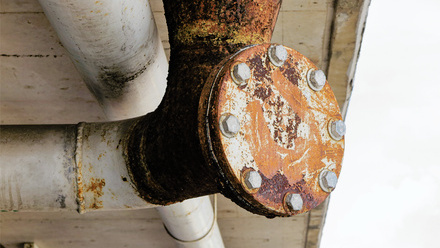
Components that are susceptible to environmental degradation mechanisms, such as corrosion, require inspection to ensure they remain fit-for-purpose for continued operation. This is particularly the case where an item may have to withstand the environment for many decades, such as containers for nuclear waste storage or pipework systems on nuclear power plants.
The challenges associated with corrosion detection are not necessarily specific to nuclear and are common to other sectors like petrochemical and pharmaceuticals – namely, the need for remote detection and, preferably, non-intrusive and non-contact inspection.
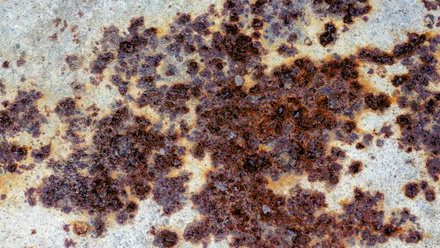
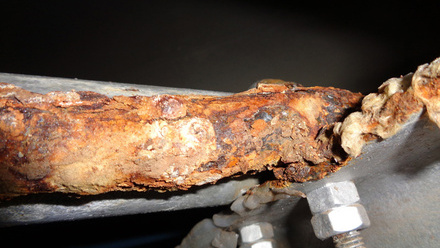
These industries use austenitic stainless steels that can suffer the same corrosion challenges, such as corrosion under insulation (CUI), pitting and crevice corrosion, and environmentally assisted cracking (EAC) phenomena like stress corrosion cracking (SCC) – see box-out below. EAC is also known as EASC – the letter S signifies the influence of stress on the cracking process.
Stripping back
Corrosion under insulation – a severe, localised form of external corrosion that occurs when moisture becomes trapped beneath thermal insulation on pipes, tanks and pressure vessels.
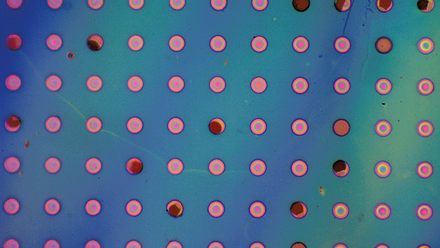
Pitting and crevice corrosion – highly localised, destructive forms of attack that degrade protective passive oxide films on metals like stainless steel and aluminium. While pitting occurs on openly exposed surfaces, crevice corrosion happens in shielded, stagnant gaps (such as under gaskets or washers) where oxygen becomes trapped and conditions turn acidic.
Stress corrosion cracking (SCC) – a dangerous material degradation process where a metal fails via sudden, branched crack propagation. It occurs when a susceptible alloy is exposed to a specific corrosive environment while under sustained tensile stress. SCC can lead to catastrophic component failures with very little to no visible surface corrosion.
The presence of chloride ions in solution leads to any of these corrosion mechanisms depending upon the precise nature of the environment, e.g., whether there is elevated temperature, the absence of oxygen leading to stagnation, or the presence of a stress.
These differing corrosion mechanisms in turn have varying impacts. While isolated pitting corrosion may lead to small through-wall penetration, EAC can cause more significant failure because of its brittle nature and crack propagation at loads below the material’s yield stress. This gives rise to the potential for sudden and unpredictable failure.
Under certain environmental conditions, there is also the possibility that corrosion pitting will initiate cracking – either SCC if the stress is static, or corrosion fatigue in the case of cyclic stress. This pit-to-crack conversion can be reproduced in laboratory samples and assessed using electrochemical methods.
For nuclear applications specifically, ionising radiation may also be a contributory factor to the corrosion process and limit access to the area for remedial actions, so the challenge is different.
On the radar
Ionising radiation can have a significant effect on polymer materials. The degradation products present a corrosion challenge to components in their vicinity, as well as affecting polymer integrity. For example, halide ions or free radicals resulting from the degradation of halide-bearing materials, such as PVC, can lead to corrosion of stainless steels located nearby or downstream.
For metals, other than those in reactor vessels operating in extremely high radiation fields and as cladding on fuel elements, the effect of ionising radiation is more often seen in the environment rather than as radiation damage to the metal itself.
In aqueous environments, a series of short-lived intermediate species are generated, including radicals, gases, neutral molecules and ions. This process, called radiolysis, shifts the corrosion potential of electrodes towards more positive values.
Water radiolysis creates an oxidising environment that significantly increases the risk of localised corrosion in passive alloys. This is why control of water chemistry is particularly important in cooling components, such as those on reactor pipework systems and on vessels that store highly active liquors from historic nuclear reprocessing operations.
The use of high-purity water is therefore required in this environment as the additional presence of chloride ions in the aqueous environment, either in the process water or in a thin condensate film on the external surface of components and pipework, can exacerbate the corrosion mechanisms even at low levels of chloride.
Chloride ions in the water can lead to pitting corrosion of stainless steels and hydrogen peroxide generation. This is exacerbated by stagnant or low flow-rate conditions where concentrations of hydrogen peroxide may increase due to increased dwell times.
Under inspection
However, inspection of equipment in the nuclear sector comes with limitations, often arising from the need for remote examination.
Improvements in camera technologies and associated lighting systems have significantly enhanced resolution and accurate colour representation. However, remote visual inspection (RVI) of stainless-steel components can be difficult due to their highly reflective nature. The smooth surfaces often required for minimising potential contamination and ease of decontamination can, in turn, make them difficult to illuminate for accurate surface views and can cause glare that masks corrosion initiation.
To select the appropriate non-destructive testing (NDT) technologies for material condition, it is necessary to understand the corrosion mechanisms that could be operating. Uniform corrosion – where chemical or electrochemical attack is evenly distributed across the entire exposed surface – is more straightforward to detect and monitor than localised mechanisms such as pitting and EAC.
Uniform corrosion mechanisms are readily quantifiable and hence predictable. Components can be subjected to repeated inspection or continuous monitoring at specific locations to establish corrosion rates based on the original design thickness and wall thickness losses as the component or system ages. Ultrasonic testing (UT) is often used for these straightforward measurements.
In the pulsed echo method, the wall thickness is determined ‘by transmitting an ultrasound pulse through the material and measuring the time for the sound to pass through the material and return to the receiver, after being reflected off the back wall of the area. Sensors can either be permanently installed or repeat measurements made in the same area after a specific elapsed period. However, ensuring the measurement location is the same in every inspection can be difficult if the surface is not permanently marked as a reference.
Since ultrasound cannot pass across an air gap, a liquid layer – known as a couplant – is required to transmit sound into the component. In many industries, residual couplant is left behind, but in the nuclear industry it is common practice for the surface to be cleaned after testing. While uniform corrosion thickness loss is not common in stainless steels, strong acids at elevated temperatures may contain oxidising species and can be highly oxidative and corrosive.
Localised corrosion mechanisms can be much more insidious and difficult to detect and monitor. For example, if a small corrosion pit is identified on a stainless-steel surface using RVI, it can be difficult to understand the extent and nature of sub-surface pitting from a visual assessment alone, since changes to the corrosion product on the surface are often minor.
Furthermore, small isolated pits are not readily detected by standard, pulsed echo UT. While the use of angled UT probes can be beneficial, the edges around a corrosion pit can be very thin and so could be damaged by the probe, with the potential to increase the size of the pit mouth.
Other potential issues include the area around the pit mouth periphery being too thin to register a signal, or the sound wave is scattered by the pit’s irregular shape.
The development of ultrasonic arrays, known as phased arrays, has enabled more accurate and faster corrosion mapping and defect detection by incorporating multiple transducers and receivers into a single UT probe.
Phased arrays are typically designed and optimised to achieve maximum image resolution and signal-to-noise ratio, which is important for detecting defects. This can provide higher-resolution images, particularly when adopting full matrix capture (FMC) data acquisition techniques using the total focusing method (TFM). Full matrix capture techniques capture the signal from each generation and detection element in the array, and then the TFM algorithm, known as a delay-and-sum algorithm, is used to form images in post-processing.
Additionally, laser ultrasound uses lasers for generating and detecting ultrasound, offering the potential for remote and non-contact inspection and defect characterisation without the need for couplant.
Laser-induced phased arrays (LIPAs) have been adopted for identifying embedded defects in complex components like composites, using FMC and TFM to produce an image. However, a drawback of LIPAs is the acquisition time, as the ultrasonic response from every combination of generation and detection elements needs to be acquired sequentially.
Full matrix capture using LIPAs therefore takes significantly longer than for traditional phased arrays.
Research has been carried out to reduce the time taken to produce an image by using a sparse array design initially, and then by adjusting the array parameters to optimise the designs so they focus on areas of interest. This is described in the doctoral thesis of Peter Lukacs at the University of Strathclyde, UK, on Laser induced phased arrays for volumetric imaging. The potential to deploy this technology remotely in hazardous environments has led to interest from the non-destructive examination (NDE) community across the nuclear and defence industries.
Another technique – electromagnetic acoustic transducers (EMATs) – uses an induction coil and magnets for non-contact acoustic wave generation and detection in electrically conducting materials. This can be used for thickness measurement and flaw detection. No liquid couplant is required, making inspection more rapid. In a nuclear context this is advantageous. There is no residue to remove after inspection, eliminating concerns about residual couplant or its potential radiolytic degradation products.
Meanwhile, for corrosion research purposes, samples can be subjected to pitting corrosion testing and X-ray micro-computed tomography – a 3D non-destructive imaging technique known as micro-CT. This technique is particularly useful for revealing sub-surface features, such as pit morphology, and for determining growth rates and directionality. Currently, it is not deployable in an industrial environment because of the equipment size, so the sample must be taken to the equipment rather than assessment performed in situ.
This exemplifies a drawback in deploying NDT on systems in the nuclear industry that may have radiation fields associated with them. It often requires the use of remote testing due to the hazard of performing in situ assessments. Crawlers and tethered vehicles have been used routinely to perform both RVI and thickness measurements in areas where human access is not feasible. However, areas where it is difficult to routinely deploy equipment may remain, such as around multiple tight bends, routes congested with pipework. or working at height.
Unmanned Aerial Vehicles (UAVs) are available that can deploy NDT payloads such as cameras, ultrasonic probes and EMATs in industrial environments. UAVs can have dry film-thickness measurement payloads to assess the condition of non-metallic, corrosion-protection coatings. However, the suitability of UAVs for use in radiologically controlled areas is uncertain, since their propulsion mechanisms could spread contamination and they may be too large to access areas of interest.
Given the lack of remotely deployable NDT technologies available to detect pitting and accurately characterise short SCC cracks, there remains a challenge of detecting and/or monitoring any pit-to-crack transition.
Collaboration is key
Many companies operating in the nuclear sector are members of the UK Research Centre in Non-Destructive Evaluation (RCNDE). Founded in 2003, the RCNDE advances research in inspection technologies and connects eight UK universities with British and overseas users of NDE across all sectors. The industrial members steer the research programmes by producing a vision for their specific sector, which are then grouped into a common document. The most recent strategy identifies three overarching themes:
- Improvements in the capabilities of NDE technologies – improved defect characterisation, especially those that give rise to weak signals, such as SCC. Also, the capability to perform a whole-area inspection without the time-consuming need to scan a sensor over that area, particularly with remote or non-contact sensors.
- Meeting asset-based inspection challenges – through improved corrosion measurements and inspection through, and under, coatings and insulation. There is strong focus around inspecting in difficult environments, for example, monitoring in high-temperature and radiation environments, as well as other harsh and/or inaccessible environments, such as offshore wind turbines and subsurface infrastructure.
- Realisation of the benefits of Industry 4.0 (digital transformation) – this includes technological improvements to NDE like sensor resilience in adverse environments and better data acquisition and processing. Artificial intelligence (AI) to develop and optimise inspections is seen as a key benefit. Using augmented reality (AR) tools to help inspectors navigate around plant assets, position and scan sensors in the correct locations. Recalling NDE records from previous inspections and retrieving supporting plant data – like materials data and component histories – is needed. Autonomous systems that can find the component to be inspected, cope with deviations and conduct the inspection would find uses in many industrial sectors, drastically reducing the need for human involvement. The long-term vision is that advances in NDE, in combination with advances in other fields, could allow self-diagnosing plant facilities and improved asset performance through life.
An example of RCNDE’s collaborative cross-sector engagement for novel corrosion inspection technologies is the UK Research and Innovation project ‘Sniffing out rust in critical industrial areas (Sensors and Industrial Engineering)’.
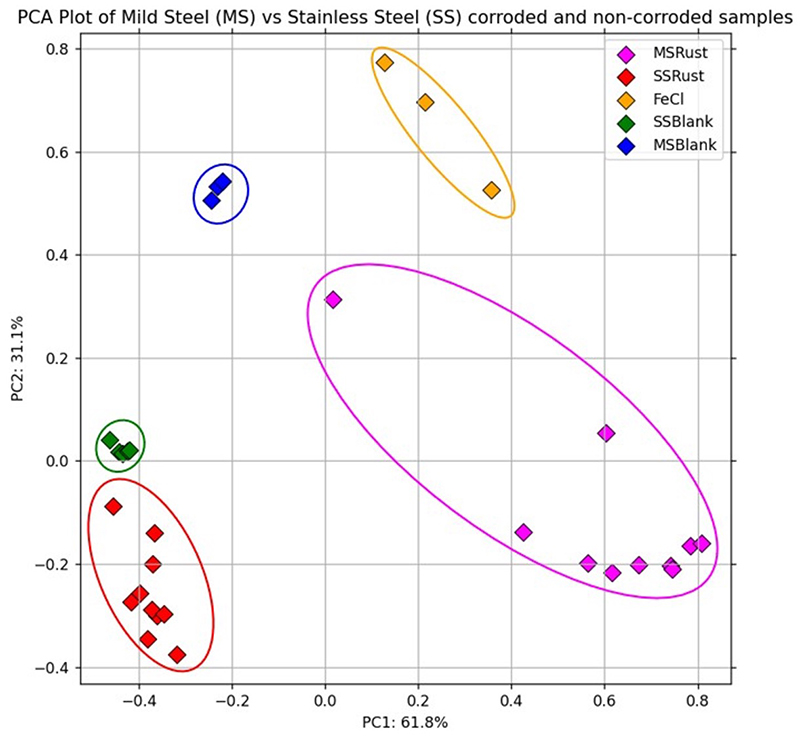
This is an EPSRC-funded research project led by the University of Warwick, UK. It aims to develop a portable, corrosion-diagnostic sensor that is capable of detecting rust under paint and insulation. It is based on detecting specific odours from corroding surfaces and identifying by-products from redox reactions or catalytic breakdown of organic matter on a corroding surface.
This project is co-funded by RCNDE’s industrial members through the NDE Research Association, mainly due to the cross-sector relevance of detecting corrosion under coatings and insulation applied to pipework systems. But there could be added benefits for the nuclear sector if it is possible to identify the corroding material through distinct corrosion signatures.
This was explored recently in the study Corrosion through odour emissions: sniffing out rust, presented at the 2024 IEEE International Symposium on Olfaction and Electronic Nose. Such a technology could be used in a storage facility to identify whether it is the steel building infrastructure that is corroding or a stainless-steel waste container. If deployable on a robot, it could perform the same function as a sniffer dog, but there is also potential for it to be attached as a payload to a UAV to detect corrosion in hard-to-reach areas.
Future developments in NDE technologies, such as remotely deployable ultrasonic arrays, non-contact EMATs and LIPAs, or electronic noses, will lead to better corrosion assessment in extreme environments and in places of restricted access. The corrosion mechanisms described and their interactions are an issue for many industrial sectors and are not specific to the nuclear industry – it is the consequence and remediation challenge that is different.
The author would like to thank Dr Tony Horner MIMMM as Lead of the IOM3 Corrosion Subgroup for his support and the following for providing images for this article: Professors Dirk Engelberg, Bruce Drinkwater, James Covington and Ines Carotti.
The IOM3 Corrosion Subgroup reports into the IOM3 Surface Technologies Group. It is formed from academic and industry professionals dedicated to advancing the science and engineering of corrosion control and supporting corrosion science and engineering in the UK and overseas. The Corrosion Subgroup aims to promulgate knowledge arising from advances in corrosion technology to the engineering community by means of seminars, conferences and publications, etc.
Recent events

EUROCORR 2026
The European Corrosion Conference, the flagship event of the international corrosion calendar, promises investment for the future by addressing the corrosion challenges of green technologies
Dublin
EUROCORR 2026
The European Corrosion Conference, the flagship event of the international corrosion calendar, promises investment for the future by addressing the corrosion challenges of green technologies
DublinMore like this...