Fabric skin warms buildings
A dye-treated textile panel could prove a low-cost and removable retrofit for improving passive solar heating.
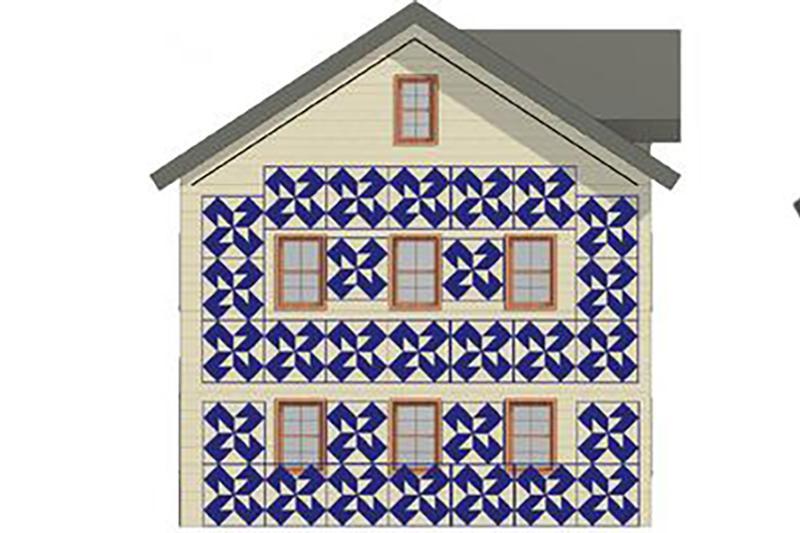
Researchers at the University of Massachusetts Amherst, USA, have developed a photothermal fabric ‘skin’ for external building walls to aid heat retention.
The concept is based on removable decorative tiles or panels that can be fitted to different wall surfaces.
The system uses a special dye that the team says can be put 'on anything' and which they tested on a low-cost umbrella fabric. When exposed to sunlight, the dye absorbs solar energy and converts it into heat. The panel structure also offers an insulating effect.
In modelling, the team reports the panels could reduce energy costs by up to 15% for a residential building in a northern climate such as Massachusetts, and by up to 23% for a larger 16-storey apartment building.
They report the approach could be particularly useful for households unable to carry out major retrofits, such as new windows, doors or insulation. And because the active material is a dye, the panels could also be printed or designed to suit local architectural styles.
The work has so far been demonstrated in the lab and through modelling, and field tests and full-size prototypes are still needed to prove the system in a real-world setting.