IOM3 responds to the King’s Speech 2026
The King’s Speech unveiled PM Keir Starmer’s legislative agenda for the year ahead, with 37 bills aimed at ‘strengthening the UK’s energy, defence and economic security’.

Responding to the King’s Speech, IOM3 CEO Dr Colin Church CEnv FIMMM, said, ‘The King’s Speech signals a necessary focus on the UK’s industrial capability, infrastructure resilience and energy security. Across measures spanning steel, clean energy, and innovation regulation, there is a welcome growing recognition of the strategic importance of materials and their secure and resilient supplies, a priority further underscored by the backdrop of geopolitical uncertainty.
However, the success of the government’s ambitions will depend on whether the UK can develop and retain the skilled workforce required to deliver them. Harmonising employment rights for offshore workers in renewables and oil and gas is a good start, but there remains a pressing need for a more coordinated, long-term approach to skills development for strategically important sectors.’

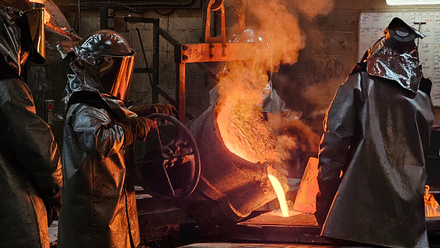
Dr Jitendra Patel CEng FIMMM, Chair of the IOM3 Iron & Steel Group, said, ‘We welcome the proposed legislation to return one of our major steelmakers to public ownership and thereby instil a period of much-needed stability and security. However, fundamental challenges facing the sector remain, including the ability to produce the type and quality of steel needed in the UK, in particular for our infrastructure, energy and defence needs, through to supporting our transition to low-carbon, sustainable steel production and usage, and crucially, availability of lower cost, clean energy.’
Bills relevant to sectors where IOM3 members work include the following:
Steel Industry (Nationalisation) Bill – provides a route for the Government to nationalise steel companies or their operations, such as British Steel. It aims to:
- Establish a public-interest test that must be met, with an indicative list including national security, support for the economy, and critical national infrastructure.
- Introduce compensation provisions for steel undertakings.
Energy Independence Bill – designed to reduce energy bills and protect consumers, accelerate deployment of clean power and deliver a fair transition. It aims to:
- Reform market, planning and regulatory frameworks to accelerate the deployment of clean power, including offshore wind, hydrogen and smart grid technologies.
- Speed up the build-out of vital grid infrastructure.
- Introduce the powers needed to take a more strategic approach to planning and building energy infrastructure, and to operate the electricity system more efficiently.
- Deliver a fair, managed and prosperous transition and good jobs in clean energy.
- Manage existing oil and gas fields for their lifetime through legislation to introduce Transitional Energy Certificates
- Ensure the North Sea Transition Authority is equipped to support a fair, managed and prosperous transition, including a new statutory objective to consider workers, communities and supply chains in its decisions.
- Extend employment rights and protections for offshore workers in renewables, bringing them in line with those working in oil and gas.
- End new coal licenses.
Nuclear Regulation Bill – takes forward recommendations of the Nuclear Regulatory Review, supports quicker delivery of nuclear projects and applies the lessons more widely across major infrastructure projects. The Bill aims to:
- Overhaul existing regulations.
- Embed a proportionate, outcomes-focused regulatory and legislative framework.
- Improve the coordination and speed of regulatory decision-making.
European Partnership Bill – introduces a framework of powers to implement agreements with the EU, including to fulfil treaty obligations and facilitate new deals, including:
- An emissions trading agreement that links the UK and EU emission trading schemes. It will also create the conditions for mutual exemptions from respective Carbon Border Adjustment Mechanisms (CBAM).
- Electricity agreement to improve efficiency, reduce average prices, increase exports, strengthen energy security and drive investment in the North Sea.
Small Business Protections (Late Payments) Bill – targets late payment practices affecting small and medium-sized enterprises. The Bill aims to:
- Impose maximum payment terms of 60 days, enforce mandatory interest for late payments and introduce a time limit for raising invoice disputes.
- Require boards or audit committees of persistently late-paying large companies to publish commentary on poor payment performance and give the Small Business Commissioner new powers to investigate, adjudicate and fine businesses that persistently fail to comply.
Regulating for Growth Bill – supports regulation to keep pace with the speed of technological innovation. The Bill aims to:
- Strengthen the growth duty – elevating consideration of growth in regulatory decision-making.
- Create sandbox powers – for businesses to test cutting-edge new products and technologies with a focus on the Industrial Strategy’s eight growth-driving sectors.
Remediation Bill – drives forward the removal of unsafe cladding. The Bill aims to:
- Make construction product manufacturers pay towards fixing the problem they caused.
- Equip regulators with the powers they need to compel action.
- Introduce a new legal duty to remediate.
- Mandate how external wall assessments are carried out.
- Implement a remediation backstop.
- Fix gaps in previous legislation to protect residents and guarantee a route to remediation.

Get involved with IOM3 Policy & Influence
As a member, we are looking for your expertise. Find out more about the work IOM3 is doing in policy and contribute to the change you want to see.