

Aluminium recycling needs 25% growth per year to support industrial demand, says Make UK
The trade body estimates that as much as 6Mt of scrap aluminium for recycling may be needed to meet the 8Mt of demand expected by 2035.
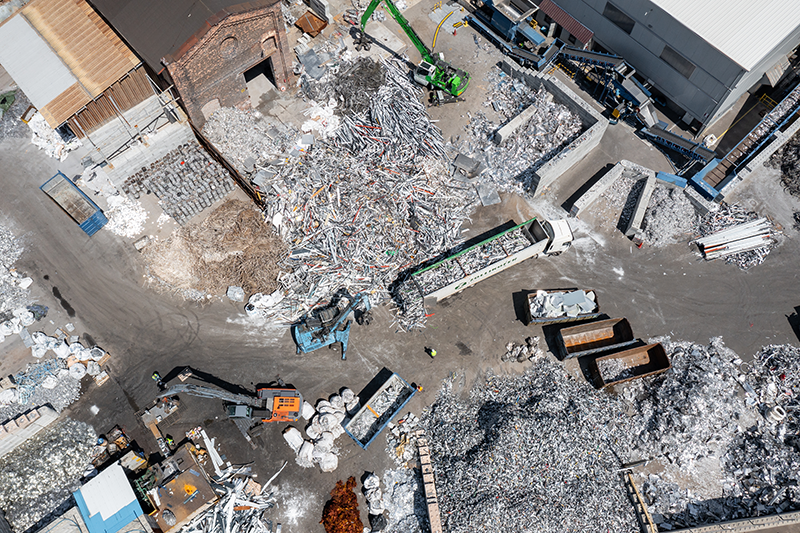
Aluminium recycling plant viewed from above
© Curioso.Photography/ShutterstockAluminium scrap is essential for products supplying defence, clean energy, digital technologies and automotive industries, which are considered pillars of the UK economy, and critical to national security and resilience.
With the UK Government's Critical Minerals and Modern Industrial Strategies, demand from sectors is expected to increase significantly in coming years.
However, Make UK warns that export scrap leakage has increased by 84% in the past decade. If these costs continue to rise, more industry might move abroad for better access to domestic and EU scrap markets. This could offshore economic value and weaken security, productivity and jobs.
In 2024-25, aluminium scrap exports from the UK to the US reportedly increased from 2,000t to 24,000t after Section 232 tariffs excluded the material from their scope. In the same period, the UK also exported around 200,000t to India and 173,500t to China and Hong Kong combined.
‘Now is the time to invest in the future of aluminium manufacturing, improve collection standards for scrap materials [and] retain the alloys we need within a domestic circular economy,’ says Daniel Paterson, Director of Sector Specialisms at Make UK.
‘Government now needs to work with business to move quickly and build domestic processing capability to stem the tide of exports, or risk losing growth, ongoing investment, jobs and supply chain resilience to competitors overseas.’
More like this...


Related events
- Free
Recycling of Aluminium from Built Environment
Join us as we take a closer look at the recycling of aluminium in the built environment.
- Free
Recycling of Aluminium from Built Environment
Join us as we take a closer look at the recycling of aluminium in the built environment.