‘A pinch of dysprosium’ for material efficiency in rare-earth magnets
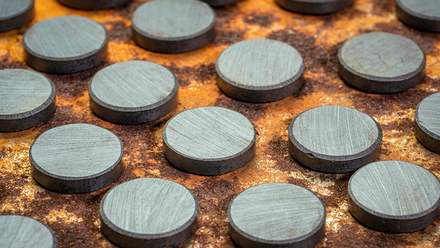
Cutting dysprosium in neodymium-iron-boron (Nd-Fe-B) magnets from 4% to 1% is feasible, find researchers in the Netherlands.
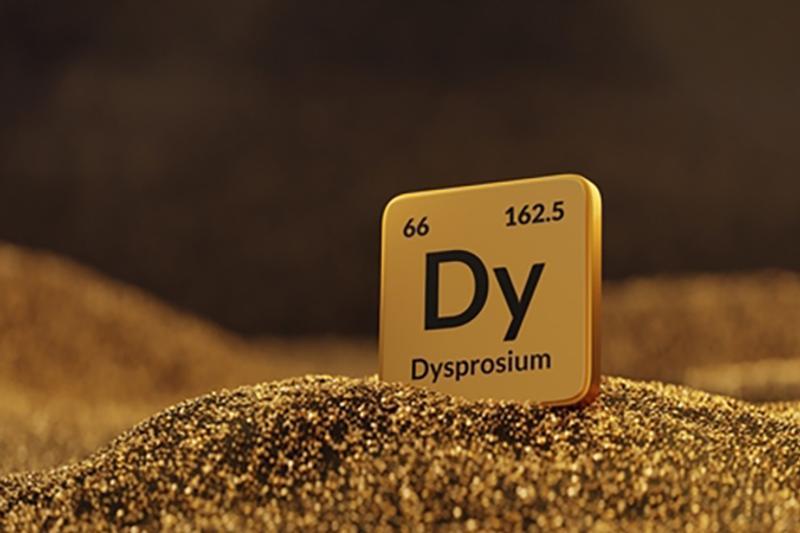
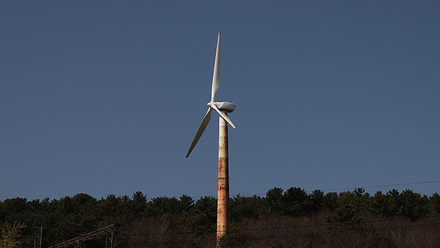
The scientists at Leiden University report to have quantified, for the first time, the environmental and economic benefits of reducing dysprosium content in Nd-Fe-B magnets. The raw material is classified as ‘critical’ in many territories and is widely used in the magnets for electric vehicle motors and wind turbines.
Stellina Samuel, lead author of the study, explains how the team undertook a Life Cycle Assessment of magnets that contain 1-8wt.% dysprosium. They modelled the neodymium and dysprosium supply chains separately.
‘For a typical magnet with 4wt.% dysprosium, that single ingredient is responsible for 78% of the freshwater ecotoxicity impact, 75% of marine eutrophication and 78% of land use – while accounting for only a small fraction of the alloy by mass,’ she said.
Dysprosium’s market price is also extremely volatile, say the Leiden researchers, and the rare earth can account for between a quarter and 44% of an Nd-Fe-B magnet’s raw material cost.
Pointing to material-efficiency techniques, such as grain-boundary diffusion, they say the rare earth’s content in magnets can be reduced to about 1% while still maintaining the required magnetic performance.
They report that, for each kilogramme of magnet, cutting dysprosium by 3% would prevent leaching of 480-840kg of ore, stop the equivalent of 12-17kg of CO2 and slash 15 other environmental impact categories by 11-64%.
The teams adds that this would save ~€10/kg of magnet.