US Government funds tech for rapid, non-destructive characterisation of critical minerals drill cores
The system seeks to measure critical minerals on drill cores onsite in comparison to conventional offsite lab assays.

The funding comes from the U.S. Department of Energy's ARPA-E ROCKS programme.
Fieldstone Bio, a synthetic biology company, is building the new class of measurement tools for the mining industry in partnership with hyperspectral imaging (HSI) firm TerraCore and MIT.
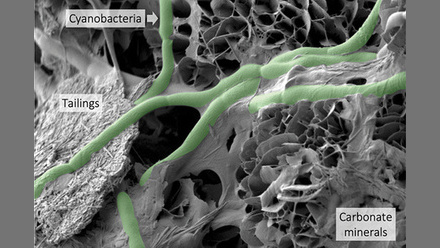
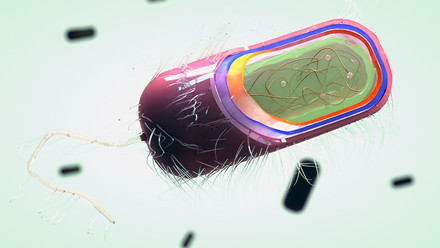
The method will pair engineered microbial sensors with compact hyperspectral cameras already common in mining workflows. The microbes are designed to produce a distinct and readable signal when they sense a target metal.
Fieldstone's imaging and analysis system then translates those signals into a quantitative, high-resolution map of metal distribution along the core's full length.
The goal is to help the US find and characterise domestic sources of the critical minerals.
'In exploration, the data that would change your next decision often arrives after you've already made it,' observes Patrick Stone, CEO and co-founder of Fieldstone Bio. 'When you can measure what's in a core while you're still standing at the drill site, the economics change. You can tighten your intervals, stop chasing dead-ends, and put your next meters where they actually count. That's what this technology is built to do.'
Scout Discoveries, an exploration company advancing new targets across Western USA, will contribute active drill sites and fresh core to validate the technology under real-world field conditions.
The scientific foundation traces to MIT, where researchers developed the engineered reporter technology that makes microbial signals readable by hyperspectral imaging at a distance. Fieldstone licensed the technology and has since demonstrated sensors for gold, copper, molybdenum and arsenic at parts-per-billion sensitivity.
'Engineered biosensors have been difficult to use in the field because their signals needed specific, sensitive and expensive specialised equipment,' explains Dr Voigt, co-founder of Fieldstone Bio and Head of the Department of Biological Engineering at MIT. 'Making those signals visible to widely-available HSI cameras is what turns a laboratory technique into a field tool. Pointing it at the critical minerals this country needs to source domestically is exactly the kind of problem it should be solving.'
For more like this...