Testing...testing...an autonomous lab
US firms suggest the autonomous lab 'can successfully perform a real-world scientific task'.

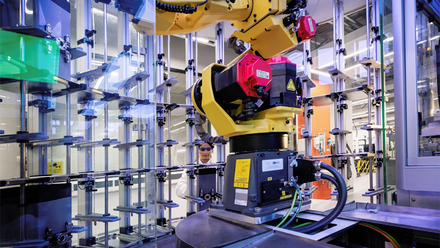
The lab comprises a large language model and automated cloud laboratory.
The authors of a paper in bioRxiv claim that, in this instance, it optimises the cost efficiency of cell-free protein synthesis (CFPS).
'Iterative experimental design, experiment execution, data capture and analysis, data interpretation, and new hypothesis generation were all handled by the LLM-driven autonomous lab,' reads the paper on Using a GPT-5-driven autonomous lab to optimise the cost and titer of cell-free protein synthesis.
'By conducting iterative optimisation, the large language model (LLM)-driven autonomous lab was able to achieve a 40% reduction in the specific cost ($/g protein) of CFPS relative to the state of the art. This cost reduction was accompanied by a 27% increase in protein production titer (g/L).'
The paper continues, 'By integrating LLMs with programmatic control of a cloud lab, we demonstrate that an LLM-driven autonomous lab can successfully perform a real-world scientific task, highlighting the potential of AI-driven autonomous labs for scientific advancement.'
For more like this...