Lots to unpack
An update on the latest developments in UK packaging policy.

The IOM3 Packaging Group has been actively involved with the Institute’s Policy Team over the last few years, inputting into consultations and working groups. I’m a huge advocate that packaging is the jewel in the crown of IOM3, because it has such a tangible use and is an application of different materials that all citizens engage with every day.
Over the last few years, it has been exciting to hear so many UK Government ministers and officials talking about packaging in terms of the importance of our materials and resources. If you’ve read any of my previous updates, you may know that there are several legislative reforms designed to boost the UK’s sustainability credentials around packaging – to reduce waste, increase recycling rates and drive circularity. These reforms include the Extended Producer Responsibility for Packaging (pEPR), Simpler Recycling for England and a Deposit Return Scheme (DRS) for single-use drinks containers.
Traffic light system
Different kinds of packaging receive different ratings under the UK’s Packaging Extended Producer Responsibility legislation.
Red – packaging has specifications that make it difficult to recycle at scale.
Amber – packaging may experience challenges during collection, sorting or reprocessing.
Green – packaging is widely recyclable in the current UK infrastructure.
The pEPR grinder
This calendar year saw pEPR bedding in, as the fees started to hit the balance sheets of businesses and the operational structure continued to take shape. As waste is a devolved responsibility, pEPR legislation needs to work across England, Scotland, Wales and Northern Ireland. PackUK is the government-based scheme administering pEPR on behalf of all four nations and is hosted by the Department for Environment, Food and Rural Affairs.
In March this year, PackUK announced the appointment of UK Packaging PRO as the industry-led producer responsibility organisation (PRO) for pEPR. It is a producer-led, not-for-profit organisation designed to bring a unified and collaborative industry and sector voice to pEPR reform. There will be a phased delegation of responsibilities from PackUK to UK Packaging PRO, with PackUK retaining all sovereign functions.
PackUK, UK Packaging PRO, the devolved governments, local authorities, the waste and recycling sector, and obligated producers of all sizes will work together to:
- Improve recycling rates by supporting innovation and improvements in how packaging is made, used, collected and recycled.
- Ensure fees and incentives align with real environmental progress.
- Support local authorities with data, insight and practical tools.
- Lead industry’s efforts to improve and reduce packaging and support better recycling across all four nations of the UK.
Collaboration is an essential part of achieving a system that the industry and public have confidence in, bringing clear representation of the whole value chain.
For the first time, producers have submitted data under the Recyclability Assessment Methodology (RAM). This data will provide the basis for fee modulation, which, over time, is designed to incentivise the use of more recyclable materials.
Did you know?
By 31 March 2027, kerbside plastic film collections must be in place in England.
Keeping things simple
Simpler Recycling for households in England also came into effect at the end of March this year. This will ensure consistency across local authorities of what can be recycled by all households, including food waste. As with anything new, it brings complexity and challenges, but the drive is to make recycling easier for everyone and more effective.
Simpler Recycling applies to business and household waste collections in England, except for smaller businesses, which have until March 2027 to comply. The regulations stipulate that waste management firms and local authorities must collect glass, metal, plastic, paper and card separately from general waste, with separate collections for food waste. By 31 March 2027, kerbside plastic film collections must also be in place in England.
The consistency of material collections from the Simpler Recycling policy enables brands to label their products with 100% consistency and confidence. This helps build trust in brand messaging and ensure every consumer has an equal opportunity to recycle. This should, in turn, lead to more recycling and lower pEPR costs for producers.
As brands focus on gathering data and assessing their packaging for recyclability, consumers hold the key to whether products actually make it into the recycling system.
Making a deposit
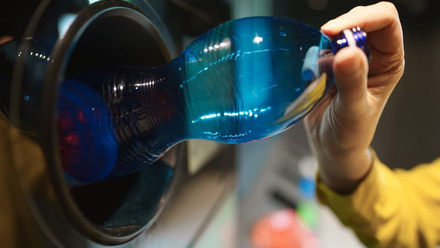
The DRS is a system where consumers are charged a deposit upfront when they buy a drink in a container that is covered by the scope of the scheme. The deposit can be redeemed when the empty container is returned to a designated return point, many of which will be automated reverse vending machines.
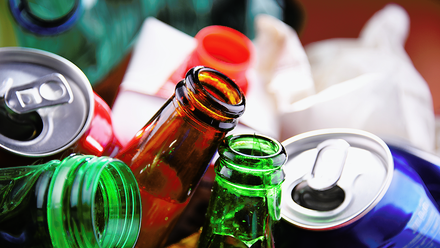
The DRS will apply to drinks in containers from 150ml-3L that are made from PET plastic, steel or aluminium – and glass in Wales.
The purpose is to increase collection rates for these containers to more than 90% within three years of the scheme going live. It is hoped that improving the quality of recycled material will encourage closed-loop recycling, ensure materials remain in use for as long as possible, and reduce the littering of in-scope containers.
The DRS is due to launch across the four nations in October 2027. Successfully launching the biggest DRS globally will require significant development, from operational design to consumer behaviour communication.
Exchange for Change has been appointed by government as the deposit management organisation (DMO) to design, implement and operate the DRS in England, Scotland and Northern Ireland. At the time of writing, Wales is yet to appoint a DMO, but Exchange for Change is keen.
To set it up, Exchange for Change is working at pace on:
- Infrastructure development
- Deposit level – set at 20p
- Retail handling fee
- Return specifications
Making a pact
Outside the legislative arena, but still with the drive for more circularity in packaging, WRAP launched the UK Packaging Pact in April of this year. IOM3 is a founding signatory of the new pact. It is supported by PackUK and the government, and brings together businesses, industry bodies and experts from across the packaging value chain. The evolution from the Plastic Pact to a Packaging Pact that considers all packaging materials is a significant step. Sustainable packaging design will always involve using the right material, in the right format, at the right time.
Conversations with friends and family who are not deeply embedded within the packaging and recycling world, but who might be driving sustainability changes in their own spheres, often return to the same thing – they just want packaging to be recyclable so they can put it in a recycling receptacle and carry on with their lives.
While we can debate whether packaging is as complex as designing hydrogen-powered engines or the aircraft of the future, it is understandable that most people only actually think of packaging when they’ve removed the product from it, and think ‘what do I do with this now?’
While legislation and industry are driving packaging to be more recyclable, there are still some products where the packaging is not easily recyclable and may contaminate and devalue recycling streams. It is therefore really important to clarify so consumers know what can be recycled and what cannot. Wish-cycling doesn’t help anyone.
Overall, we want to encourage people to think about the value of the material in their hand. We need as many people as possible to recycle their packaging, because it is much better than not recycling, which means we need to make recycling as straightforward and effective as possible.
However, we know that recycling is not the only answer. We also want to drive our material usage further up the waste hierarchy. However, this requires a system and consumer behaviour change so that schemes like reuse and refill are embraced and can be effective. To do that, we need to keep championing the positive impact of recycling packaging and to positively espouse the value of materials.
What is Packaging Extended Producer Responsibility?
Fees are paid by 'obligated producers' of packaging to PackUK – in year one this totalled £1.4bln from approximately 4,300 producers.
Payments were made to 388 local authorities to cover the 'efficient and effective' disposal and recycling of household packaging.