Bioinspired fluoride-free gel regenerates dental enamel
A protein-based material can reportedly repair and regenerate demineralised tooth enamel.

The work at the University of Nottingham, UK, is inspired by the formation of natural enamel during infancy.
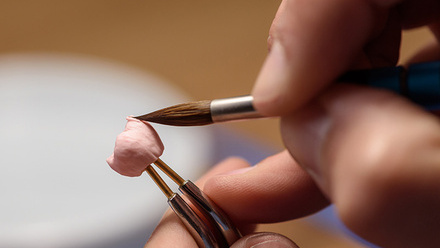
The gel works by recruiting calcium and phosphate ions from saliva to trigger controlled mineralisation. The researchers claim it can be rapidly applied to teeth in the same way dentists apply standard fluoride treatments.
The unique structure and properties of natural enamel protect teeth against physical, chemical and thermal insults. Although these are challenging to replicate, the proprietary material is inspired by the natural protein amelogenin that is critical for regulating enamel growth.
When applied on top of dentine, the gel forms a thin, robust layer that fills holes and cracks in teeth, functioning as a scaffold to promote epitaxial mineralisation – controlled, organised growth of mineral nanocrystals.
The gel’s reported capacity to regenerate demineralised or eroded enamel, strengthen healthy enamel and prevent future decay could make it the first solution to enamel degradation, suggests the team behind it. It can also be applied on top of exposed dentine to treat hypersensitivity or enhance the bonding of dental restoration.
Dr Abshar Hasan at the University says the regenerated enamel 'behaves just like healthy enamel', able to recover its natural architecture.
These findings are based on tests of the tissues’ mechanical properties, as well as computer simulations of tooth brushing, chewing and exposure to hot, cold and acidic foods.
Enamel degradation is usually irreversible, contributes to tooth decay and is associated with dental problems in almost 50% of the world’s population. These can lead to tooth loss, infections and are linked to conditions such as diabetes and cardiovascular disease.
Current treatments, such as fluoride varnishes and remineralisation solutions, only alleviate symptoms of tooth decay.
The developers of the material claim it has potential for more effective and long-lasting dental treatments that are both preventative and restorative.
The invention is the result of 16 years of research at the University, during which time the researchers investigated fundamental mechanisms, conducted extensive characterisation, explored different ways to engineer and use the technology, and assessed its performance.
The team has worked closely with dental schools and clinics throughout the process in an interdisciplinary environment, with input from areas such as supramolecular chemistry, materials science, developmental biology, bioengineering and biomineralisation.
Professor Alvaro Mata, another researcher on the team, says, 'We are very excited because [it] has been designed with the clinician and patient in mind', and is reported as safe to use for people of all ages.
Start-up Mintech-Bio will now take the development forward, hoping to have a first product out in 2026.
Mata proposes the technology’s versatility and scaleability mean it could be translated into other oral health products, as well as alternative regenerative medical applications that could benefit from the capacity to trigger and control mineral growth.