Refractory-metals alloy balances ductility and oxidation resistance
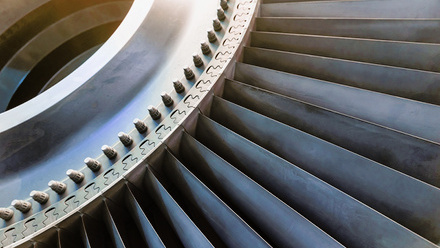
The material could find use in more energy-efficient turbines that can operate at higher temperatures.
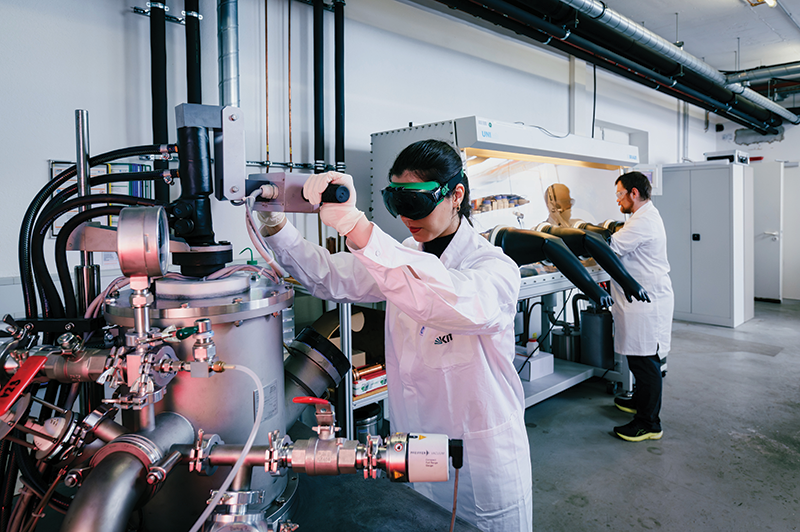
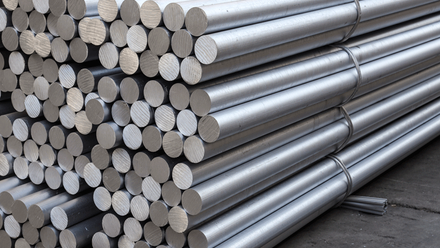
A novel combination of chromium, molybdenum and silicon (Cr-Mo-Si) is said to overcome the individual limitations of these refractory metals,
The Cr-Mo-Si alloy, developed by researchers at Karlsruhe Institute of Technology (KIT), Germany, is reportedly ductile at room temperature, oxidation-resistant and stable even at high temperatures.
This could address the efficiency limitations of nickel (Ni)-based superalloys – currently used in high-temperature scenarios, although their operating range only reaches up to around 1,100°C.
Refractory metals, meanwhile, have high melting points of around 2,000°C. Improving fuel efficiency in turbines by employing these materials could lower emissions, subject to meeting the required safety checks and engineering constraints (e.g., aeroplane weight).
However, refractory metals are typically brittle at room temperature and start to oxidise at temperatures of 600-700°C. This renders them unsuitable for high-temperature applications, such as aircraft engines, gas turbines and X-ray units, unless used in vacuum conditions like X-ray rotating anodes.
The combination of ductile deformation mechanisms and oxidation resistance is uncommon in such alloys, and they typically only show one of these properties at a time. As a result, until now, there had been ‘no real competitors’ to Ni-based superalloys, says Professor Martin Heilmaier at KIT.
Heilmaier explains how existing Ni-based superalloys ‘have been used for decades in components that are exposed to air or combustion gases at high temperatures… [These] are made of many different metallic elements, including rarely available ones’. However, their operating temperatures are ‘too low to exploit the full potential for more efficiency in…high-temperature applications’.
He notes, ‘a temperature increase of just 100°C can reduce fuel consumption by about 5%’ in stationary gas turbines, while reducing fuel consumption will also be crucial for enabling electricity-powered aeroplanes to perform longer-haul flights.
But Dr Alexander Kauffmann of Ruhr University Bochum, Germany, who worked on the research, adds that, despite progress in computer-assisted materials development, oxidation resistance and ductility still can’t be predicted sufficiently for targeted material design. Catastrophic oxidation of refractory-element-based alloys is a ‘long-standing issue’ in the field.
The group first sought to overcome this in 2019 with multi-phase molybdenum-silicon-titanium (Mo-Si-Ti) alloys containing silicide phases – ‘the first that didn’t suffer from catastrophic oxidation in the critical temperature range’. However, these still suffered from brittleness due to the high volume fraction of ‘intrinsically brittle’ silicide phases.
The first Cr-Mo-Si alloys developed by the team shared the same fundamental principles, but analysis of their oxidation behaviour identified that, even without the silicide phases in the microstructure, the alloys could retain their oxidation resistance.
According to the researchers, more research is now needed to uncover the new alloy’s full potential and turn it into an engineering material on an industrial scale. It is also competing with established engineering materials and supply chains.
However, Kauffman postulates, ‘The possibilities are wider than the extreme cases’ as ‘temperature is not necessarily always at [its] limits’. Their research lays the groundwork for further alloy, microstructure and process development, as well as work to address manufacturability, cost and sustainability.