Offshore wind farms could cover 11% of North Sea by 2050
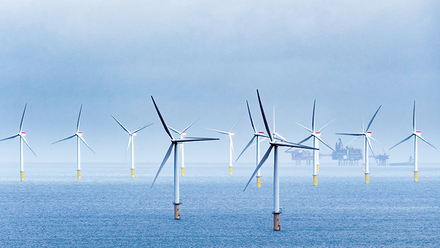
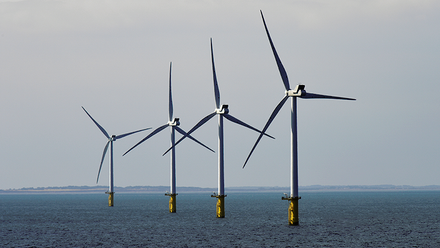
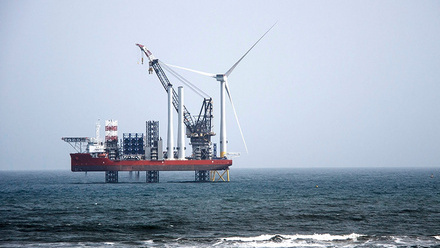
A study led by Heriot Watt University, UK, found current plans could result in 19,400 North Sea wind turbines by 2050.

The analysis examined both operational offshore wind farms and projects already in national development pipelines across all seven countries with North Sea waters: the Netherlands, Belgium, Denmark, Germany, the UK, Norway and France.
Where necessary, hypothetical wind farms were added to bring each country’s total capacity in line with its stated commitments. The researchers stress that this is a scenario, not a forecast, and does not predict where wind farms will actually be located in 2050.
The study finds that, by 2030, the UK is projected to remain the largest offshore wind nation in the North Sea, with roughly 4,200 turbines in operation.
Germany follows with around 2,700 turbines and the Netherlands with approximately 1,700.
By 2050, these three countries continue to dominate in scale, with the UK expected to host around 6,300 turbines, Germany in the region of 4,300, and the Netherlands just over 4,200.
In spatial terms, the Netherlands is projected to be the most intensively used national zone, with offshore wind farms occupying ~19% of its North Sea waters by 2050.
Belgium follows at ~18%, ahead of Denmark (~15%) and Germany (~14%). The UK (~9%), Norway (~8%) and France (~7%) show lower proportions of their national waters within wind farm boundaries.
Taken together, projected and operational offshore wind developments would cover approximately 58,500km2 of the North Sea, rising from ~1% of the basin today to about 11% by 2050.
Recent events
- Free
Energy Transition – The Role of the National Grid
The National Grid is at the centre of the UK's electricity system. Find out how it is evolving to support evolving electricity generation and consumption patterns.
- Free
Energy Transition – The Role of the National Grid
The National Grid is at the centre of the UK's electricity system. Find out how it is evolving to support evolving electricity generation and consumption patterns.
For more like this...