Light-driven graphene aerogels tested for space
The aerogels are propelled by laser light under microgravity conditions, moving towards propellant-free space propulsion.
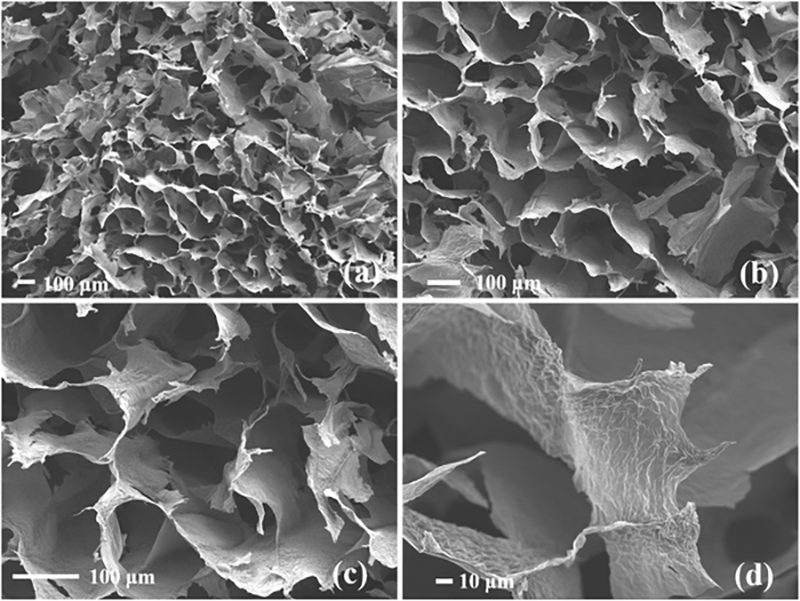
Magnified images of graphene‐based aerogels
© Advanced Materials TechnologiesThe experiment was carried out during the European Space Agency’s (ESA) 86th parabolic flight campaign, led by researchers at Belgium’s Université Libre de Bruxelles and Khalifa University in the UAE.
Graphene aerogels combine the electrical properties of graphene with an extremely low density and porous aerogel structure. The team placed small cubes of graphene aerogel in a vacuum chamber and exposed it to a continuous laser, then recorded their movement using a high-speed camera.
The response under microgravity was described as ‘fast and furious’, with ESA reporting that the samples accelerated within around 30ms.
However, under normal Earth gravity, the aerogels barely moved – suggesting that microgravity conditions are critical to unlocking the propulsion effect.
The researchers also found that acceleration could be controlled by tuning the laser beam, with stronger laser power producing greater acceleration.
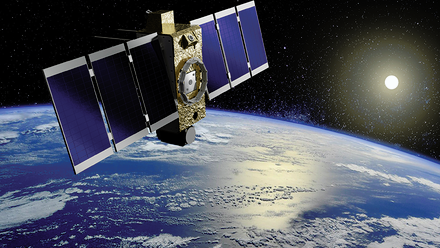
The ESA says future applications could include solar sail propulsion or attitude control for small satellites, potentially reducing the need for onboard fuel. While the work remains at a fundamental research stage, it does suggest that graphene-based materials could play a role in future space technologies.