Google agrees long-duration energy storage project in County Offaly, Ireland
This announcement comes as analysis reveals growing commercial potential for innovative long-duration energy storage solutions in Europe.
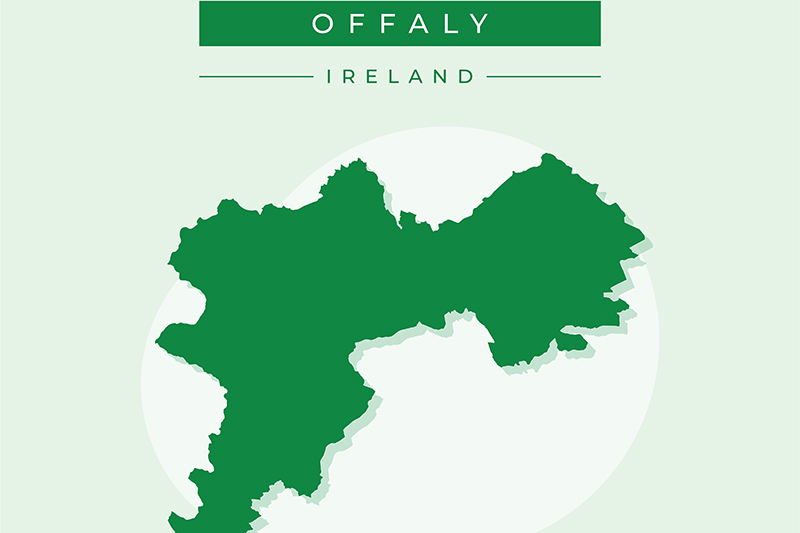
Energy Dome and Google announced their first bilateral commercial contract for a 23MW/200MWh CO2 battery project in County Offaly, Ireland.
The project is part of a long-term partnership the companies announced last year to deploy Energy Dome’s technology at scale and advance Google’s ambition for access to affordable, secure and 24/7 clean energy for grids globally.
This announcement is on the back of a 19MW/200MWh project in Arizona, USA, announced this month by Energy Dome, Google and the local utility SRP.
This project will be developed, owned and operated by Energy Dome using its proprietary technology. It works by using grid power to compress and store CO2. When power is needed, the gas is expanded through a turbine to generate energy that is sent back to the grid. In doing so, it will absorb surplus energy during periods of oversupply and dispatch firm power during periods of system stress.
The Irish government has identified long-duration energy storage as a key solution for security of electricity supply, reducing system costs and enabling Ireland to reach 80% renewable electricity by 2030.
Through this commercial project, Google and Energy Dome aim to establish a blueprint for how long-duration energy storage technology can contribute to an affordable, secure and clean electricity system in Ireland.
The site is strategically located on a critical node of the Irish electric grid, with high-voltage lines serving the Greater Dublin metropolitan area. Located near the Rhode Green Energy Park, the surrounding area has solar and wind energy resources, that suffer from curtailment due to high congestion in the local grid. By storing energy for later dispatch, the project is designed to provide congestion relief to avoid the costly buildout of transmission lines, translating into greater affordability for all users on the grid.
Meanwhile, a new Eurelectric-AFRY report reveals how innovative long-duration energy storage (LDES) technologies are set to become an increasingly viable flexibility option in several European markets.
The analysis finds that each GW of LDES could generate €150-250mln in annual variable operating cost savings at system level. These figures point to a strengthened business case for new storage technologies that can reduce renewable energy curtailment, ease network congestion and provide long-term flexibility for a decarbonised power system.
According to the report, technologies such as iron-air batteries, compressed air and liquid air storage can help balance the system over timescales exceeding eight hours, making them particularly suited to managing longer-duration flexibility needs.
In wind-rich Germany and Great Britain, some storage technologies with durations exceeding 24 hours are set to reach commercial viability after 2040, while sunny Spain and Portugal show particularly strong prospects for storage technologies with durations between 8 and 12 hours.
However, the analysis finds that investment conditions for LDES remain uncertain in some markets. High upfront costs and insufficient revenues from existing energy and system service markets can make projects difficult to finance. This is particularly the case for Finland, where abundant pumped-storage hydropower and relatively low price volatility limit revenue opportunities for new LDES assets.
Recent related events
- Free
Energy Transition – The Role of the National Grid
The National Grid is at the centre of the UK's electricity system. Find out how it is evolving to support evolving electricity generation and consumption patterns.
- Free
Energy Transition – The Role of the National Grid
The National Grid is at the centre of the UK's electricity system. Find out how it is evolving to support evolving electricity generation and consumption patterns.
For more like this...