Extractive metallurgy enabled by engineering
System-level engineering to underpin critical minerals recovery.

Across much of the international discourse, critical materials continue to be framed primarily as lists of strategic elements, or as indicators of geopolitical risk. While such perspectives are valuable for policy formulation, they are fundamentally insufficient for industrial decision-making.
Industrial feasibility is not determined by whether a material is designated as ‘critical’ on a particular list, but whether it can be translated – reproducibly and predictably – from a real feedstock into an operable industrial flowsheet.
Within the UK context, critical materials have long moved beyond questions of price or import dependency and have become decisive factors in the industrial feasibility of the energy transition.
Lithium, rare-earth elements (REEs), copper, nickel, cobalt, neodymium, niobium and other strategic metals now sit at the intersection of supply chain resilience, environmental compliance and delivery risk. The central question is no longer whether these materials are essential, but how they can be produced sustainably, on an industrial scale and within the practical constraints imposed by permitting, regulation and operations.
Long-standing experience across mineral processing and recovery projects demonstrate consistently that the dominant limitation is rarely the physical absence of resources. Rather, it is the inability of engineered systems to enable production that is sustainable, scaleable and compliant with regulatory requirements.
Through experience from recent iron-REE ore projects in the Middle East, Iran Central Iron Ore Company confirms that solutions are rarely found in standalone technologies. Success instead arises from system-level engineering and intelligent integration of multiple process functions.
Within such architectures, selective separation technologies – ranging from adsorption and ion exchange to hybrid circuits – play a foundational yet understated role. They underpin many emerging critical-material recovery pathways, not as isolated solutions, but as embedded components of a coherent and engineered system.
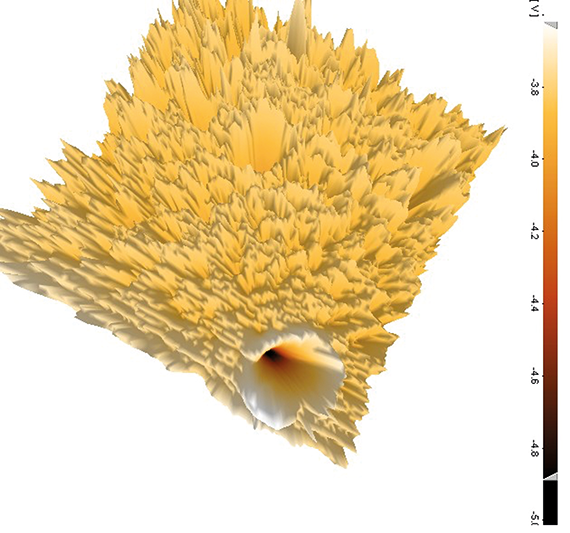
Three-dimensional atomic force microscope image of the synthesised nano-adsorbent developed by Green Mine Tech Ltd, indicating a porous surface structure, which plays a significant role in enhancing adsorption performance
© All image rights belong to Green Mine Tech Ltd. The images were personally acquired and analysed by Dr Mohammad Reza Heydartaemeh using atomic force microscopySystem engineering
It is from this premise that we developed the concept of Critical Materials Enabling Engineering (CMEE). A defining principle of CMEE is the explicit recognition of manufacturing reality as the primary design constraint.
Within this framework, a material can only be considered truly secure when it can be translated from a complex, variable and non-ideal feed – characterised by chemical heterogeneity, operational fluctuations and regulatory constraints – into a stable, scaleable and permit-compliant industrial process.
CMEE is a system-level framework explaining the transition from lab-scale separation to industrial deployment. It consists of three interconnected layers:
- Feed definition – treating minerals, industrial residues and recycled materials as dynamic chemical systems.
- Enabling separation technologies – such as nanoadsorbents, ion-exchange media and hybrid membranes, which condition streams, impose selectivity and stabilise the process.
- Industrial process architecture – integrating separation stages with regeneration strategies, mass-transfer control and continuous operation constraints.
Industrial feasibility emerges only when these layers are aligned and governed by lifecycle considerations, including regeneration efficiency, energy balance and operational durability.
Production capacity, manufacturability, regeneration strategy and lifecycle performance must be embedded into the design process from the earliest stages of development.
Non-reproducible separation media (substrate), such as those produced through scaleable granulation routes, are systematically excluded from the enabling framework, as are media whose regeneration cannot be environmentally justified. While this approach inevitably constrains the chemical design space, it delivers a substantial and necessary reduction in industrial risk.
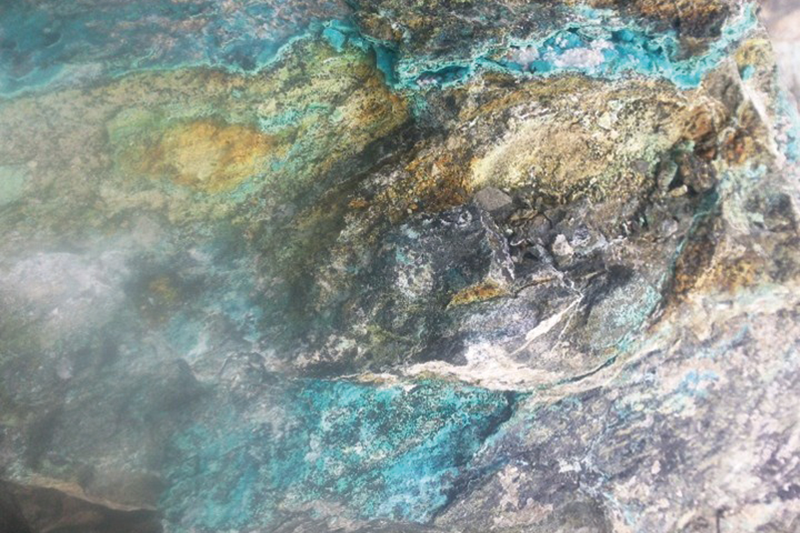
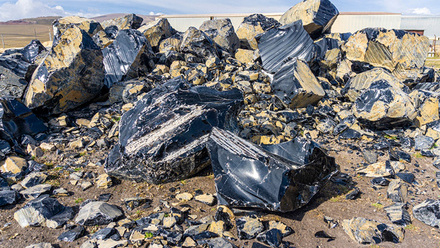
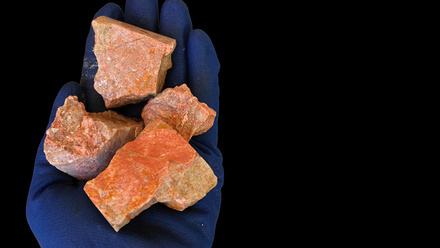
High-grade copper ore sample (approximately 12% grade) associated with critical minerals, including rare-earth elements, molybdenum, cobalt and tungsten
© Green Mine Tech LtdAt the nanoscale
Selective nanoadsorbents have been positioned as enabling materials for advanced recovery, characterised by high specific surface area, tuneable surface chemistry and targeted ion-surface interactions.
However, the vast majority of proposed adsorbent-based technologies for recovering critical materials never progress to industrial deployment. This failure is not due to weak results from research outputs, nor inadequate lab-scale performance during pilot studies. Its root cause lies in a chronic and systemic disconnect between materials innovation and the realities of industrial engineering.
The problem is the application of nanoadsorbents as standalone separation solutions, disconnected from system-level integration, real feedstock characteristics and lifecycle constraints. Industrial evidence consistently demonstrates that even the most successful pilot results, if not embedded within engineered and feed-aware architectures, can lead to operational fragility at industrial scale.
However, in CMEE, selective separation technologies, including nanoadsorbent-based systems, are not an end in themselves – they are enabling tools valued solely by how much they improve overall system performance.
Adsorption alone is insufficient for actual recovery of saleable products. Controlled desorption and adsorbent regeneration are critical, with the balance between strong adsorption and reversible release being the primary criterion for industrial applicability.
This pattern is observed in lithium projects across the world seeking to apply nanoadsorbent technologies. Effective systems typically exhibit:
- High metal recovery during desorption
- Minimal loss of adsorption or separation capacity across multiple cycles
- Use of mild eluents to reduce chemical consumption
In these contexts, adsorbent regeneration costs and long-term durability are more decisive for economic viability than initial adsorption capacity, illustrating that thermal integration and energy balance – rather than adsorption chemistry alone – govern feasibility.
Beyond lithium, REE recovery projects highlight limitations of single-element approaches. The UK’s recent Critical Minerals Strategy and project analyses confirm that effective separation of heavy and light REEs remains a key bottleneck, despite encouraging pilot-scale results. This is consistent with the study Key Pathways Towards Sustainable Processing of Critical Minerals in Minerals Engineering.
The HyProMag initiative in the UK integrates hydrogen processing of magnet waste with hydrometallurgical circuits supported by adsorption stages, where multi-element selectivity, rather than absolute adsorption capacity, is consistently the dominant technical constraint.
Meanwhile, Solvay in Europe incorporates selective adsorption into hybrid solvent-extraction/ion-exchange flowsheets for mixed REE feeds. Analyses show that solvent footprint, waste generation and circuit complexity often exert more influence on system performance than the intrinsic properties of adsorbents.
Similarly, BASF battery recycling flowsheets integrate selective adsorption in hydrometallurgical circuits for lithium, cobalt and nickel recovery from black mass, where regeneration economics and circuit complexity management outweigh laboratory-scale selectivity.
Research presented from Chalmers University of Technology, Sweden, at SETAC Europe 26th LCA Symposium, reveals that nanoadsorbents after hydrometallurgical leaching of black mass are found to offer efficient lithium-ion battery recycling.
Materials such as nanocellulose, structured metal oxides and bio-based functionalised adsorbents provide high surface area for selective interactions with Li+, Co2+, Ni2+, Mn2+ and REEs. Adsorption mechanisms include surface covalent interactions, ion exchange and ligand-metal binding, enabling high recovery while reducing acid and energy consumption.
Nanoscale adsorbents can also recover more than 90% of cobalt and nickel, with residual lithium converted to Li₂CO₃ via conventional methods. These methods also reduce waste and enhance operational safety, offering a green and cost-effective alternative to traditional strong-acid hydrometallurgy.
Collectively, these initiatives reveal a convergent patter – projects adhering to CMEE principles treat nanoadsorbents not as standalone technologies, but as integrated components within feed-aware, lifecycle-driven architectures. CMEE represents a coherent synthesis of recurring industrial lessons, showing that the transition from pilot to industrial deployment depends far more on system-level engineering discipline than on optimising individual materials.
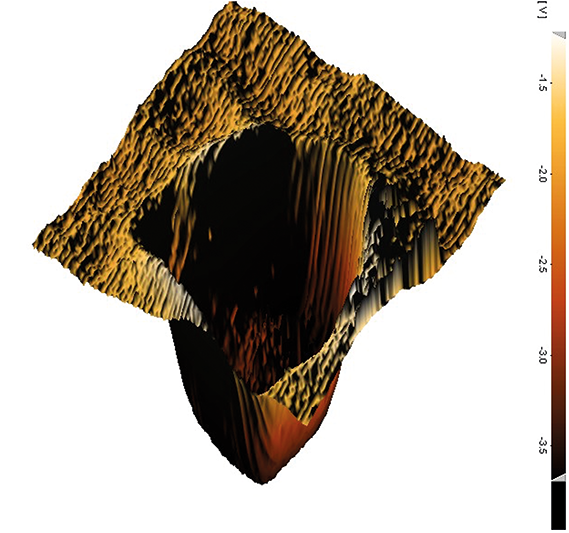
Three-dimensional atomic force microscope image of the synthesised nanoadsorbent developed by Green Mine Tech Ltd, providing detailed insight into the structural characteristics and porosity of the adsorbent
© All image rights belong to Green Mine Tech Ltd. The images were personally acquired and analysed by Dr Mohammad Reza Heydartaemeh using atomic force microscopy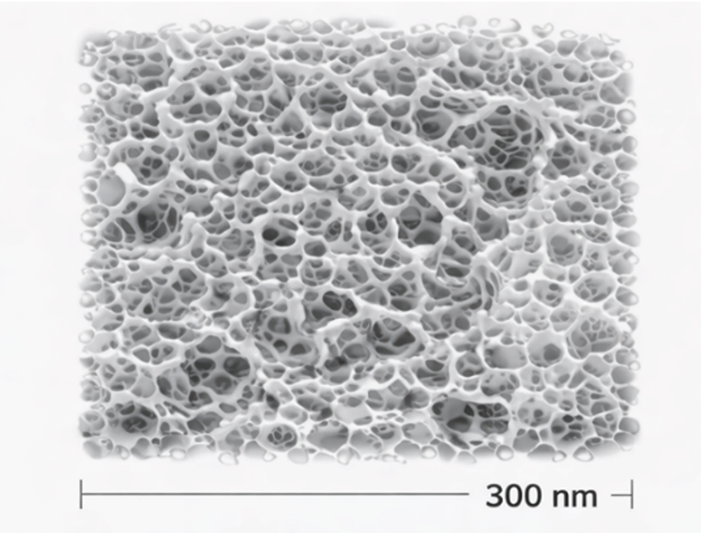
Schematic representation of the general surface morphology of a nanoscale adsorbent medium, porous network by scanning electron microscopy
© All image rights belong to Green Mine Tech Ltd. The images were personally acquired and analysed by Dr Mohammad Reza Heydartaemeh using atomic force microscopy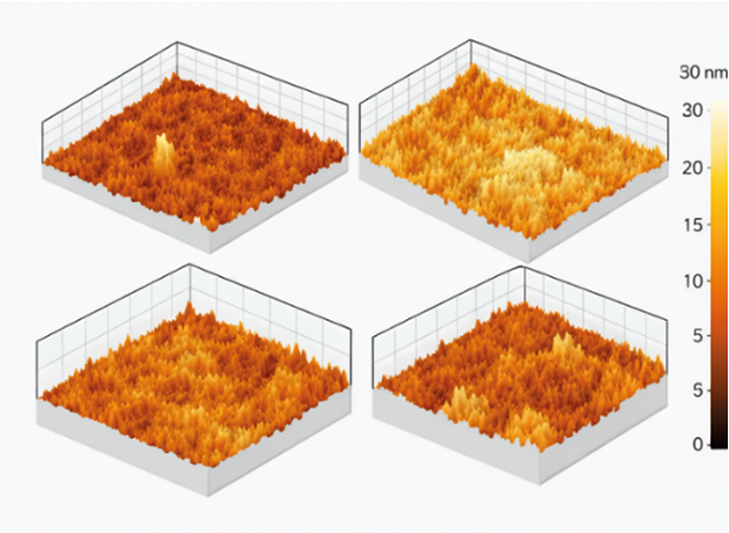
Schematic representation of the general surface morphology of a nanoscale adsorbent medium, porous network in a 3D atomic force microscopy map
© All image rights belong to Green Mine Tech Ltd. The images were personally acquired and analysed by Dr Mohammad Reza Heydartaemeh using atomic force microscopyTaking stock
One of the most realistic pathways for securing critical minerals today lies in secondary recovery from existing processing plants and historical mine tailings.
Large tailings inventories represent not only long-term environmental liabilities, but also underutilised sources of strategic metals. Reprocessing these streams can reduce environmental risk while generating secondary revenue that often exceeds marginal recovery costs. As a result, secondary critical materials recovery has shifted from a peripheral idea to a credible industrial route.
Despite this potential, industrial experience repeatedly identifies a structural cause behind project failures – technology selection often precedes genuine feed understanding. Many flowsheets are designed around preferred extraction routes, with feed characterisation treated as secondary. This inversion routinely produces systems that appear viable on paper but fail under real operational conditions.
In the UK, this issue is pronounced, as many critical materials feeds – from geothermal brines to recycled permanent magnet streams – are inherently variable, multi-element and operationally non-ideal. Separation circuits that are not designed to accommodate these characteristics struggle to maintain stability, selectivity and regulatory compliance at scale.
Accelerating Technology Readiness Levels (TRLs) further compresses timelines, turning underestimated feed complexity into a critical path risk. It is therefore important to embed feed variability, impurity tolerance and process resilience into early flowsheet definition, reducing late-stage redesign, scale-up failure and investor risk aversion.
Within the CMEE framework, separation performance arises from a small number of tightly coupled system-level constraints. Mineral feeds must be treated as dynamic chemical envelopes rather than laboratory averages, with variations in speciation, interfering ions, organics and gangue phases directly influencing adsorption behaviour and kinetics.
Meanwhile, selectivity is meaningful only if preserved under continuous operation and repeated regeneration, as well as the inevitable fluctuations of pH, temperature and ionic-strength fluctuations.
Industrial reliability depends on mass-transfer behaviour, pressure drop, attrition and mechanical stability as much as surface chemistry. Regeneration cannot be treated in isolation but must consider media lifetime, reagent consumption, effluent generation and overall economics. The distinction between laboratory concepts and deployable technologies becomes decisive only at high TRLs of seven to eight.
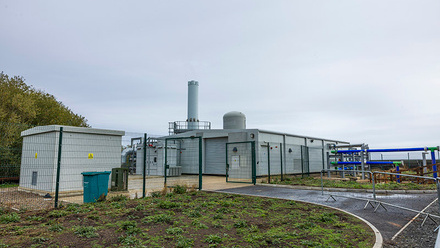
In this regard, lithium serves as a system-level stress test. UK geothermal brines concentrate classical critical materials challenges into a single feed – low grades, complex interference, energy and water constraints, and regulatory pressure. Success depends not on instantaneous recovery, but on a circuit’s ability to tolerate feed variability, sustain performance, and preserve economic and environmental viability through regeneration.
Rare-earth-element recovery reinforces this principle. Recycled magnet streams are inherently multi-element and become economically viable only when guided by multi-element enabling logic.
Adsorbents should therefore be evaluated for their contribution to overall process stability, mechanical compatibility with continuous configurations, and qualitative regeneration viability over extended lifetimes.
Ultimately, the future of critical materials recovery will not be driven by adding more technologies, but by disciplined engineering judgment at the system level. Industrially viable systems must tolerate feed variability, maintain mechanical deployability at scale, and remain defensible across lifecycle and environmental considerations.