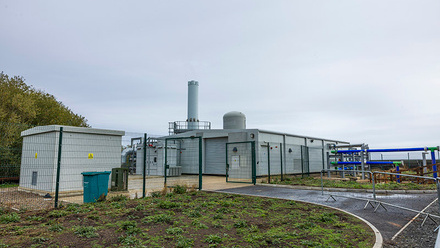
Environment Agency to lead on regulation of Cornish Lithium project
The Trelavour Project will produce high-grade lithium by redeveloping a former china clay pit in Cornwall.

The UK Government announced the Environment Agency’s role as Lead Environmental Regulator for Trelavour in a pilot to speed up regulatory approval on major growth projects.
Typically, developers of nationally significant infrastructure must navigate complex, but critical, environmental requirements involving multiple regulators. However, the process of engaging with regulators often lacks coordination notes the Environment Agency.
The Agency has been appointed as the primary point of contact for Cornish Lithium throughout the planning, permitting and licensing process.
As Lead Environmental Regulator, the Agency will coordinate input from regulatory partners, including Natural England, so advice is aligned and provided as early as possible. This aims to reduce duplication, avoid unnecessary delays and give developers greater clarity.
It is said that the new approach of appointing a single, primary regulator will not reduce the level of environmental protection in place, and the Environment Agency will consider all risks to the environment and the local community in making their decisions.
Trelavour intends to deliver lithium for the growing UK battery industry in an environmentally responsible way to help build a more sustainable domestic supply chain.
Cornish Lithium expects to produce up to 10,000t of battery-grade lithium hydroxide each year in Cornwall, and because the project reuses an existing pit, the environmental impact from hard rock extraction is thought to be limited.
No new pits are proposed and much of the necessary infrastructure, including power, rail and road access, is already in place.
A permit application is expected to be submitted in late 2027, with construction then starting in 2028 for two years.
Despite the reformed approach, all statutory duties, Environmental Impact Assessments, permitting standards and mitigation obligations will continue to apply in full. The programme is currently being tested across a small number of projects to learn what works, identify improvements and inform longer-term implementation.
Existing pilots for a similar Lead Environmental Regulator include East West Rail, Sizewell C and Lighthouse Green Fuels, all led by the Environment Agency, and Falmouth Docks, led by the Marine Management Organisation. Natural England is also planned to lead aspects of the National Grid’s ‘Great Grid Upgrade’.


![Cornish Lithium Trelavour Project - Photo Credit Cornish Lithium - June 2022[6].jpg](https://www.iom3.org/static/30e6a23e-0061-4480-a114fe6f77781427/resourcegridlistingimagedefault_4d12532919c64e60a22baf03232bbf94_4a7c7e45a350/Cornish-Lithium-Trelavour-Project-Photo-Credit-Cornish-Lithium-June-20226.jpg)