Magnetic resonance and radio frequency for real-time detection of lithium
CSIRO researchers in Australia continue to develop tools to reshape mineral and explosives detection.

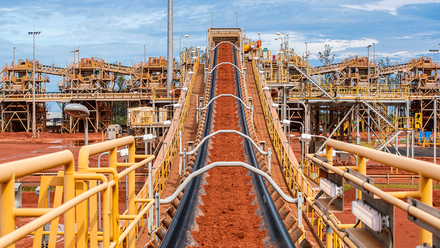
A crusher in action
© Lucian Coman/ShutterstockTwo CSIRO spin-outs, NextOre and MRead, have been merged into MagnaTerra Technologies as a result of the work.
The team’s ore-sorting success was based on a long-ago conference trip, where a CSIRO researcher heard that King’s College London had used radio waves to detect explosives. The Australian group began exploring possibilities related to ore sorting.
The first lab success came in 2001, but that was a long way from real world application. Through many year’s of miniaturisation work. NextOre was launched in 2017, which brought CSIRO’s sensing technology to mining sites around the world.
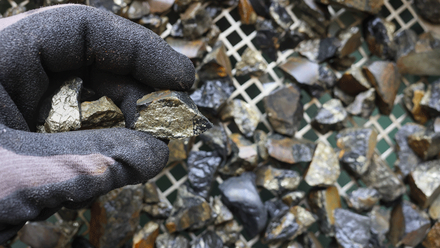
Now, the team is tackling lithium, specifically spodumene in igneous pegmatites.
The latest project involves integrating large electromagnets into mining environments. The intention is to build a sorting machine that can detect lithium-rich rocks for refining, improving efficiency and reducing waste.
The technology is being tweaked for scale applications. Field tests are expected to commence in the next 12 to 18 months.
In addition, the team is developing compact magnetic-resonance-based devices to accurately detect explosives for humanitarian demining.