Cleaner pipes with diamond films
Lab-grown diamond films could stop costly mineral build-up.
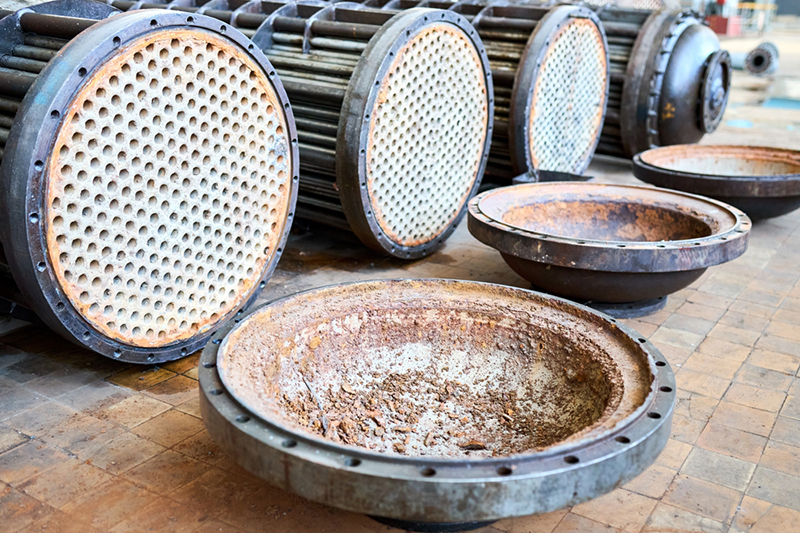
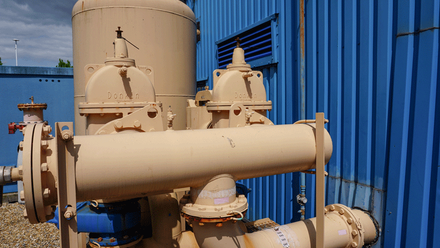
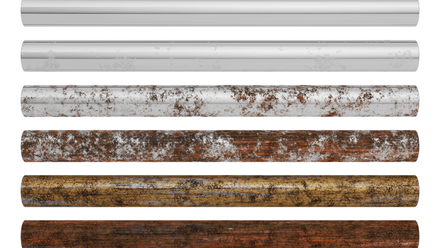
Mineral deposits often build up in industrial pipes, causing a major issue in water and energy systems, where it slows flow, strains equipment and drives up costs.
A new study, from Rice University, USA, engineers, has shown that lab-grown diamond coatings could resolve the issue, providing an alternative to chemical additives and mechanical cleaning, both of which are temporary fixes and carry environmental or operational downsides.
The researchers grew diamond films via microwave plasma chemical vapour deposition (MPCVD). By applying postgrowth treatments, the researchers could tailor the chemistry of the diamond’s surface as it formed.
The team found that nitrogen-terminated diamond stood out in terms of performance. It accumulated more than an order of magnitude less scale than diamond treated with oxygen, hydrogen or fluorine, and microscopy showed only scattered crystal clusters where other surfaces formed dense layers.
This is because nitrogen encourages a tightly bound layer of water molecules to form on the diamond, creating a barrier that makes it difficult for mineral ions to attach and begin building scale.
The researchers applied the same chemistry to boron-doped diamond electrodes used in electrochemical systems. Those electrodes collected roughly one-seventh as much scale without losing performance.
Combined microscopy, chemical analysis and adhesion measurements captured not only how much scale formed but also how strongly it bound.
The researchers say the films could provide cost-effective, polycrystalline diamond films as a powerful, long-lasting anti-scaling material with broad potential across water desalination, energy systems and other industries where mineral build-up is an issue.