Turkey tail fungus turns wood waste into low-carbon insulation
Mycelium grown on resin-bonded wood waste creates a composite insulation material.
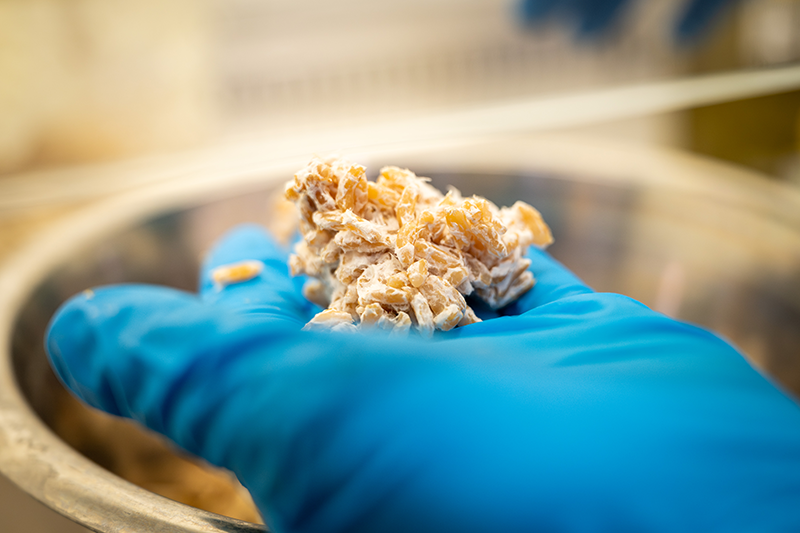
Engineers at the University of Bath, UK, chipped and soaked waste oriented strand board, before adding Trametes versicolor, more commonly known as turkey tail fungus.
The fungus developed a mycelium network through the substrate, binding the wood waste into a consistent composite with insulating and fire-resistant properties.
The thermal performance reportedly matches that of conventional insulation products, and the researchers also report production emissions over 10 times lower than expanded polystyrene, extruded polystyrene and mineral wool. However, they note that drying remains the greatest source of emissions.
The team now plans to scale up the material, while cutting its energy demand, monitoring long-term durability and moisture behaviour, and investigating other challenging waste streams.