Healthcare in the community
How mining companies can have a more sustained impact on healthcare in remote communities

A significant proportion of the world’s mineral resources, including copper, cobalt, gold, bauxite and rare-earths, are extracted in low-income countries where poverty rates are high, health systems are fragile and progress towards achieving the 2030 deadlines of the UN Sustainable Development Goals (SDGs) is faltering, finds The Sustainable Development Goals Report 2025.
In mineral-rich regions of sub-Saharan Africa, Latin America and parts of Asia, communities surrounding mine sites experience high burdens of preventable disease. Maternal and child mortality, malaria, tuberculosis, HIV/AIDS, malnutrition, unsafe water and poor sanitation remain common. Life expectancy can be decades lower than in high-income countries, while access to basic healthcare services is often limited by distance, cost, or shortages of trained staff – according to the Tracking Universal Health Coverage: 2025 Global Monitoring report from the World Health Organization (WHO).
Mining companies do not cause these systemic health challenges. However, they frequently operate in remote areas where national governments struggle to deliver essential health services. In areas with limited effective state resources, mining operations can become influential local actors. They are employers, infrastructure providers and economic anchors – with both opportunity and responsibility to contribute to improved health outcomes.
Thankfully, experience and evidence show that health improvement in mining-affected communities can be achieved without large or unsustainable expenditure. Carefully designed, locally informed, evidence-based and targeted interventions can deliver measurable improvements in health, productivity and community wellbeing.
Furthermore, beyond the societal merit of these achievements, these programmes can also deliver tangible business benefits, including workforce productivity, operational continuity, community relations and long-term social licence to operate.
Ill health reduces labour productivity, increases absenteeism, raises healthcare and insurance costs, and can amplify community grievances – all of which can ultimately affect operational stability. There is a clear business and ethical case for sustained engagement.
What is the role and responsibility of mining companies in supporting health improvement for communities affected by their operations? And what has been proven to work?
Healthy approach
As mentioned, the health challenges faced by communities near mining operations are often shaped by geography, poverty, conflict and historical under-investment rather than mining activity itself.
For instance, the health outcomes in the West African countries of the Birimian Greenstone Belt, one of the world’s premier gold resources, rank among the worst in the world, with maternal and infant mortality rates 20-50 times higher than the wealthy countries where many mining companies are headquartered. This is according to a report on Levels and Trends in Child Mortality from the UN Inter-agency Group for Child Mortality Estimation. These shocking health outcomes have complex origins, but some of the dominant factors witnessed in the communities impacted by remote mining operations include:
- Remoteness – long distances to hospitals or clinics, poor roads and limited emergency care
- Under-resourced health systems – shortages of trained medical personnel, medicines and equipment
- High communicable disease burden – malaria, TB, HIV, respiratory infections and diarrhoeal disease
- Poor water, sanitation and hygiene (WASH) – contaminated water sources and inadequate sanitation infrastructure
These challenges directly affect host communities and the mine workforces who are recruited from them.
Global public health experience demonstrates that significant improvements in health outcomes do not necessarily require expensive hospitals or highly specialised care. A substantial body of evidence demonstrates that well-designed, targeted interventions can dramatically improve health outcomes, even in fragile and low-resource settings.
Crucially, many of these interventions are not capital-intensive – with measures including training and retention of frontline health workers, standardised clinical protocols, basic diagnostic capacity and reliable supply of essential medicines – all demonstrated to deliver low-cost, sustained improvements in key population health metrics.
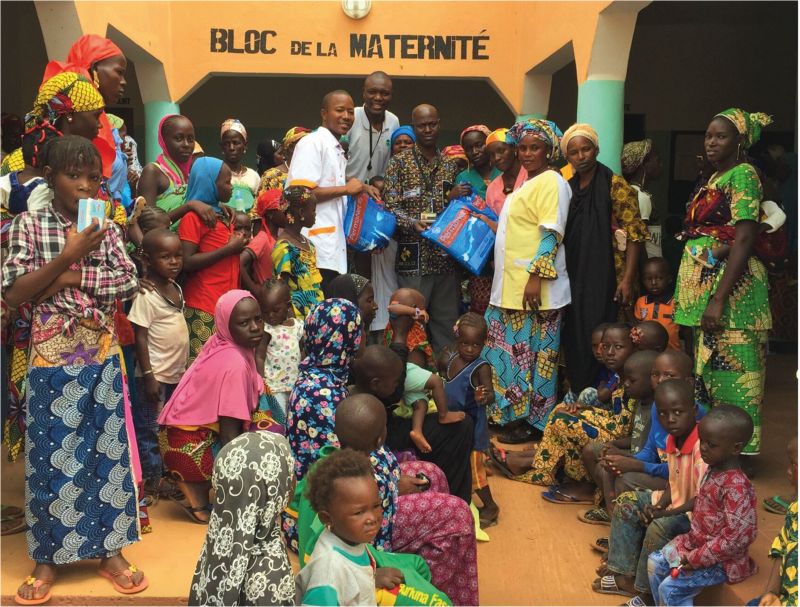
Interventions targeting maternal and child health offer some of the highest returns on investment in global health. Evidence-based measures that improve outcomes include skilled birth attendance, emergency obstetric referral systems, neonatal resuscitation training, vaccination programmes and nutrition support in early childhood.
Community members, both professional medical staff and families, can deliver many of these interventions themselves if provided with targeted education and essential resources. Visiting clinical training teams can upskill community birth attendants and help transform maternal, neonatal and child health metrics.
UNICEF estimates that scaling proven maternal and child health interventions could prevent millions of deaths annually at relatively modest cost. This provides an extraordinary opportunity for mining companies to make immediate and sustained impact in communities, providing generational positive legacy.
Similarly, investments in WASH have consistently reduced rates of diarrhoeal disease, a major cause of child mortality and lost productivity. Point-of-use water treatment, borehole rehabilitation and community hygiene education are technically simple but highly effective when maintained.
Malaria remains a leading cause of global illness. According to the WHO Global Health Estimates, there were 282 million malaria cases and 610,000 malaria deaths in 2024. Simple, targeted measures combining insecticide-treated bed nets, indoor residual spraying and rapid diagnostic testing have reduced malaria incidences by more than 50% in many high-burden settings.
These interventions are credited for averting 2.2 billion cases and saving 12.7 million lives since 2000, while being inexpensive on a per-capita basis and particularly effective in remote communities where exposure is high.
The high malaria burden in some key regions of mining activity mean that malaria programmes have been demonstrated to pay for themselves many times over through improved workforce attendance and productivity.
Underutilised resource
Mining environments carry inherent occupational risks, and operational sites responsibly prepare for traumatic injuries and critical illness with skilled medical personnel, advanced equipment and evacuation platforms. These resources often sit underutilised while, by contrast, surrounding communities can lack formal emergency care systems or trained clinicians.
While a tension exists between maintaining preparedness for site emergencies and meeting unlimited community need, a careful balance of training assistance, incident support and targeted investment can sustainably improve community systems without dependency.
Mining companies are uniquely positioned to support these systems through logistics, training and infrastructure that often already exist onsite. Evidence shows that basic trauma-care training, emergency transport systems and referral coordination significantly reduce mortality from injury and acute illness.
Crucially, these interventions work best when they are targeted, data-driven and aligned with existing health systems, rather than operating in isolation.
Excellent evidence exists to support the training of local community members as health workers. Community health workers cost-effectively improve outcomes by providing basic treatment, promote prevention and early care-seeking, and act as trusted links between communities and formal health services. This approach builds local capacity and sustainability while reducing reliance on external staff.
Mining companies are often particularly well placed to support this approach because they have long project timelines and sustained engagement with specific communities.
Philanthropy to strategy
Historically, some mining companies investing in low-income countries have approached community health through ad hoc philanthropy, such as funding clinics, donating equipment or responding to crises. While well intentioned, these efforts do not always deliver sustained impact and have been criticised as encouraging dependence.
Leading practice is shifting towards strategic, evidence-based health investment, underpinned by baseline data, clear objectives and monitoring frameworks. This approach holds health investment to the same standards as other areas of business risk management and value creation, rather than being beyond objective or metricised evaluation.
To be delivered effectively, these programmes must be informed by a detailed understanding of community-specific healthcare need, guided by medical expertise and integrated into existing healthcare systems.
The UN SDGs provide a vehicle for developing an internationally standardised framework of metrics, including around 40 specific health-related targets, designed to track and inspire progress. To make sustained impact, this strategic view must commit to a long-term vision rather than project cycles.
Investing in the community
At a broader corporate permitting and investment level, national governments increasingly expect private sector partners to contribute to SDGs. Demonstrated alignment with national health strategies and SDGs enhances credibility, facilitates permitting processes and long-term partnerships.
Environmental, social and governance (ESG) performance has become central to investor decision-making. Health outcomes are a tangible, measurable social indicator. Transparent, evidence-based health initiatives support ESG reporting, risk mitigation and access to capital, while enhancing public trust and brand value.
Ultimately, remote mining operations draw their workforces from their host communities, with poor health indices dramatically impacting operational effectiveness. Healthy workers are more productive, safer and more likely to remain employed. Reduced absenteeism, fewer medical evacuations and lower staff turnover translate directly into operational efficiency and cost savings.
In turn, these employees and their families are members of wider communities that will judge the presence of external mining companies, not only on their economic contribution, but also by the perceived fairness and shared benefit of the relationship. Health programmes that are visible, inclusive and evidence-based, strengthen engagement with local populations and reduce the risk of conflict or disruption.
Beyond business benefits, there is also a moral argument that resonates strongly with many mining professionals. Extracting value from some of the world’s poorest regions inevitably raises questions of fairness, equity and responsibility. Mining companies possess financial resources, logistical capacity and have access to medical technical expertise that can make a real difference to human wellbeing.
When modest investments can save lives, reduce suffering and strengthen communities, the ethical case for action is compelling. For many companies, health investment is not about charity, but is about shared value, dignity and long-term partnerships with the communities that host their operations.
Contributing to improved health outcomes is a concrete way to ensure that mining leaves a positive legacy. Health investment, done well, is not just philanthropy. It is strategic, ethical and good business.